🪨 Species at a Glance
| Scientific Name | Crossocheilus oblongus |
| Common Synonyms | C. siamensis (misapplied), True SAE |
| Family | Cyprinidae (minnows and carps) |
| Order | Cypriniformes |
| Origin | Thailand, Malaysia, Indonesia, Laos, Cambodia — lowland forest streams |
| Adult Size | 10–14 cm (4–5.5 in) |
| Lifespan | 8–10 years |
| pH Range | 6.5–7.5 |
| Temperature | 24–26 °C (75–79 °F) |
| Hardness (dGH) | 5–15 |
| Diet | Omnivore leaning algivore — algae, biofilm, small invertebrates, vegetable matter |
| Minimum Tank Size | 150 L (40 gal) |
| Care Level | Beginner–Intermediate (ID at purchase is the hard part) |
| Temperament | Peaceful; mildly territorial with own species in cramped tanks |
| Breeding | Not achieved in home aquaria — commercial stock is hormone-induced |
| Tank Position | Bottom to mid-level; active swimmer across all zones |
| Unique Value | Only commonly sold fish that reliably eats black beard algae (BBA) |
Species Background
Almost no common name in freshwater fishkeeping causes as much frustration as ‘Siamese Algae Eater’. In Australian and international fish stores, the label ‘SAE’ is stuck onto at least four genuinely different species, three of which are not what the buyer actually wants. The true Siamese Algae Eater is Crossocheilus oblongus, a member of the carp family Cyprinidae. For decades this fish was sold under the name Crossocheilus siamensis, and many reference books, aquarium guides and even current supplier catalogues still use that older name. Taxonomic revisions in the 2010s established that the fish most hobbyists were keeping and calling ‘C. siamensis’ was in fact C. oblongus, which was formally described earlier and therefore takes priority under the rules of zoological nomenclature. The name C. siamensis is now generally treated as a synonym — sometimes a valid separate species in strict scientific usage, but for practical hobbyist purposes the fish in your tank is C. oblongus. The confusion persists in print, in wholesaler paperwork, and on online shop pages, which is one more reason you cannot rely on the Latin name printed on a shop sign to guarantee what is actually swimming in the tank.
That confusion is compounded by three other species that regularly arrive at aquarium shops pre-labelled as SAE. The first and most dangerous is the Chinese Algae Eater, Gyrinocheilus aymonieri, a completely unrelated fish from a different family. As a juvenile it grazes algae passably and looks superficially similar to an SAE, but it grows to 25 cm or more, develops a chunky body and a permanently grumpy-looking sucker mouth, and — critically — becomes increasingly aggressive with age, famously latching onto the flanks of larger flat-sided fish (angelfish, gouramis, discus) to rasp at their protective slime coat. A Chinese algae eater in a community tank is a time bomb. Many hobbyists have stories of a peaceful 4 cm ‘algae eater’ gradually becoming a 20 cm bully that kills tank mates over months. Worse, because it looks like a viable option to new keepers, it is one of the most consistently mis-sold species in the trade. The second impostor is the False SAE, Garra cambodgiensis (and related Garra species), which is a respectable algae grazer in its own right but not remotely as effective on black beard algae. The third is the Flying Fox, Epalzeorhynchos kalopterus, a handsome and more colourful relative that is far more territorial and largely ignores algae in favour of meaty foods. A fourth sometimes appears: the Siamese Flying Fox, Epalzeorhynchos munense, rarer but occasionally confused in Southeast Asian wholesale shipments.
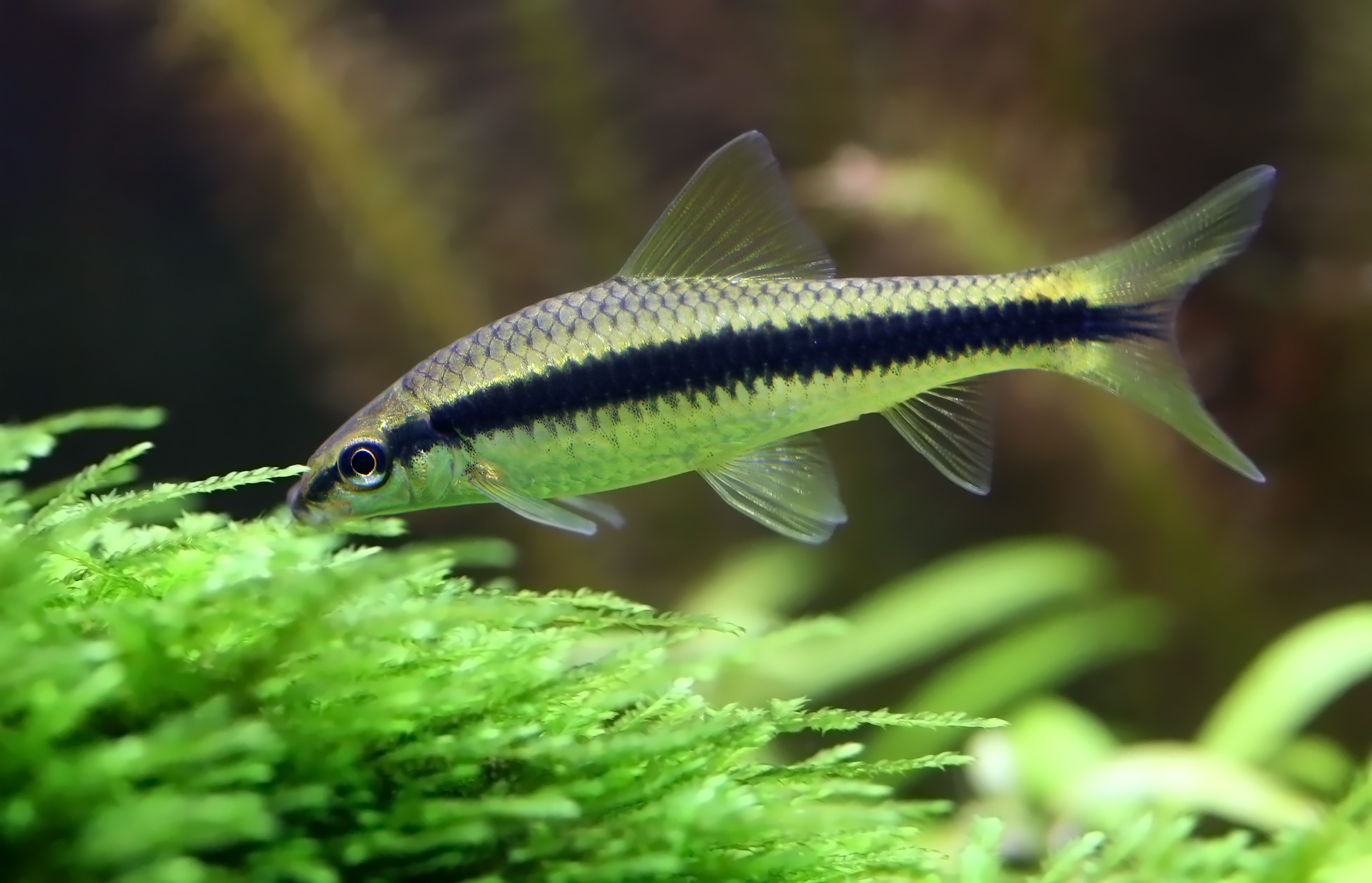
Positively identifying a true Crossocheilus oblongus at the shop comes down to four features, and you should check all four before committing to a purchase. First, the black horizontal stripe must extend all the way into the tail fin, breaking slightly into a zigzag or ragged edge as it enters the caudal rays — on the Flying Fox the stripe stops sharply at the base of the tail, giving a clean endpoint rather than a ragged continuation. Second, the SAE has a pair of tiny, often hard-to-see rostral barbels (whiskers) at the corners of the mouth only; the Flying Fox has two pairs, and the Chinese algae eater has none. Third, the unpaired fins of the true SAE are plain, transparent, and completely lack the bright red, orange, or black-and-yellow ‘flag’ markings found on the Flying Fox’s dorsal and caudal fins — if you see any colour on the fins beyond translucent grey, it is not an SAE. Fourth, the SAE’s body is slim and slightly elongated like a torpedo; the Chinese algae eater is visibly stockier and has a distinctive downward-facing sucker mouth, while the False SAE has a more rounded head profile. If a shop’s ‘SAE’ shows coloured fins, a sucker mouth, extra whiskers, or a stripe that doesn’t reach into the tail, it is not the fish you want. Ask the staff to double-check the scientific name against the invoice — serious stores will always be able to confirm, and a reluctance to verify is itself a warning sign. Where possible, bring a phone and look the fish up while you are standing at the tank.
The Colour Spectrum
✅ True SAE (Crossocheilus oblongus)
The fish you want. Slim torpedo body, silver-gold base, crisp black horizontal stripe from snout tip running unbroken into the caudal fin with a slightly ragged zigzag tail edge, clear unmarked fins, one tiny pair of rostral barbels only. Peaceful. The only commonly sold fish that actually eats black beard algae (BBA).
⚠️ Chinese Algae Eater (Gyrinocheilus aymonieri)
AVOID for community tanks. Stockier body, distinctive downward-facing sucker mouth used to attach to surfaces (and sometimes flat fish), no barbels at all, duller mottled brown-gold colour. Grows to 25 cm. Becomes increasingly aggressive with age and famously attaches to the flanks of flat-sided fish (angelfish, gouramis, discus) to rasp at their slime coat. Juvenile algae-grazing behaviour fades by about 10 cm.
⚠️ False SAE (Garra cambodgiensis)
Frequently mislabelled. Similar silver body and horizontal stripe, but the stripe ends cleanly at the caudal peduncle rather than extending into the tail. Body is slightly deeper and the head is more rounded. A passable general algae grazer — will not touch mature black beard algae. Harmless but not the fish you are paying for.
⚠️ Flying Fox (Epalzeorhynchos kalopterus)
More colourful cousin. Body shape is similar but fins carry distinctive bright markings — red or orange on dorsal and tail with black and white edging. Two pairs of barbels. Much more territorial, especially with its own kind and similarly shaped cyprinids. Largely ignores mature algae in favour of meaty foods.
⚠️ Siamese Flying Fox (Epalzeorhynchos munense)
Another occasional impostor rarely encountered in Australian shops but sometimes in mixed Asian wholesale shipments. Dark stripe present but body tone is greener, with a faint second golden line running above the black stripe. Fins may carry thin dark edges. Not a serious algae eater in the aquarium and more territorial than a true SAE.
Unlike most aquarium fish, there are no true selectively-bred colour morphs of the Siamese Algae Eater. Every SAE you encounter is the wild-type silver-gold with a black stripe. Commercial fish farms in Thailand, Malaysia, and Indonesia produce the vast majority of stock sold worldwide, almost all of it hormonally induced from brood stock because the species has never been reliably bred in pure home aquarium conditions. This also means that any SAE offered as a ‘long-fin’, ‘albino’, or ‘golden’ variety should be treated with immediate suspicion — at best it is a Flying Fox, at worst something else entirely. Buy SAEs in person whenever possible, ideally from a shop that keeps a dedicated planted display tank with visible algae-grazing activity. If you are ordering online and cannot inspect the fish, ask for a photograph of the actual stock showing the tail fin clearly — the stripe-into-tail feature is the single most reliable field marker. A reputable Australian supplier will never object to that request; anyone who does is telling you something you should listen to. One small note on colour change with mood and health: a stressed or sick SAE can temporarily display a ‘colour fade’ where the black stripe breaks into a dashed line and the body pales to grey. This is a stress response common across many Crossocheilus species and usually resolves within 24–48 hours once the fish settles. However, if the fade persists, the fish looks emaciated, or you see clamped fins alongside the faded stripe, check parameters immediately — SAEs are sensitive to nitrate creep and to sudden pH swings from aggressive CO2 dosing schedules.
Sexual Dimorphism
Crossocheilus oblongus is one of the most frustratingly monomorphic cyprinids in the trade. There is no reliable external difference between a mature male and a mature female outside of active spawning condition — no colour dichromatism, no fin extensions, no sexually dimorphic body shape that can be reliably called at the shop counter. A sexually mature, well-conditioned female carrying eggs will show a noticeably fuller abdomen for a period of days to a couple of weeks, and this is effectively the only visible difference most keepers will ever see. Commercial breeders in Southeast Asia distinguish the sexes not by eye but by gentle manual ‘stripping’ of brood stock under sedation, or by observing which fish respond to hormonal conditioning injections with visible egg development. Neither of those techniques is available — or advisable — to the home keeper.
For the home aquarist, this has a simple practical consequence: you will not be sexing your SAEs, and it does not matter. You are buying them for algae control in a community setting, not a breeding project. If you want a group of 3–5 to spread any mild territorial tension across individuals, just buy the group — statistically you will get a mix of sexes, and the group dynamic stabilises regardless of exact ratio. Anyone selling ‘sexed pairs’ of SAEs at a premium price is almost certainly guessing, and you are paying for that guess rather than any verified information. The only vaguely useful rule of thumb, and it is not much, is that the largest, stockiest individual in a mature group of 5+ SAEs is statistically more likely to be a dominant female; but even this is speculative and has no bearing on husbandry decisions. Treat the fish as a functionally single-sex species for husbandry purposes and focus your attention on health indicators — active stripe, alert behaviour, clean fin edges, steady appetite for biofilm grazing — which tell you far more about an SAE’s wellbeing than any attempt to identify its sex.
| Feature | Male | Female |
|---|---|---|
| Body Shape | Slightly slimmer overall, especially when viewed from above | Slightly fuller belly when sexually mature, especially if carrying eggs |
| Size at Maturity | Tends to be marginally smaller, 10–12 cm | Tends to be marginally larger, 11–14 cm |
| Stripe & Colour | Stripe and body identical to female — no colour dimorphism | Stripe and body identical to male — no colour dimorphism |
| Fin Development | Fins plain, clear; no extensions or special markings | Fins plain, clear; no extensions or special markings |
| Behaviour | Slightly more active patroller; may lightly chase other SAEs | Typically spends more time grazing on surfaces |
| Reliability of Sexing | Essentially impossible to confirm visually outside spawning | Essentially impossible to confirm visually outside spawning |
Water Chemistry Guide
6.5–7.5
ideal 7.0
24–26 °C
ideal 25 °C
5–15 dGH
Soft to moderately hard water tolerated — neutral is ideal
One of the SAE’s most attractive qualities, alongside its algae-eating utility, is its broad tolerance of typical community tank parameters. It does well anywhere from pH 6.5 to 7.5, at temperatures from 24 to 26 °C, and across a hardness range of roughly 5 to 15 dGH. This puts it squarely in the comfort zone of most planted community tanks — it fits easily with tetras, rasboras, gouramis and corydoras without anyone being pushed outside their preferred range. Australian tap water in most states sits comfortably within SAE tolerances with minimal adjustment, and even in harder-water regions the species adapts well as long as you are consistent and do not chase extreme parameters. In fact, SAEs are far more sensitive to sudden parameter swings than to any specific absolute value — a tank held rock-steady at pH 7.6 is far better for them than one oscillating between 6.8 and 7.4 because of aggressive CO2 on a timer.
What the SAE does demand is clean, well-oxygenated water with active flow. In the wild they inhabit the riffle and run zones of forest streams where current is brisk and oxygen saturation is high. They will survive in low-flow tanks but look dull and listless; give them a canister filter rated for slightly more than the tank volume, direct the spray bar along the back wall, and the fish will spend hours facing into the current, grazing the surfaces where biofilm and algae accumulate fastest. Weekly 25–30% water changes are important — like most active cyprinids, SAEs are sensitive to accumulated nitrate and organic waste, and a stale tank is one of the quickest routes to stripe fading and reduced appetite. If you see the black stripe go grey or patchy, check your nitrates first before worrying about disease: a nitrate reading above 40 ppm is already starting to stress the fish, and above 60 ppm you are into territory where the stripe fade becomes chronic and appetite drops enough to cause visible weight loss over weeks. A two-part test — nitrate and pH stability across a day — will almost always identify the problem before any medication becomes necessary.
Temperature matters in a subtler way. SAEs tolerate down to about 22 °C without visible distress, but their metabolism slows and grazing activity drops noticeably below 24 °C — the whole point of the fish is active feeding on algae, so keeping them cool is counterproductive. Conversely, above 27 °C they begin to show signs of oxygen stress, especially in tanks with heavy CO2 injection where dissolved O2 is already suppressed. The sweet spot at 25 °C gives brisk metabolism, strong appetite, and excellent long-term health. If you are co-keeping with discus or other warm-water fish that want 28 °C+, the SAE is not the right algae eater for that setup — consider otocinclus (cooler tolerant) or bristlenose (flexible across the range) instead.
Creating the Perfect Habitat
Plan for a minimum of 150 litres (40 US gallons) for a small group of SAEs, and think in terms of footprint rather than height — a 120 cm long tank is far better than a 60 cm tall one for this species. SAEs are restless, active swimmers that cover the full length of the tank many times per hour, particularly in the morning and late afternoon when they do most of their grazing patrols. Crammed into a nano tank, they quickly lose condition, stop grazing, and can turn on each other in ways that never happen in larger setups. Given proper room, they become one of the most entertaining residents in the aquarium: darting through open water, pausing vertically on a leaf to rasp a patch of algae, sometimes resting briefly on a flat rock or wood surface in a characteristic ‘tripod’ pose on their pelvic and caudal fins, and occasionally shoaling loosely with rasboras or other mid-water fish in unplanned but charming formations.
Aquascape for them the way you would for a planted community. Use a fine gravel or sand substrate — aquasoil is fine if you are running CO2. Plant densely along the back and sides, leaving a clear open ‘highway’ down the front or centre for swimming. Driftwood is almost mandatory: SAEs love grazing biofilm off wood surfaces, and a couple of sizeable driftwood pieces with crevices give them retreat options that significantly reduce stress and any mild intra-species sparring. A few broad-leaved plants such as Anubias, java fern or Cryptocoryne wendtii are excellent because their sturdy leaves resist being grazed bare while still growing useful biofilm and algae for the fish to patrol. These plants also serve as resting perches — SAEs will quite often park themselves on a broad Anubias leaf for several minutes at a time, using the leaf like a hammock. Avoid very delicate carpet plants in a small-tank SAE setup — the fish can uproot young carpets when they dive for food, though a well-established carpet in a tank with existing SAEs tends to be left alone.
Lighting needs careful thought. Moderate to strong lighting encourages algae growth (which is what you want them to eat) but pair it with enough fast-growing stem plants to keep nitrate uptake in check. A good balance for an SAE tank is approximately 7–9 hours of moderately bright planted-tank LED per day, tuned so that a low-to-moderate film of algae accumulates on the hardscape and glass over the course of a week. If your tank is so clean that no algae ever develops, your SAE has nothing to do and will start begging for prepared food — defeating the whole point of keeping the fish. Some deliberate ‘grazing real estate’ in the form of roughened hardscape or unglazed pottery is useful. Keep the lid secure: SAEs are capable jumpers when startled, particularly during water changes or when a tank mate gives them a scare. A full glass cover with no gaps larger than a finger-width is essential. More than one keeper has come home to find a dried-out SAE on the floor behind the cabinet because a cable hole was left open.
Circulation and oxygenation are the final pieces. Aim for total flow of 5–8 times the tank volume per hour, split between filter return and optional small powerheads if the tank is long. Position outputs so that water moves across the full length of the tank rather than all circulating in one corner — SAEs will naturally drift into flow zones when they want exercise and retreat to slack water behind plants or wood when they want to rest. Oxygenation matters because SAEs come from well-aerated stream habitats; if you run heavy CO2 injection during lights-on, make sure surface agitation picks up during lights-off to maintain O2 saturation overnight. An air stone on a timer opposite to the CO2 schedule is cheap insurance.
Tank
Minimum 150 L (40 gal); 200–250 L strongly recommended for a group of 3–5 and long-term comfort. Prioritise footprint over height — 120 cm length is ideal
Filter
Canister filter rated 1.5–2x tank volume per hour, with spray bar for directional flow; or strong HOB with adjustable flow. Aim for 5–8x turnover total
Heater
100–200 W adjustable heater set to 25 °C, properly sized to the tank volume. Consider dual heaters in large tanks for redundancy
Lighting
Moderate to moderately strong planted-tank LED on a 7–9 hour photoperiod — encourages algae for grazing without runaway blooms
Substrate
Fine gravel, sand, or aquasoil. SAEs sift through the top layer picking at fallen food but do not dig aggressively
Driftwood
Multiple pieces of spiderwood, mopani, or Malaysian driftwood — critical for biofilm, grazing surfaces, and resting spots
Plants
Dense background planting (Vallisneria, Rotala, Ludwigia), broad-leaved epiphytes (Anubias, java fern, Cryptocoryne), and a few floaters for light diffusion
Secure Lid
Full glass cover or tight-fitting hood with all cable holes sealed — SAEs jump when startled, especially during netting, water changes, or sudden room movements
What to Feed
Here is the single most important rule of SAE keeping, and one that nearly every new owner gets wrong: a well-fed SAE is a lazy SAE. The Siamese Algae Eater is an omnivore with a strong preference for algae and biofilm in the wild, but in the aquarium it will happily eat everything offered — flakes, pellets, wafers, frozen bloodworms, brine shrimp, blanched vegetables, and scraps left by other fish. Given the choice between pre-prepared food that requires no work and a tough tuft of black beard algae that needs serious rasping, any sensible fish picks the easy option. Over-feed your SAE and it will simply stop eating algae altogether, which is almost always what prompts owners to write angry online reviews claiming ‘my SAE never touches BBA’. In every single case where we have investigated a ‘my SAE won’t eat algae’ complaint, the keeper has been feeding either twice daily, or multiple times daily, with a mix of flake and frozen food. The fish is full. That is the entire problem.
The correct feeding strategy is restraint, not generosity. Let the SAE earn most of its calories by grazing the tank. Offer a small amount of a quality sinking algae wafer or spirulina-based pellet only two or three times a week, and once a week provide a piece of blanched vegetable — a 2 cm disc of zucchini, a small chunk of cucumber with the skin on, or a blanched spinach leaf, weighted to the bottom with a veggie clip or a stainless steel fork. Boil the vegetable briefly (30–60 seconds depending on thickness) to soften it, then drop it in after lights-out if you want the SAE to have first crack at it before snails and other tank mates move in. Once or twice a week you can offer a small pinch of frozen bloodworms, daphnia, or brine shrimp as a treat — this keeps the fish in excellent condition and enriches its behaviour without pushing it into full satiation. That is enough. The tank itself, with its biofilm on driftwood and algae on hardscape, provides the bulk of the daily calories.
Most new keepers significantly over-feed their SAEs in the first few weeks out of a well-meaning but counterproductive generosity. If your fish is refusing to touch algae after a month, cut the supplemental feeding roughly in half for two weeks and observe. In almost every case, the grazing resumes promptly once hunger kicks in. This is not cruelty — an SAE is a fish evolved to earn its living by working surfaces for low-calorie plant matter. A lean, active, grazing SAE is the natural state; a plump, sedentary, algae-ignoring SAE is an unhealthy aquarium ornament that will often die earlier from obesity-linked organ issues. Think of it the way you might think of feeding a working cat that is meant to keep mice down: over-feed it and it stops hunting.
A well-managed SAE will clear out black beard algae over a period of weeks, not days — BBA is a tough, fibrous red alga and even the SAE has to work at it. Patience is essential. The most effective approach is to combine SAE grazing with manual removal of the worst infested leaves, a brief reduction in lighting intensity, and attention to CO2 stability, because BBA is often triggered by unstable CO2 levels. Do not expect the SAE to fix an environmental problem by itself — it is a finisher, not a miracle cleaner. For other algae types, the SAE is also happy to handle soft green hair algae, green spot algae on older leaves, staghorn algae, and the thin diatom and biofilm layer that develops on glass and hardscape. It is less effective against green dust algae on glass (use a magnet scraper) and does not touch blue-green algae (cyanobacteria, which is a bacterium rather than a true alga and requires different treatment such as ErythroMycin dosing or blackout periods). It also largely ignores green water (suspended algae) since it is not adapted to filter-feed from the water column — for green water use a UV sterilizer or diatom filter instead.
One additional note on juvenile versus adult diet: young SAEs (below about 6 cm) are far more enthusiastic algae grazers than fully grown adults. This is an ecological pattern common in many cyprinids, where juveniles rely heavily on abundant low-calorie plant food and become more omnivorous as they mature. For this reason, many experienced keepers deliberately buy SAEs at 4–5 cm and let them grow out in the target tank; the algae clearance is strongest in the first year, and the fish establishes its grazing habits during that critical period. An adult SAE purchased at 10 cm can still be effective, but is more likely to have been ‘spoiled’ by supplementary feeding at the wholesaler or shop and may take several weeks of lean feeding before it re-learns to graze aggressively. This is the single most common cause of the ‘my SAE doesn’t work’ complaint, and the fix is almost always dietary discipline rather than a different fish.
Reproduction & Breeding
Wild Trigger
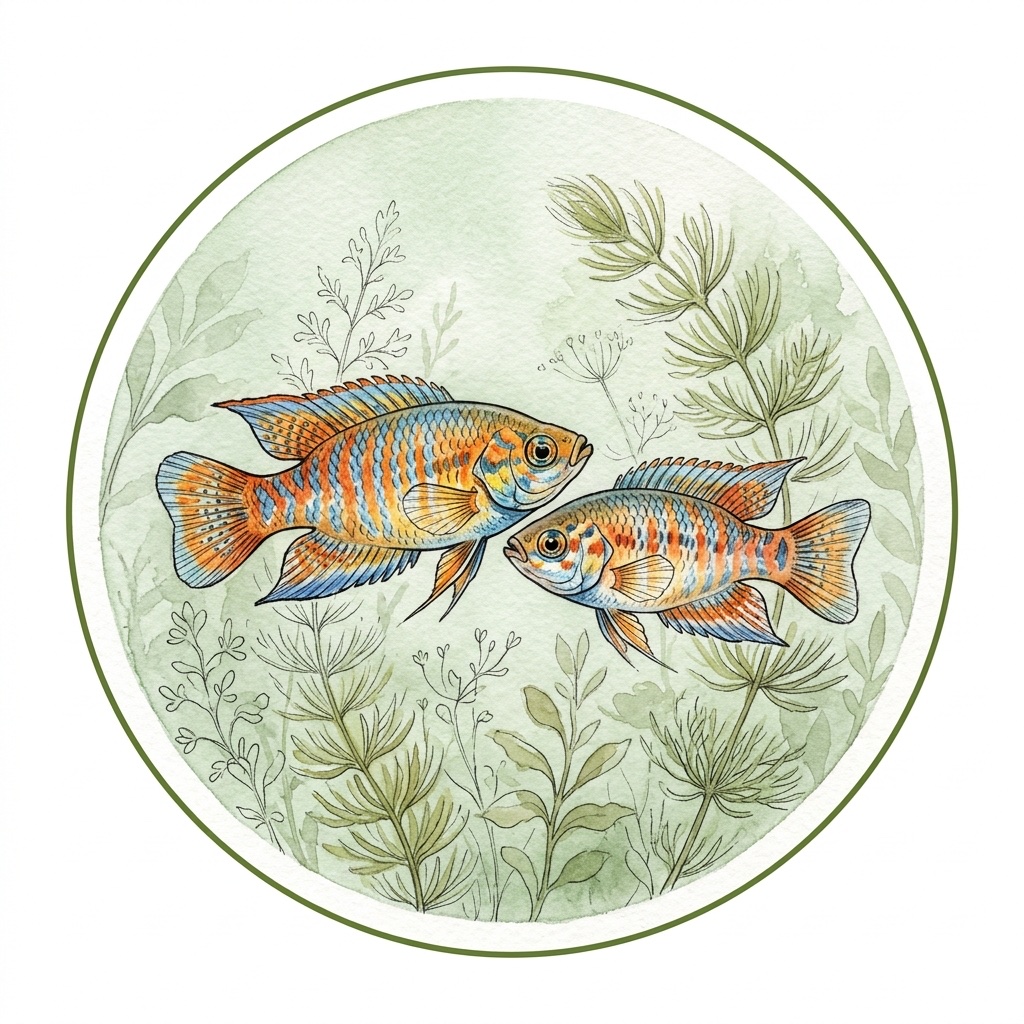
Monsoon Flood Pulse
Rising water, temperature drop, pH shift
Wild Day 0
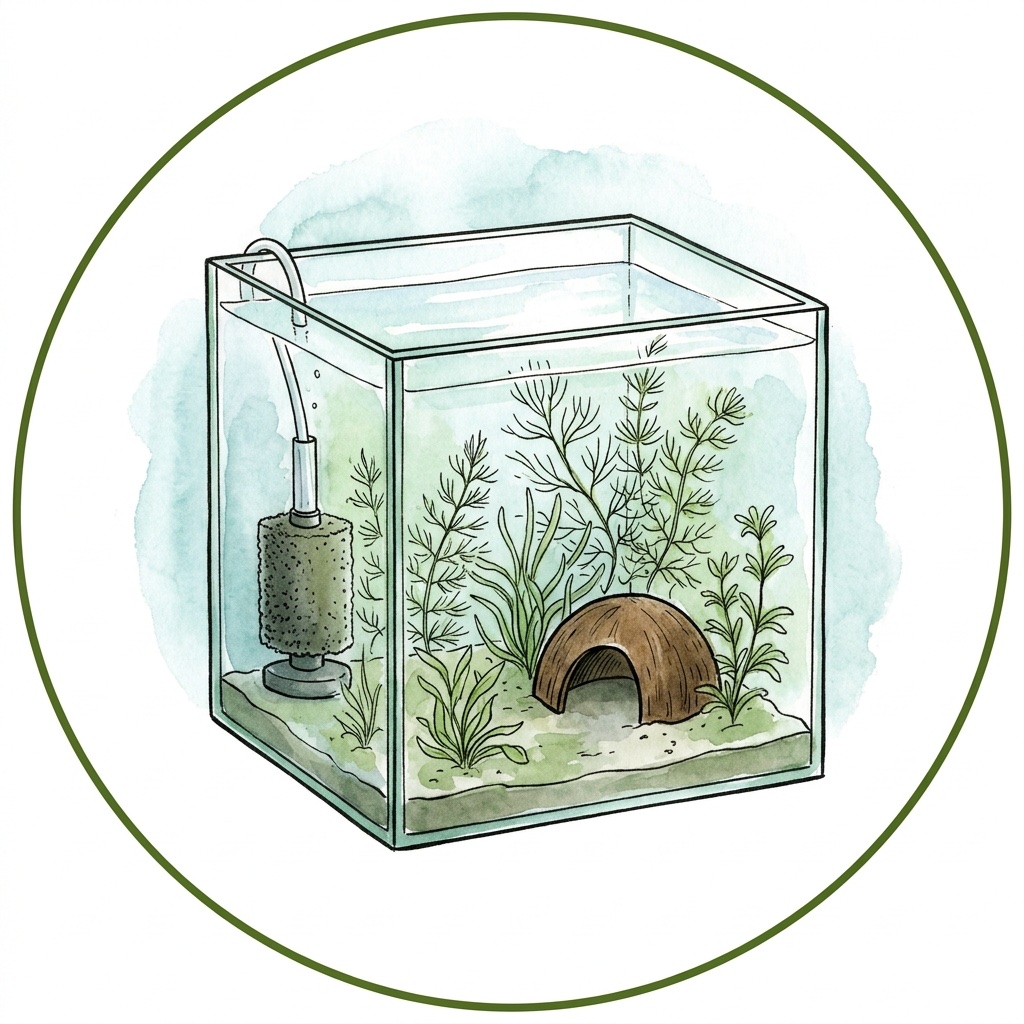
Spawning Event
Egg scattering in flooded vegetation
Wild Day 2–3
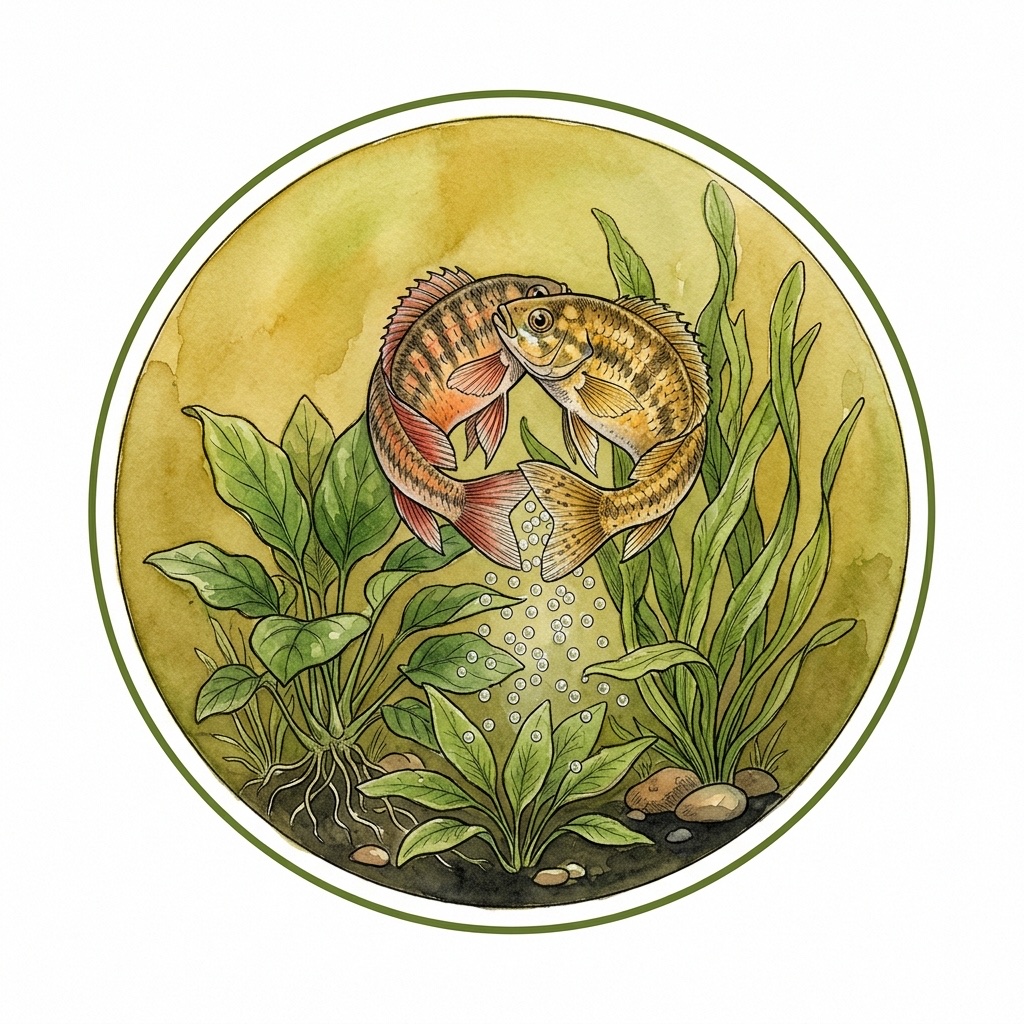
Egg Hatch
Free-swimming within 3–4 days of yolk absorption
Commercial Reality
Hormone-Induced Stripping
Farm-only process using synthetic gonadotropin
Monsoon Flood Pulse
In the wild, Crossocheilus oblongus spawns in response to the onset of the Southeast Asian monsoon season. Heavy rains flood forest streams, dropping the pH by 0.5–1.0 units, softening the water through dilution of dissolved minerals, cooling it by 2–3 °C, and dramatically increasing flow as riffles and runs double or triple in volume within hours. These compound cues — not just one — trigger mature adults to migrate upstream or into flooded marginal zones to spawn. Reproducing this complex combination in a home aquarium is essentially impossible; even professional hatcheries rely on synthetic hormone injection rather than attempting full environmental simulation. The handful of hobbyist reports of ‘accidental’ SAE spawning in large well-managed aquaria have never been independently replicated.
Spawning Event
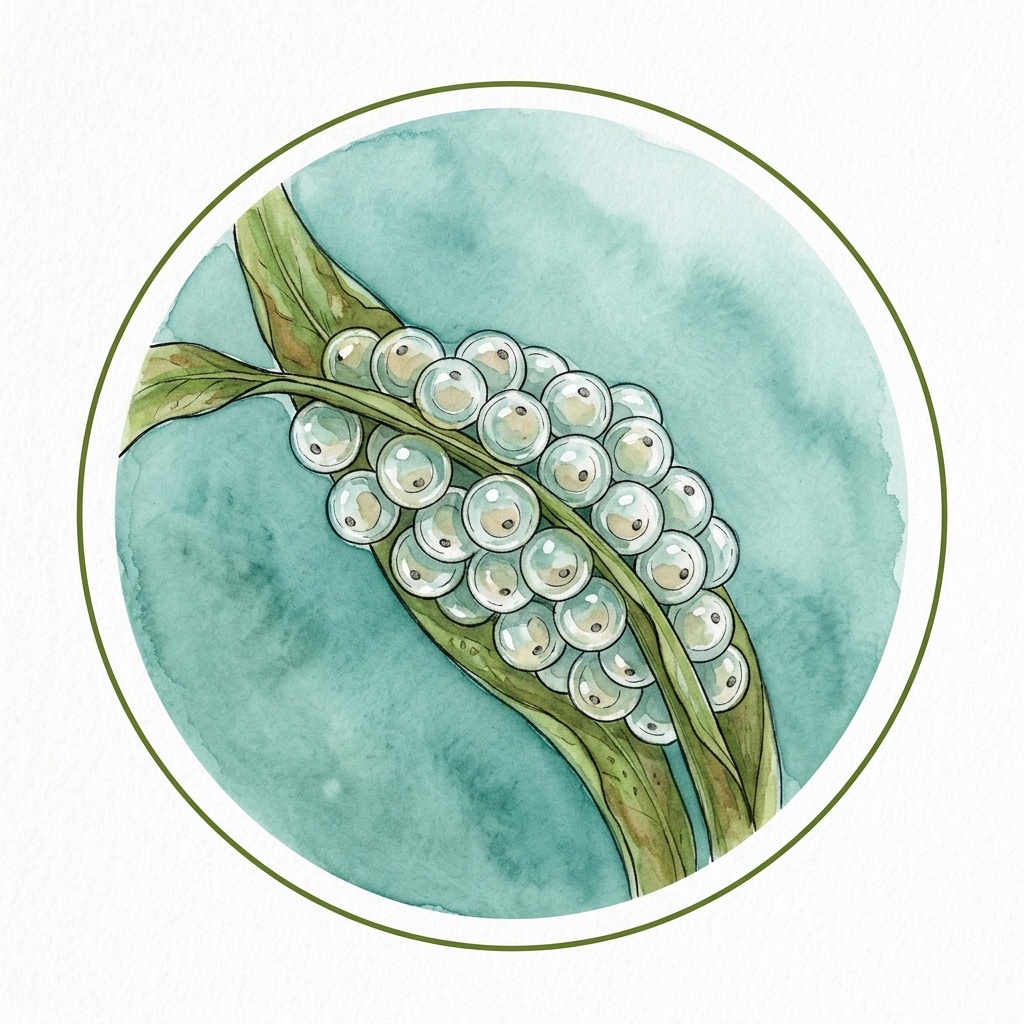
In natural spawning, pairs or small groups scatter several hundred translucent eggs among submerged vegetation, leaf litter, and root mats in shallow, freshly flooded areas where fast-moving water keeps the eggs oxygenated and spreads them out of reach of most predators. No parental care is given; adults return to the main stream channel once spawning is complete. The whole event may last only hours and is thought to coincide tightly with pre-dawn light levels. This behaviour has never been reliably reproduced in a home aquarium, and sporadic attempts to induce it with dramatic water changes and temperature swings have not produced consistent or repeatable results that would let a hobbyist plan around it.
Egg Hatch
Eggs hatch after approximately 48–72 hours at 25–26 °C in the wild. Fry are tiny, poorly pigmented, and survive on yolk sac reserves for a further 2–3 days before becoming free-swimming and beginning to feed on infusoria, rotifers, microscopic biofilm, and fine plant matter. Fry mortality in the wild is extremely high — estimates suggest fewer than one in a thousand eggs reaches juvenile size — and the species compensates with very high fecundity per female, often several thousand eggs per spawn in large specimens. The characteristic black stripe does not appear until fry reach about 2 cm, several weeks after hatching.
Hormone-Induced Stripping
Essentially all Siamese Algae Eaters sold worldwide are produced at commercial hatcheries in Thailand, Malaysia, and Indonesia. Mature brood stock are injected with synthetic gonadotropin hormones (typically hCG or a GnRH analogue) to induce spawning readiness within 24–48 hours, then gently stripped of eggs and milt under mild sedation for controlled fertilisation in shallow trays or raceway channels. Fry are raised in flow-through green-water systems rich in rotifers and infusoria, and grown to 3–4 cm before being shipped to wholesalers. This intensive process is the reason SAEs are reliably available worldwide at reasonable prices despite being effectively unbreedable in home conditions — and the reason hobbyist-bred ‘local’ SAEs simply do not exist on the market.
Tank Mate Guide
The Siamese Algae Eater is one of the most underrated community fish in the hobby — not just because of its algae-eating utility, but because it is genuinely peaceful with almost every other species it might reasonably share a tank with. In a properly sized tank (150 L or larger) it shows essentially no aggression toward tetras, rasboras, gouramis, corydoras, loaches, or peaceful bottom-dwellers. The one caveat is intra-species: in a small tank, a group of 2 or 4 SAEs can develop a pecking order where one dominant individual harasses the others, sometimes to the point of preventing subordinates from feeding. There are two workable solutions to this, and they are the only two that genuinely work. The first is to keep a single SAE on its own — they do not require conspecifics to thrive, this is not a schooling species like a tetra, and many of the healthiest and most effective SAE-kept tanks on record have a lone individual. The second is to keep a group of 5 or more in a larger tank so that any mild territoriality is spread across many individuals and no single fish becomes the sustained target. A group of 3 is the worst option — enough fish for conflict to develop, not enough to diffuse it across the group. As SAEs age (4+ years) some individuals become slightly more territorial with their own kind, which is another reason the larger-group or solo strategy works far better than pairs or threes.
Avoid housing SAEs with two clear categories of fish: dedicated fin-nippers (tiger barbs, Serpae tetras in small groups, some rosy barbs), and large aggressive cichlids that will treat the slim striped body as a target. Mid-sized to large South American cichlids like oscars, large severums, or green terrors will quickly kill an SAE; African rift-lake cichlids are doubly wrong because they also require hard alkaline water that the SAE tolerates poorly. Red-tailed and rainbow sharks deserve their own mention: they share enough body plan with the SAE to trigger aggressive territorial responses, and the result is typically a harassed SAE that hides permanently or dies of chronic stress. Keep SAEs with peaceful, similarly-sized-or-smaller community fish, and they are one of the most trouble-free tank mates available.
The SAE is also unsuitable for dedicated shrimp-breeding tanks — while it ignores healthy adult cherry shrimp or amanos, it will happily pick off shrimp fry, so you cannot realistically maintain a growing shrimp colony in the same tank. If you want both SAEs and a breeding shrimp colony, run two tanks. In a mature planted community with well-established adult shrimp and no breeding goal, an SAE can coexist with the existing shrimp without meaningful predation. For a standard planted community with peaceful mid-sized fish, the SAE is as easy and productive a tank mate as you will find in the hobby — and for many planted-tank keepers, it is the single fish that turns a BBA-infested tank into a manageable one.
| Species | Why | |
|---|---|---|
| ✅ | Neon Tetra | Small, peaceful mid-water schooler that ignores and is ignored by the SAE. Classic planted-tank pairing with perfectly overlapping water parameters |
| ✅ | Cardinal Tetra | Slightly larger than neons with the same peaceful disposition; overlapping water parameters work perfectly with SAEs and the size makes them predation-safe |
| ✅ | Harlequin Rasbora | Asian origin like the SAE, matching water preference, peaceful mid-water schooler that complements the SAE’s bottom-to-mid zone activity with beautiful biotope pairing |
| ✅ | Honey Gourami | Gentle surface-zone centrepiece fish with similar parameter needs; completely non-aggressive and unbothered by SAE activity. Elegant warm-water community combination |
| ✅ | Pearl Gourami | Medium-sized peaceful gourami that fits the same larger planted tank footprint an SAE needs; they occupy different zones and complement each other’s activity patterns |
| ✅ | Corydoras (Sterbai) | Bottom-dwelling peaceful catfish that tolerates the same warm, neutral parameters. SAEs and corys coexist without any conflict whatsoever |
| ✅ | Otocinclus | A complementary algae eater rather than a competitor — otos handle soft green algae and biofilm on plant leaves while SAEs handle tougher algae types including BBA and green spot |
| ✅ | Amano Shrimp | Excellent algae-team partner. Amanos clear soft green hair algae that SAEs are less enthusiastic about; SAEs are too peaceful to predate adult amanos at 3 cm+ |
| ✅ | Kuhli Loach | Nocturnal bottom-dweller from the same Southeast Asian region; SAEs rest at night while kuhlis emerge, so zones and activity schedules don’t overlap |
| ✅ | Bristlenose Pleco | Another useful algae partner. Bristlenose handle large flat glass surfaces and driftwood, while SAEs handle plant leaves and hardscape crevices — zero overlap, full coverage |
| ❌ | Tiger Barb | Notorious fin-nippers that will harass slender, laterally-striped fish like the SAE. Keep these two species in separate tanks — no exceptions |
| ❌ | Chinese Algae Eater (Gyrinocheilus aymonieri) | Aggressive pseudo-look-alike. Will outcompete the SAE in small tanks and can attack larger flat-sided fish in the community. Never stock both together |
| ❌ | Redtail / Rainbow Shark | Similar body plan and cyprinid swimming behaviour triggers strong territorial response from red-tailed sharks. Expect persistent harassment of the SAE, often ending in stress deaths |
| ❌ | Cherry Shrimp (breeding colony) | Adult SAEs largely ignore adult cherry shrimp but will opportunistically eat newly-hatched shrimp fry, making a breeding shrimp colony impractical. Keep shrimp breeding in a separate tank |
| ❌ | Small Fish Fry | SAEs are opportunistic omnivores and will eat free-swimming fry of smaller species; don’t rely on them for a breeding tank where fry survival is important |
Quick Reference
| Scientific Name | Crossocheilus oblongus (syn. C. siamensis) |
| Adult Size | 10–14 cm |
| Lifespan | 8–10 years |
| pH | 6.5–7.5 (ideal 7.0) |
| Temperature | 24–26 °C (ideal 25 °C) |
| Hardness | 5–15 dGH |
| Min Tank Size | 150 L (40 gal) |
| Group Size | 1 alone, or 5+ in a larger tank (avoid 2–4) |
| Diet | Omnivore / algivore — keep slightly lean to keep them working |
| Care Level | Beginner–Intermediate (correct ID at purchase is the hard part) |
| Temperament | Peaceful; mildly territorial with own species in cramped tanks |
| Tank Position | Bottom to mid; active across all zones |
| Breeding | Not possible at home — commercial hatchery stock only |
| Key Strength | Only commonly sold fish that reliably eats black beard algae (BBA) |
| ID Marker | Black stripe runs unbroken from snout tip into the tail fin |
Related Products
Reviews
Clear filtersThere are no reviews yet.