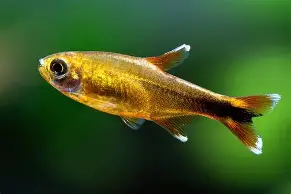
🪨 Species at a Glance
| Scientific Name | Hasemania nana (monotypic genus) |
| Common Names | Silver Tip Tetra, Copper Tetra, Hasemania Tetra |
| Family | Characidae |
| Origin | Eastern Brazil — Rio Sao Francisco basin and nearby coastal drainages |
| Adult Size | 3-4 cm (1.2-1.6 in) |
| Lifespan | 4-6 years in aquaria |
| Care Level | Beginner — one of the hardiest community tetras |
| pH | 6.0-7.5 |
| Temperature | 22-28 °C (72-82 °F) |
| Hardness | 4-15 dGH |
| Min. Tank | 60 L+ for a proper school of eight or more |
| Diet | Omnivore — flake, micro pellets, frozen daphnia, bloodworm, brine shrimp |
| Tank Position | Middle — active open-water swimmer |
| Community Safe | Yes with caveats — avoid long-finned tank mates |
| Schooling | Active schooler — eight or more strongly recommended |
| Price (AUD) | $8 per fish |
Name & Origin
The common name Silver Tip Tetra could not be more literal: every fin on a mature specimen is capped with a bright, almost frosted silvery-white tip. Look closely at a healthy male in good condition and you will see this crisp highlight on the dorsal fin, the anal fin, the upper and lower lobes of the caudal fin — and, in a quirk that makes this species truly unique, there is no adipose fin at all, so the silver markings on the dorsal, caudal, and anal fins alone define the pattern. The effect, against the deep copper-red body of a conditioned male, is striking: like molten metal trailing sparks. In Australia you will also hear them called Copper Tetras, a name that captures the other half of the visual story — the warm, glowing body colour that deepens dramatically when the fish is well fed, settled, and in a school of enough friends to feel safe. Between the two common names, Silver Tip Tetra is the older and more widely used label in Europe and North America, while Copper Tetra has gained traction in Asia-Pacific markets and reflects how the fish looks in its best-conditioned adult form rather than the fin-tip detail that gives it the other name. Both names refer to exactly the same fish.
The scientific name Hasemania nana has its own story to tell. The genus Hasemania was erected in 1917 by the American ichthyologist Carl H. Eigenmann, one of the most prolific characin taxonomists of his era, who named it in honour of John Diederich Haseman, a Stanford University-trained zoologist who had conducted extensive fish-collecting expeditions in Brazil in the early 1900s. Haseman made three major trips into the Brazilian interior between 1907 and 1910, collecting thousands of specimens across the Amazon, Paraguay, and Sao Francisco drainages, and the genus named after him is a small tribute to that work. The species epithet nana comes from the Latin for “dwarf” — an apt description for a characin that maxes out at roughly four centimetres. Interestingly, Hasemania nana is the only described species in its genus — making it a monotypic genus, which in biological terms simply means the genus contains exactly one species. Any fish sold as Hasemania in the hobby is therefore this species and this species alone, with no close relatives in the same genus and no risk of hybrid confusion at the point of purchase. You may occasionally see older literature refer to the species as Hemigrammus nanus or Tetragonopterus nanus, both of which are junior synonyms from earlier classifications that have since been superseded.
What really sets Hasemania nana apart taxonomically, however, is the absence of the adipose fin. That is the small, fleshy, rayless fin sitting between the dorsal and caudal fins that is present in virtually every other characin — every other tetra you have ever kept, from Neons and Cardinals to Rummy Noses, Black Skirts, Congos, Emperors, Diamonds, and Ember Tetras. Silver Tips are the notable exception. It is a detail most aquarists never notice, but once you know to look, it becomes instantly obvious and is a reliable visual ID marker when Silver Tips are mixed in a mixed-tetra display tank at the shop. Compare a Silver Tip side-by-side with a Serpae Tetra or a Pristella Tetra and the difference is immediate: the other species have a little fleshy bump on the back between the dorsal and tail, while the Silver Tip’s back runs cleanly from the trailing edge of the dorsal all the way to the base of the caudal fin. This feature is not just a curiosity — it is one of the defining characters used by ichthyologists to separate Hasemania from its closest relatives in the subfamily Tetragonopterinae, and it was the principal reason Eigenmann felt justified in erecting a new genus for the single species rather than lumping it in with the much larger Hemigrammus.
Colour Varieties
🟠 Wild-type Hasemania nana
The standard (and only) commercial form — a warm copper-gold body with clean white-silver tips on dorsal, anal, and caudal fins. No line-bred variants exist.
Unlike many popular tetras that have been pushed through generations of selective breeding to produce fancy albino, gold, or long-fin variants, the Silver Tip Tetra has remained refreshingly unadulterated. The hobby has not yet produced a line-bred albino Hasemania nana, no long-fin mutation, no designer colour strain, no artificially-dyed fluorescent variant. What you see in a shop tank is what wild-caught and commercially farmed fish have always looked like: the wild-type form, straight from the Rio Sao Francisco drainage, essentially unchanged by human selection. This is genuinely refreshing in an era where many small tetras have been pushed through so many breeding cycles that finding the original wild form has become difficult. If you buy a Silver Tip, you are buying the fish that naturalists first described over a century ago.
That said, there is meaningful variation in how intense the copper body colour becomes, and it is almost entirely driven by husbandry and sex. A stressed, under-fed, poorly-lit Silver Tip in a bare shop tank can look a washed-out tan colour, barely distinguishable from a rusty gold, and many aquarists see their first Silver Tips at the wholesaler or big-box store and dismiss the species as bland. Take the same fish home, give it a dark substrate, subdued lighting, real plants, a proper school of eight or more companions, and two weeks of high-quality food, and you will watch the same fish develop into a deep, glowing copper-red that is almost unrecognisable. The silver fin tips also brighten significantly under good conditions — they can become almost iridescent in well-conditioned males, catching the light with every flick of the tail and producing that trademark flashing-sparkle effect when the school executes a synchronised turn.
Females are always paler than males — more of a warm buttery tan than a true copper — and their fin tips, while still present, are noticeably less crisp and less reflective. This sexual dichromatism is present from a fairly young age: by the time Silver Tips reach 2.5 cm and are approaching sexual maturity, you can already see the males beginning to colour up. The final adult colour intensity is reached at roughly 8-10 months of age and holds through the fish’s 4-6 year lifespan. Older males, in particular, develop the deepest and most saturated copper tone — a fish in its third year can be genuinely spectacular.
For maximum visual drama, a Silver Tip display tank benefits from a male-heavy ratio (something like three males to two females), a dark substrate (black sand or fine dark gravel), tannin-stained water from Indian almond leaves or alder cones, and moderate to subdued lighting filtered through floating plants. Under those conditions the school literally shimmers as the fish twist and turn through shafts of light, with the copper bodies glowing against the dark backdrop and the silver fin tips flashing like sparks. Photograph the tank under soft side-lighting rather than overhead and the effect is striking — Silver Tips are one of the most photogenic tetras in the hobby precisely because the copper-and-silver contrast renders so beautifully on camera.
Male vs. Female
Silver Tip Tetras display clear and obvious sexual dimorphism — which is genuinely unusual for tetras of this size. In most small characin species, telling males from females requires peering at body profiles from above, waiting for females to carry eggs, or simply buying enough fish that statistics guarantees both sexes. With Silver Tips, a single glance at a well-conditioned adult tells you everything. The colour difference alone is enough: mature males glow a deep, saturated copper-red, while females are a pale, buttery tan. It is the kind of colour contrast you normally expect from cichlids or livebearers, not from a peaceful little schooling tetra. This makes Silver Tips one of the few small tetras where you can confidently hand-pick a specific male-female ratio at the shop simply by looking at the fish — a rare luxury in the characin world.
The silver fin tips are the second obvious indicator. On a male, they are crisp, bright, and almost iridescent — the defining visual feature that gives the species its English name. On a female, the tips are present but visibly softer, less contrasty, and the dorsal and anal fins themselves are shorter and more rounded rather than subtly pointed. Body shape reinforces the story: males are slim and slightly elongated, while females are rounder through the belly, especially once sexually mature. A gravid female carrying eggs develops a pronounced pot-bellied silhouette that is unmistakable from above. If you look down into the tank on a group of conditioned fish, the females look like little tan almonds and the males look like slim copper spindles — two clearly different shapes.
Behavioural differences are also visible once you spend time watching the school. Males spend a meaningful fraction of their day displaying to each other — flaring fins, briefly chasing rivals away from preferred positions in the group, and jockeying for visual prominence. It is ritualised, not violent, and it is one of the reasons a male-heavy school is so entertaining: there is always something to watch. Females, by contrast, tend to hang quietly in the centre of the school, feeding steadily and generally ignoring the male drama around them. During spawning periods, males become significantly more active toward females, performing figure-eight swimming patterns and brief embrace attempts as they try to coax the females into scattering eggs.
For community tank purposes, a slightly male-heavy ratio (roughly three males to every two females, or even two-to-one) produces the most vivid visual impact because you are loading the school with the deeper copper colour. However, if you intend to breed them, you want the opposite: more females than males so that males have multiple spawning partners to chase and each female is less likely to be harassed into exhaustion. For most aquarists not breeding, buy eight to ten at random and you will end up with a beautiful, visibly mixed school that shows off both the bright males and the subtler females. The contrast between the two sexes is part of the charm and makes the school visually richer than a monochrome display would.
| Feature | Male | Female |
|---|---|---|
| Body colour | Deep, glowing copper-red — almost metallic in peak condition | Pale buttery tan to soft gold — noticeably less saturated |
| Silver fin tips | Crisp, bright, almost reflective white-silver | Present but softer, less defined, slightly duller |
| Body shape | Slim, streamlined, slightly more elongated | Noticeably rounder belly, especially when gravid |
| Size at maturity | 3-3.5 cm — typically the smaller sex | 3.5-4 cm — marginally larger and heavier-bodied |
| Fin shape | Anal and dorsal fins slightly more pointed and elongated | Fins shorter and more rounded |
| Behaviour | More active, display-oriented, will flare fins at rivals | Calmer, tends to hang in the centre of the school |
Water Parameters
6.0–7.5
ideal 6.8
22–28 °C
ideal 25 °C
4–15 dGH
Soft to moderately hard — adaptable to most tap water
If you have ever been told that tetras are delicate, water-chemistry-obsessed fish that demand blackwater conditions, the Silver Tip Tetra will quickly set you straight. This is one of the hardiest, most tolerant small characins in the hobby — a genuinely beginner-friendly species that will happily adapt to almost any sensible community tank setup. In their native habitat in the Rio Sao Francisco basin of eastern Brazil, they experience relatively soft, slightly acidic water with seasonal fluctuations in flow and temperature as the region moves between wet and dry seasons, but the species has been bred in captivity for generations across Europe, Asia, and Australia, and modern commercial stock is comfortable across a remarkably wide parameter range. Most of the Silver Tips sold in Australian aquatic shops have never seen the Sao Francisco — they are third or fourth generation tank-bred stock from commercial hatcheries in Eastern Europe or Southeast Asia, fully acclimated to municipal water with minimal chemistry fuss required.
In practical terms, this means Silver Tips will thrive in the pH range most Australian tap water already falls into (6.8-7.6), and they tolerate hardness from soft rainwater-supplemented tanks all the way up to the moderately hard, alkaline tap water common in many cities. The ideal range is roughly pH 6.0-7.5 with hardness between 4 and 15 dGH. There is no need to mess with RO water, peat filtering, or blackwater botanicals unless you want to — though adding Indian almond leaves or alder cones will deepen the copper body colour and is aesthetically pleasing. If your tap water sits comfortably in the neutral-to-slightly-alkaline zone, just age your water change water overnight, dechlorinate it, match the temperature, and you are good to go. No special preparation needed.
Temperature tolerance is equally generous: anywhere from 22 to 28 degrees Celsius is fine, with 25 being the sweet spot for the best combination of colour, activity, and longevity. Avoid the very warm end of the range for long-term husbandry — fish kept chronically above 27 degrees tend to have shorter lifespans and reduced breeding activity, their metabolism running at a pace their cardiovascular system cannot sustain indefinitely. In a room-temperature Australian tank in a temperate climate, a basic adjustable heater set to 25 degrees is all you need, and in true tropical climates you may not need a heater at all for most of the year. Silver Tips also handle short-term cooler spells (down to 20 degrees for a day or two during a power outage in winter, for example) better than many tropical fish — another point in their favour for less-than-perfect home setups.
The one place Silver Tips do demand attention is stable water quality. Like all tetras they respond poorly to nitrate spikes, ammonia, or sudden pH crashes. A reliable weekly water change of 20-30 percent, a properly cycled filter, and avoiding overstocking or overfeeding are the three habits that will keep a Silver Tip school healthy for their full 4-6 year lifespan. Nitrates should be kept below 20 ppm; sustained exposure to 40 ppm or higher causes chronic stress, faded colour, and increased disease susceptibility. Ammonia and nitrite should always read zero on a cycled tank; any detectable reading means something is wrong with filtration or stocking level. If you test your water monthly and change water weekly, you will never run into trouble with this species.
Tank Setup
Silver Tip Tetras are genuinely active, energetic fish — noticeably more busy than Neons or Cardinals, and closer in behaviour to a small barb or a Danio than to a slow-cruising Rummy Nose. They dart, chase, flare fins, and constantly reshuffle their position within the school. Watching a group of ten Silver Tips for five minutes is like watching a perpetual motion machine — they rarely stop, rarely pause, and the school constantly reshapes itself as individuals move from front to back and side to side. Tank design needs to accommodate this energy level with generous open swimming space through the middle of the water column, combined with dense planting around the edges for security and visual contrast.
The recommended minimum tank size is 60 litres for a proper school of eight or more, but a longer 80-90 cm tank of 100 litres or larger is where the species really comes alive. A longer tank lets the school stretch out laterally, develop proper swimming momentum, and display the flashing-copper-and-silver effect at full scale. Tall narrow cube tanks are less suitable — the fish want horizontal runway, not vertical real estate. If you are planning a display aquascape around Silver Tips as the feature fish, aim for a tank that is at least 60 cm long, and ideally 80 cm or longer. The difference in how the school behaves in a long versus short tank is dramatic: in short tanks they can look agitated and over-busy, while in long tanks they spread out and settle into the graceful back-and-forth runs that show the species at its best.
For substrate, dark colours dramatically enhance the copper body colour by reducing light reflection from below and providing a contrasting backdrop. Fine black sand, dark planted-tank substrates, or smooth dark gravel all work well. Avoid bright white sand or light-coloured gravel, which washes the fish out and makes them look much paler than they really are. If you must use a lighter substrate for aesthetic reasons — for example, in a white-sand biotope meant to evoke a tropical river beach — compensate by using a dark background behind the tank and dense floating plant cover to reduce top-down light intensity.
Planting should follow the classic open-swimming-zone design: dense at the back and sides, open through the centre front. Use taller background plants like Vallisneria, Echinodorus, or Rotala stems to create visual depth and hiding spots. Mid-ground plants such as Cryptocoryne, Anubias on driftwood, and Java Fern break up the hardscape and soften the transition to the open swim zone. Low foreground plants like Marsilea, dwarf Sagittaria, or a small patch of Monte Carlo keep the front clean and low-profile. Floating plants — Amazon Frogbit, Red Root Floaters, Water Lettuce, or Salvinia — provide crucial dappled shade overhead, which both enhances coloration and makes the fish feel secure. Without some overhead cover, Silver Tips can be a touch skittish in brightly lit tanks, spending more time in the lower corners than out in the display zone where you want to see them.
Driftwood and botanicals complete the biotope-leaning setup. Spiderwood, mopani, or Malaysian driftwood provide natural hardscape with interesting branching structure, and Indian almond leaves scattered on the substrate release tannins that bring out the copper glow. Alder cones are another excellent choice — smaller and more discreet than almond leaves, they provide a gentler tannin release and a more subtle aesthetic. If you prefer a cleaner, more Dutch-style planted look without botanicals, that is perfectly fine too — Silver Tips do not require blackwater conditions to thrive, only to look their absolute best.
Flow and aeration matter for Silver Tips because they are active swimmers with a healthy oxygen demand. A filter that provides 4-6x tank volume turnover per hour is about right — enough for the fish to play in the current without being pushed around. A spray bar directed along the length of the tank creates a gentle laminar flow that Silver Tips will actively swim into, which both exercises them and promotes natural schooling behaviour. Avoid direct blast-flow from a canister return pointed at the front glass, which can make a smaller tank feel turbulent and unsettled.
Finally, keep the tank covered. Silver Tips are strong jumpers when startled, and a lidless open-top aquascape will eventually lose a fish or two to the carpet. A glass lid, a fine mesh cover, or even just a reduced opening with limited gaps is enough to prevent carpet-fish surprises.
Filter
Sponge, internal, HOB, or canister all suitable. Aim for 4-6x tank turnover per hour. Silver Tips are active swimmers that appreciate moderate flow but do not want turbulent blast currents.
Heater
Adjustable heater sized to tank volume, set to 25 °C for ideal coloration and activity. Unnecessary in tropical climates with stable room temperatures.
Thermometer
Digital or glass thermometer — check weekly. Silver Tips tolerate a wide temperature range but dislike sudden swings.
Lighting
Moderate intensity suitable for live plants. Floating plants provide natural dimming which brings out the best copper coloration.
Substrate
Dark fine sand, black aquasoil, or dark smooth gravel. Dark substrates dramatically enhance the copper body colour.
Plants
Dense background and side planting with open centre swim zone. Vallisneria, Cryptocoryne, Java Fern, Anubias, and floating plants all work well.
Botanicals (optional)
Indian almond leaves, alder cones, or driftwood for tannin release and colour enhancement — aesthetic rather than essential.
Lid or cover
Silver Tips are strong swimmers and can jump when startled — keep the tank covered.
Diet & Feeding
Silver Tip Tetras are genuinely greedy feeders — arguably the most enthusiastic eaters among the common small tetras. They are unfussy omnivores with slightly upturned mouths adapted to grabbing food from mid-water and the surface, and they will happily accept virtually any appropriately-sized aquarium food. In a mixed community tank, Silver Tips are often the first fish to the food and the last to leave — a trait that makes them easy to feed but means you need to watch out for them outcompeting slower or shyer species. If you have ever struggled to get a quarantined or newly-introduced fish eating, try putting a Silver Tip in with them for a few days — the Silver Tip’s enthusiastic feeding response often triggers appetite in fish that were previously refusing food. It is the aquarium equivalent of the kid at the dinner table who gets everyone else hungry.
A high-quality flake food or micro pellet formulated for small tropical fish makes an excellent staple. Look for products containing a meaningful protein fraction (35 percent or more) alongside spirulina, krill meal, or astaxanthin — the carotenoid-rich ingredients support the copper-red body colour. Several major brands (Tetra, Hikari, Omega One, Fluval Bug Bites) offer tropical flake formulas that work well. Feed once or twice daily in amounts the school can consume within one to two minutes. Silver Tips have small stomachs relative to their appetite, and overfeeding is the single most common husbandry mistake. A small pinch of flake morning and evening is plenty for a school of ten in a 100-litre tank — the instinct is always to feed more than the fish need because they beg so enthusiastically, but resist.
Supplement the staple diet with frozen foods two to three times per week. Frozen daphnia is particularly good for Silver Tips — it mimics the small crustaceans they eat in the wild, provides excellent roughage, and is eagerly accepted. Frozen bloodworm, brine shrimp (especially baby brine shrimp, which are small enough for any Silver Tip to handle), cyclops, and mysis shrimp all add variety. Thaw frozen cubes in a small cup of tank water before feeding to prevent any risk of bacterial contamination and to ensure the food hits the tank at a fish-friendly temperature. Live foods, when available, produce the most intense feeding response and the richest conditioning — freshly hatched brine shrimp nauplii, micro worms, grindal worms, and small daphnia cultures are all excellent. If you ever see a school of Silver Tips encounter a cloud of live brine shrimp nauplii, the ensuing feeding frenzy is both hilarious and instructive: the fish go from casual mid-water cruising to laser-focused hunting in milliseconds, and within a minute every nauplius is gone.
Because they eat so enthusiastically, Silver Tips are prone to what aquarists jokingly call “pellet belly” — a distended, overstuffed abdomen that can cause constipation and bloating. Avoid this by feeding small amounts multiple times rather than one large feeding, and consider a once-weekly fast day (no food at all) to allow the digestive tract to clear. A fast day also encourages natural foraging behaviour as the school combs through plants and substrate for missed scraps and biofilm — one of the quiet ecosystem benefits of keeping a mature planted tank with an established bacterial and micro-invertebrate population on every surface.
If you notice one or two individuals sitting near the bottom after feeding with clearly distended abdomens and a reluctance to swim actively, skip the next two feedings entirely and the fish usually recover on their own. Persistent bloating in multiple fish is a sign of chronic overfeeding and requires a reset of your feeding routine — cut portions in half, add an extra fast day, and watch the fish for a week before slowly returning to normal.
Breeding
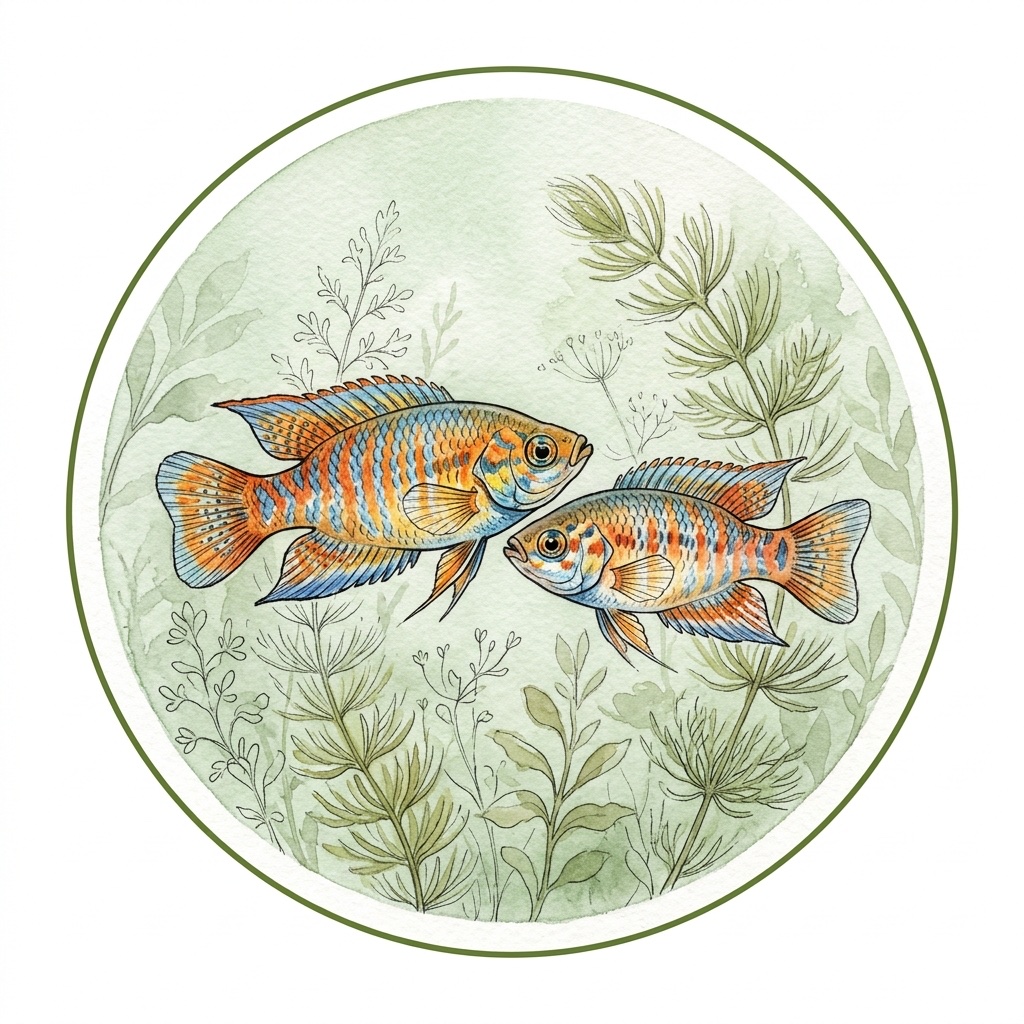
Weeks 1-2
Conditioning
High-protein live and frozen foods
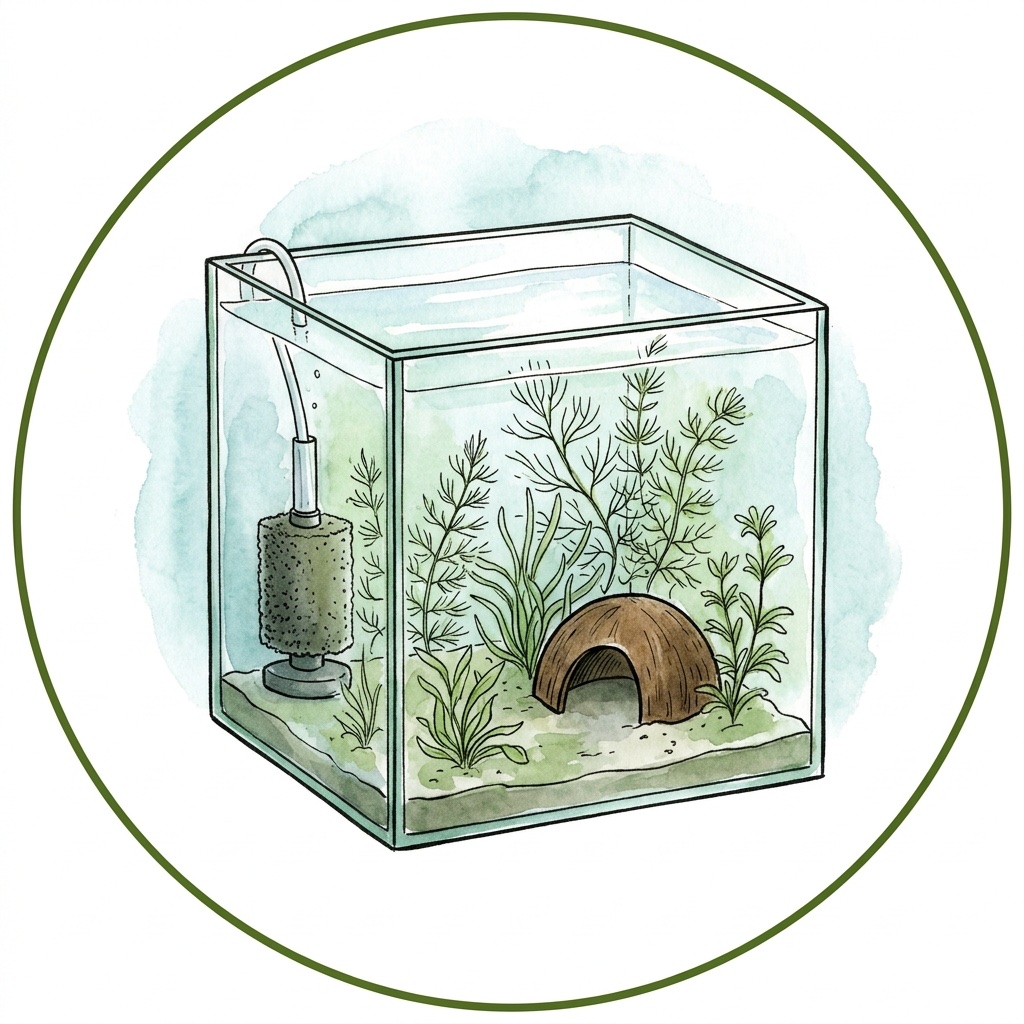
Day 0
Spawning
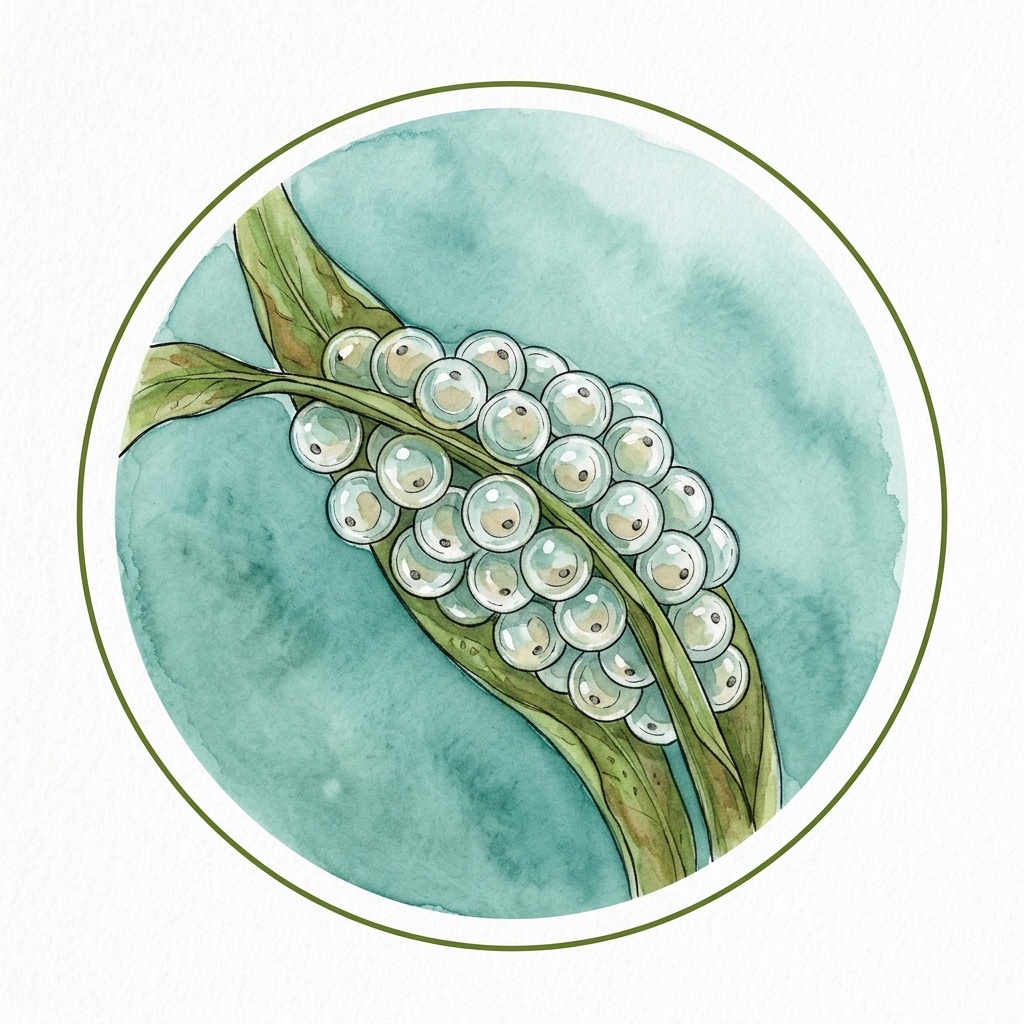
Eggs scattered among moss and plants
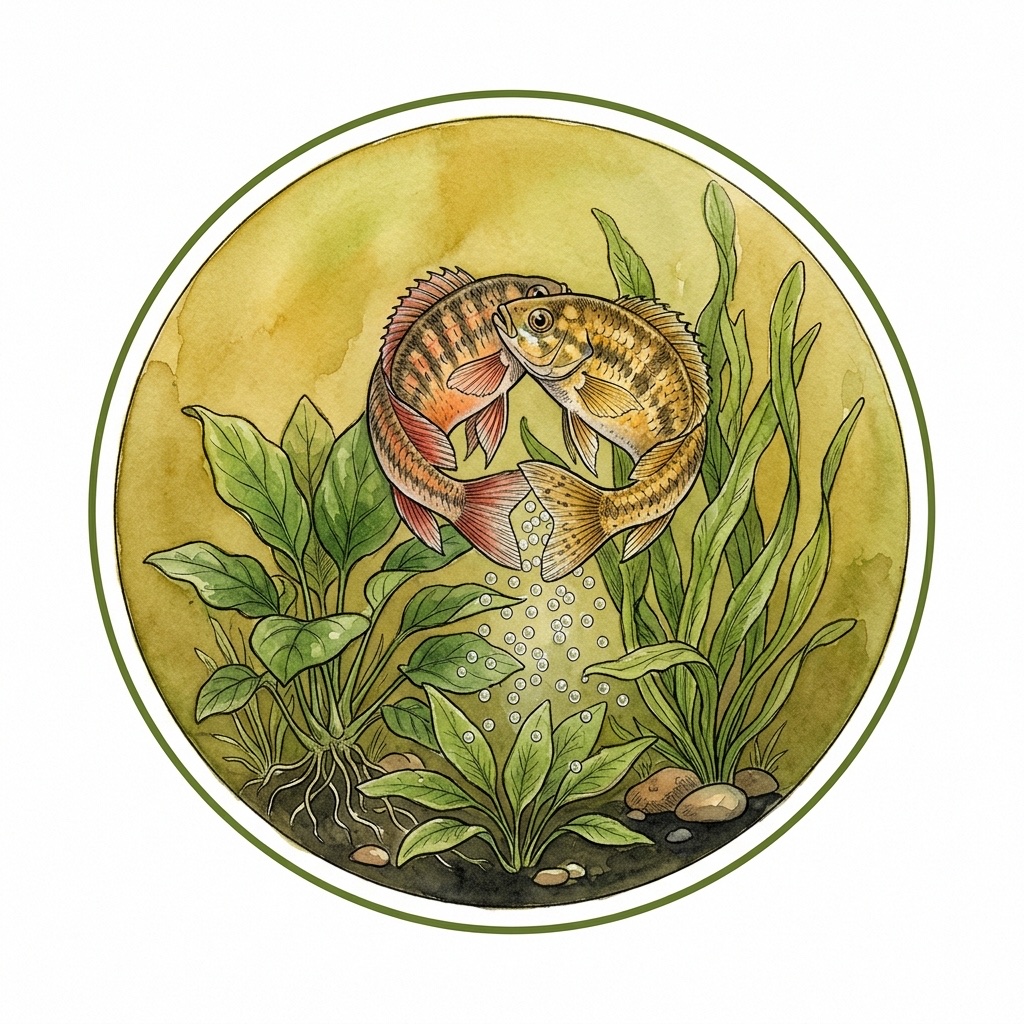
Day 1-2
Incubation
Eggs develop in low light
Day 2-4
Yolk-sac fry
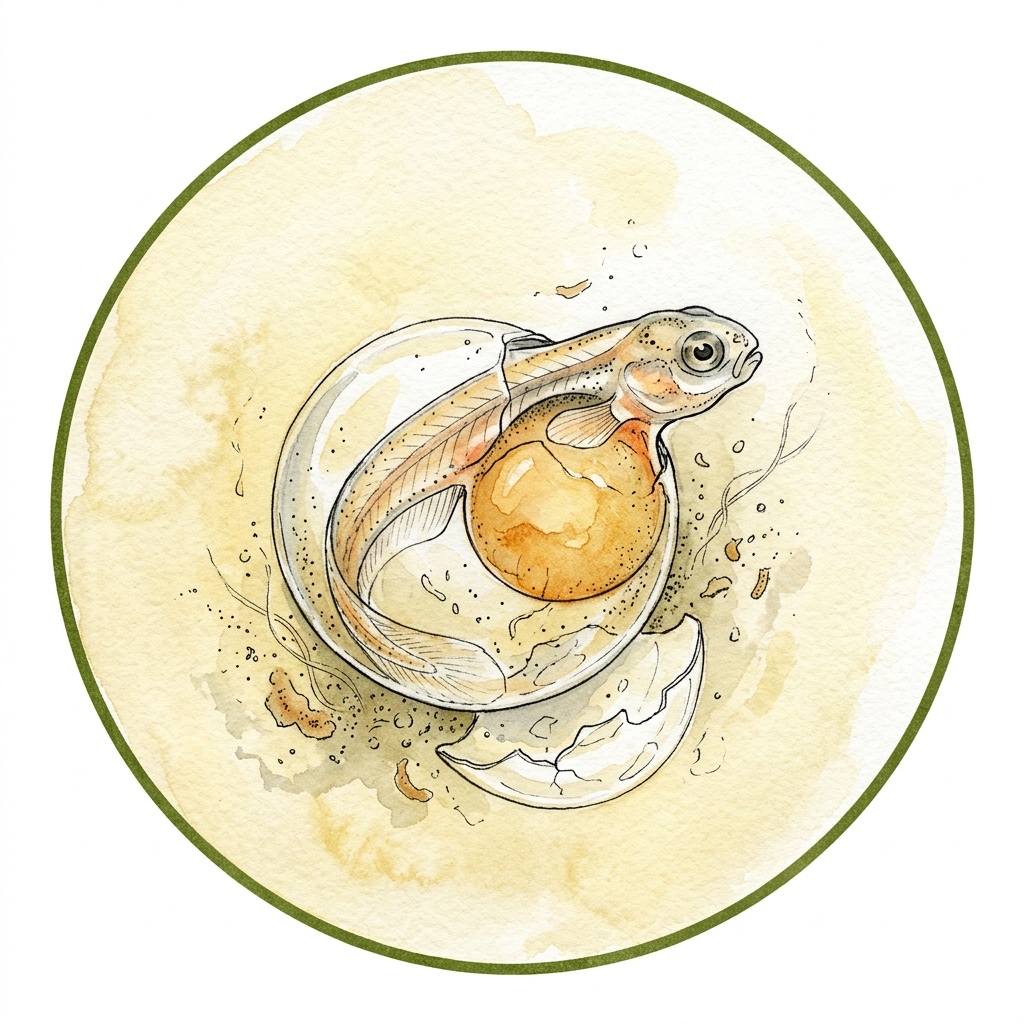
Larvae absorb yolk, not yet feeding
Day 5-7 onwards
Free-swimming fry
Fry begin active feeding
Conditioning
Separate a small group of six well-coloured adults (ideally two males to four females) into a dedicated breeding setup. The breeding tank should be 20-40 litres, dimly lit, with soft acidic water (pH 6.2-6.8, hardness 4-6 dGH, temperature 26-27 °C) and a thick mat of Java Moss, spawning mops, or fine-leaved plants covering the bottom. Feed heavily with live baby brine shrimp, daphnia, bloodworm, and micro worms twice daily. Within a week to ten days, the females will develop visibly rounder bellies as they become gravid, and the males will intensify in copper coloration and begin displaying to each other.
Spawning
Spawning typically occurs in the early morning shortly after lights come on. Males will chase females energetically through the vegetation, and pairs will briefly embrace and release clutches of small transparent eggs that fall into the moss or stick lightly to plant leaves. A single female may release 100-200 eggs over the course of a spawning session, typically distributed across multiple males. The eggs are non-adhesive to weakly adhesive and generally sink into the plant layer. Once spawning activity subsides (usually within an hour or two), remove all adults immediately. Silver Tips are notorious egg predators and will cheerfully consume their own eggs within minutes if left in the breeding tank.
Incubation
The eggs hatch in 24-36 hours at 26 °C, depending on temperature. Keep the breeding tank dimly lit or shaded during incubation — the eggs and newly hatched larvae are light-sensitive. Maintain pristine water quality without strong filtration; a gently bubbling air stone or small sponge filter provides enough circulation without sucking in eggs. Some breeders add a few drops of methylene blue to inhibit fungal growth on any unfertilised eggs.
Yolk-sac fry
Newly hatched larvae are tiny and nearly invisible, clinging to plant leaves and glass by their yolk sacs. They do not feed during this stage — the yolk sac provides all their nutrition. Resist the urge to add food, which will only foul the water. Keep the tank stable and undisturbed.
Free-swimming fry
Once the yolk sac is fully absorbed, the fry become free-swimming and need immediate first food. Infusoria or commercial liquid fry food works for the first three or four days, after which they can graduate to freshly hatched brine shrimp nauplii — the gold standard first food for virtually all small tetra fry. Silver Tip fry grow relatively quickly compared to Rummy Noses or Cardinals, and with consistent feeding and small daily water changes of 10-15 percent, they will begin to show the first hints of copper colour at four to six weeks and reach sellable size (around 1.5 cm) in eight to twelve weeks. Move them to a larger grow-out tank once they reach 1 cm, increase feeding frequency to four times daily with microworms and crushed flake, and by the time they hit 2 cm they will already be showing clear male-female dimorphism. Sexual maturity is reached at around six months in well-fed fry.
Community Tank Mates
The Silver Tip Tetra is, with one major caveat, a superb community tank citizen. They are peaceful among themselves and toward most other similarly-sized fish, they occupy the mid-water column and leave bottom-dwellers and surface-dwellers entirely alone, they are active enough to look alive but not so aggressive as to bully tank mates, and they tolerate a wide range of water parameters. For most standard community tanks with Corydoras, peaceful dwarf cichlids, Honey Gouramis, and similarly-sized tetras or rasboras, Silver Tips are a fantastic and visually striking addition. They integrate quickly — new arrivals typically join the existing school behaviour within hours rather than days, and the copper coloration kicks in within a week of settling in.
The caveat — and it is an important one — is fin-nipping. Silver Tip Tetras, like their more notorious cousin the Serpae Tetra and the classic offender the Tiger Barb, have a tendency to nip at long trailing fins of slow-moving tank mates. The behaviour is not usually aggressive or territorial; it seems to be more opportunistic curiosity, triggered by drifting, ribbon-like fin material. The severity is generally milder than Tiger Barbs — most community keepers report occasional nipping rather than the relentless fin-shredding Tiger Barbs are famous for — but it is real, and it is worse when the school is too small. A school of four or five Silver Tips redirects its attention outward toward tank mates more readily than a school of eight or ten, which keeps its social energy focused internally on the group. If you ever see your Silver Tips paying attention to another fish’s fins rather than each other, the answer is almost always “add more Silver Tips” rather than remove the target fish.
The practical rule is simple: never combine Silver Tips with long-finned slow-moving fish. That means no Angelfish, no Bettas, no male fancy Guppies, no Pearl Gouramis with their trailing feelers, and no long-finned variants of any species. Stick to tank mates with short, compact fins — Corydoras, short-finned tetras and rasboras, Danios, Otocinclus, peaceful dwarf cichlids, Honey Gouramis — and you will have zero issues. Combine that with a proper school size of eight or more and Silver Tips become one of the most visually arresting additions to a community tank, a flashing copper-and-silver cloud that brings genuine energy and movement to the mid-water. This is one case where the community stocking rule of thumb — “match temperament” — means match fin length as well as aggression level.
For a standout display aquascape, pair a school of ten Silver Tips with a pair of Bolivian Rams in the lower zone, a group of six Sterbai Corydoras combing the substrate, and a trio of Otocinclus on the plant leaves. The vertical stratification — copper cloud in the middle, gentle cichlid pair below, sand-sifting corys on the floor, green algae grazers on the leaves — creates a richly layered scene that looks brilliant in a 90-litre planted tank or larger. Another classic combination is Silver Tips with Harlequin Rasboras, which pair beautifully: the Rasboras’ warm orange and black matches the Silver Tips’ copper glow, and because both species prefer the same water chemistry and mid-water zone, the tank feels unified rather than partitioned into competing territories.
If you are new to community stocking and not sure where to start, a simple recipe that almost always works for Silver Tips is: 10 Silver Tip Tetras, 6 Corydoras (any species), 4 Otocinclus, and either a pair of Honey Gouramis or a pair of peaceful dwarf cichlids as a centrepiece. That setup fills a 90-120 litre planted tank, requires minimal specialised water chemistry, and produces a balanced, active, visually interesting display that will run happily for years with basic weekly maintenance.
| Species | Why | |
|---|---|---|
| ✅ | Corydoras (Bronze, Sterbai, Peppered) | Peaceful bottom-dwellers that occupy a completely different zone and tidy up uneaten food. Share compatible water chemistry and temperature range. |
| ✅ | Honey Gourami | Calm, slow-moving surface-to-mid dweller. The Honey Gourami’s short fins and gentle temperament make it a safe match for Silver Tips — their nipping tendencies do not target its compact fin shape. |
| ✅ | Peaceful dwarf cichlids (Apistogramma, Bolivian Ram) | Occupy the lower water column and generally ignore fast-moving schoolers. Share similar water parameter preferences and benefit from the same planted-tank setup. |
| ✅ | Harlequin Rasbora | Similar size, similar activity level, similar water preferences. A mixed school of Silver Tips and Harlequins creates a beautiful warm-orange and copper colour combination in the mid-water. |
| ✅ | Danios (Zebra, Celestial Pearl) | Active, short-finned schooling fish with comparable energy levels. Danios hold their own against the boisterous Silver Tip school and share the same open-swimming preferences. |
| ✅ | Other active tetras (Black Skirt, Serpae, Pristella) | Similar-sized characins with comparable activity profiles. Avoid mixing with shyer or slower tetras, which may be outcompeted at feeding time. |
| ✅ | Otocinclus | Tiny, peaceful algae grazers that keep plant leaves and glass clean without any interest in other fish. Share soft-water preferences and community-tank temperament. |
| ✅ | Amano and Cherry Shrimp (adult) | Full-grown Amano Shrimp are too large for Silver Tips to bother. Adult Cherry Shrimp are usually ignored in heavily planted tanks, though shrimplets will be eaten. |
| ❌ | Angelfish | The Angelfish’s long flowing fins are an irresistible target for Silver Tips, which will nip persistently until the fins are frayed and the Angelfish is chronically stressed. Classic mismatch. |
| ❌ | Betta (Siamese Fighting Fish) | Long, flowing fins of male Bettas are guaranteed to be nipped. Bettas also prefer calmer tank mates and will be stressed by the Silver Tip’s constant mid-water activity. |
| ❌ | Male Fancy Guppies | Long, colourful tails of male Guppies will be nipped to tatters. Female Guppies with shorter fins are sometimes tolerated but not recommended. |
| ❌ | Large gouramis with long feelers (Pearl, Moonlight) | The pelvic “feelers” of larger gourami species are frequently targeted by fin-nippers. The shorter-finned Honey Gourami is a better choice. |
| ❌ | Large aggressive cichlids (Oscars, Jack Dempseys, adult Severums) | Silver Tips are bite-sized for any cichlid over 10 cm. Guaranteed to be hunted or bullied out of open swimming space. |
Quick Reference
| Scientific Name | Hasemania nana (monotypic) |
| Adult Size | 3-4 cm |
| pH | 6.0-7.5 (ideal 6.8) |
| Temperature | 22-28 °C (ideal 25 °C) |
| Hardness | 4-15 dGH |
| Min. Tank | 60 L+ for a school of 8 |
| Diet | Omnivore — flake, pellets, frozen daphnia & bloodworm |
| Tank Position | Middle — active swimmer |
| Schooling | 8+ strongly recommended |
| Community | Corys, Honey Gourami, peaceful dwarf cichlids, rasboras |
| Avoid | Long-finned fish — Angel, Betta, male Guppy |
| Breeding | Egg scatterer, one of the easier tetras to breed |
| Lifespan | 4-6 years |
| Special Feature | No adipose fin — unique among characin tetras |
| Price (AUD) | $8 per individual fish |
Reviews
Clear filtersThere are no reviews yet.