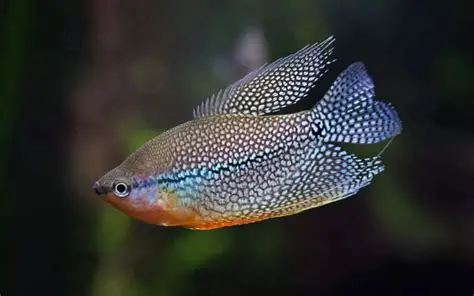
🪨 Species at a Glance
| Scientific Name | Trichopodus leerii (formerly Trichogaster leerii) |
| Family | Osphronemidae |
| Order | Anabantiformes |
| Origin | Thailand, Malaysia, Sumatra, Borneo — peat-swamp forests and blackwater streams |
| Adult Size | 11–13 cm (4.3–5.1 in) |
| Lifespan | 5–8 years |
| pH Range | 6.0–7.5 |
| Temperature | 24–28 °C (75–82 °F) |
| Hardness (dGH) | 4–12 |
| Diet | Omnivore leaning carnivore — flake, pellet, frozen bloodworm, brine shrimp, daphnia |
| Minimum Tank Size | 150 L (40 gal) for a trio |
| Care Level | Beginner–Intermediate |
| Temperament | Peaceful but males territorial with each other |
| Breeding | Bubble nest builder; male constructs large foam nest under floating plants |
| Tank Position | Mid-water to surface |
| Availability | Common |
Origin & Etymology
The common name ‘pearl gourami’ captures exactly what makes this species unforgettable. Under good lighting, the body is covered from gill plate to caudal peduncle with small, rounded, mother-of-pearl spots arranged in an irregular mosaic across an otherwise silver-lavender ground colour. Each spot catches light at a different angle, so as the fish turns, waves of shimmer pass across the flanks in a way that truly does evoke a scatter of pearls embroidered onto silk. The alternative names ‘mosaic gourami’ and ‘lace gourami’ describe the same pattern from different angles — mosaic emphasises the tiled appearance of the spots in overlap, while lace refers to the delicate, openwork filigree effect along the fins and tail when the fish is fully finned out.
The scientific name has a more turbulent history. The species was first described by the great Dutch-German ichthyologist Pieter Bleeker in 1852 and named *Trichopodus leerii* after the town of Leer in East Frisia, a nod to the family of a colleague. For much of the twentieth century the fish was shuffled between genera, spending long periods classified as *Trichogaster leerii* — a name still printed on many older aquarium books, on shop tanks, and in countless field guides. A comprehensive revision of the family Osphronemidae by Töpfer and Schindler in 2009, building on molecular work earlier in the decade, restored *Trichopodus* for the larger gouramis (pearl, moonlight, snakeskin, three-spot) and reserved *Trichogaster* for the small honey/dwarf gourami group. Aquarium literature is still catching up, so both genus names appear in active use and the same fish will answer to either.
In parts of Southeast Asia the species carries local names such as *sepat mutiara* in Malay (literally ‘pearl sepat’, the sepat being the name given to the gourami/snakeskin family) and *sepat batik* in reference to the mosaic pattern resembling traditional batik textile art. Whatever the label, no one has ever needed more than one glance at an adult male in breeding colour to understand why this fish has been a global aquarium mainstay for more than a century — it was among the first tropical fish bred and distributed by early European aquarists in the 1890s, featured in the earliest colour plates of aquarium literature alongside the paradise fish and the three-spot gourami, and has never left the trade since. Today the vast majority of pearl gouramis sold are tank-bred in commercial fish farms in Southeast Asia and eastern Europe, and wild-caught specimens are rare — a good thing given the ongoing pressure on the peat-swamp habitats of the species’ native range from palm-oil plantation expansion and peat-swamp drainage, which has seen the fish’s wild populations decline noticeably since the 1980s. Supporting responsible tank-bred supply is the single most direct thing an aquarist can do to keep this species thriving into its next century in the hobby.
How to Sex This Species
Sexing adult pearl gouramis is among the easiest tasks in the freshwater hobby once the fish are mature. Two features settle the question almost instantly. First, the throat: any fish showing a genuine orange-red wash on the throat and belly is a male, full stop — females never develop this colouration at any life stage, and the reverse is also true, since any fish lacking throat colour at an adult size of 10 cm or more is almost certainly female. Second, the dorsal fin: males grow a long, pointed, banner-like dorsal that sweeps back well past the base of the tail, often trailing a fine filament, while females carry a shorter, distinctly rounded dorsal that does not extend nearly as far. Either feature alone is diagnostic; the two together are conclusive.
Juvenile fish are more challenging. Young pearl gouramis below 6 cm or so are effectively monomorphic in colour — both sexes show the pearl pattern on a silver-lavender ground, and neither shows throat colour — and dorsal shape differences only become clearly visible as the fins finish their final growth phase around four to six months of age. Shops selling young fish often cannot reliably sex them at all, and buyers hoping for a specific male-to-female ratio should buy a group of six to eight juveniles and sort them at maturity, rehoming surplus males. Trying to buy a proven sexed pair from a shop tank of juveniles is a gamble that experienced keepers avoid.
For an adult display tank, the classic recommendation is one male with two or three females — this prevents the dominant male from harassing a single female relentlessly during the frequent low-level courtship behaviour that characterises the species, and lets the male divide his attention across the group. Two males in a tank under 300 litres is generally a mistake: the dominant fish will chase the subordinate enough to suppress its colour, feeding, and long-term health, even if outright combat never escalates. Single males kept alone are possible, but the fish is at its most interesting as part of a small harem where you can watch the daily rhythm of display, courtship, and nest-building behaviours.
| Feature | Male | Female |
|---|---|---|
| Throat and Belly Colour | Bright orange throat that flushes deep crimson-red during courtship and spawning; belly tinged orange | Pale orange to cream throat at most; belly a plain silver-cream; no red flush at any time |
| Dorsal Fin | Long, pointed, extending well past the base of the caudal fin; often with a fine trailing filament | Shorter and distinctly rounded at the tip; does not extend to the caudal peduncle |
| Anal Fin | Elongated, pointed at the rear edge, often rimmed with a soft orange tint | Shorter, rounded, plain in colour |
| Body Size and Shape | Slightly larger, slimmer and more streamlined — up to 13 cm | Slightly smaller, noticeably rounder in the belly, particularly when gravid |
| Pelvic Filaments | Long, thread-like, often with faint orange wash | Long but proportionally shorter than the male’s; plainer |
| Behaviour | Patrols upper water layer; performs fin-spread display; builds large foam bubble nest | More stationary; may retreat into plants; does not build nests |
| Peak Display Colour | Red throat blazes during nest-building and courtship; dorsal held erect | Coloration remains muted throughout life |
Available Colour Grades
⚪ Wild-Type Pearl
Silver-lavender body entirely covered in cream-white pearlescent spots; males develop a bright orange throat that deepens to crimson-red in breeding condition.
🤍 Albino Pearl (rare)
A selectively bred line with reduced melanin — pale cream body, pink-tinged eyes, and a softer pink-orange wash replacing the red throat; far less common than the wild type.
🔴 Line-Bred Red-Throat
Breeder-developed strain with an intensified, larger orange-to-crimson throat patch that extends further across the belly; prized by show keepers for dramatic courtship colour.
Of the three forms, the wild-type pearl dominates the trade almost exclusively, and for good reason — a mature wild-type male in a blackwater tank with floating plant cover and tannin-stained water is arguably one of the most photogenic fish in the hobby. The albino form surfaces occasionally through specialist breeders but is comparatively fragile, often shows weaker fin development, and in most keepers’ eyes loses the very contrast that makes the pearl pattern so striking: the value of those cream-white spots lies in their sharp play against the dark silver-lavender base, and an albino body simply has nowhere for the pattern to shine against. Line-bred red-throat specimens are a relatively recent development driven by enthusiast breeders in Europe and Southeast Asia seeking ever-more saturated courtship colour; they command premium prices and are worth seeking out if you intend to breed or exhibit the species at club level. In all three lines, final adult colour is a product of genetics, diet, environment, and the fish’s emotional state — a pearl gourami kept in a bright, sparsely planted tank with pH over 7.5 and boisterous tank mates will look washed-out even if it is genetically a top-grade fish, while the same fish moved to a dimly lit, tannin-rich, densely planted, peaceful setup will transform within three to six weeks. Patience is rewarded. It is also worth noting that the pearl pattern only reaches its full expression at around eight to twelve months of age; juveniles in the shop will show a paler, less developed version of the mosaic, and the real beauty of the species only emerges as the fish matures. When buying, look for specimens that show even spot distribution across the flanks, clean unshredded fin edges, and — in males — the first orange flush under the gill plates that tells you the fish is settling into sexual maturity.
Getting the Water Right
6.0–7.5
ideal 6.8
24–28 °C
ideal 26 °C
4–12 dGH
Soft to moderately hard; soft water strongly preferred for best colour and breeding
In their native range, pearl gouramis inhabit peat-swamp forests and the tea-stained blackwater tributaries of Thailand, peninsular Malaysia, Sumatra, and Borneo. These environments are warm, shaded by rainforest canopy, slow-flowing almost to the point of stillness, and heavily acidic — pH in wild habitat often sits between 4.5 and 6.5, with vanishingly low carbonate hardness and a steady dose of dissolved humic acids from decaying leaf litter. Temperatures in these forest waters sit between 24 and 28 °C year-round, buffered by the dense canopy and modest water movement. The tank-bred strain that dominates the ornamental trade has adapted to a much wider window over the past century of captive breeding, tolerating pH up to roughly 7.5 and hardness up to around 12 dGH without difficulty, but the species still looks and breeds its best when kept closer to its ancestral chemistry. Tap water in most Australian cities sits somewhere in the 7.0–7.8 pH range and 5–12 dGH range, which is workable for keeping pearl gouramis but sub-optimal for serious breeding — a short tannin-led push toward pH 6.5–7.0 and hardness under 8 dGH yields noticeably better colour, more active courtship display, and higher spawning success.
Temperature stability matters more than the exact set-point. Pearl gouramis come from equatorial waters that vary little across the year — 25 to 27 °C is the sweet spot for general keeping, and a precise 27 to 28 °C promotes bubble-nest building and spawning. Temperatures below 22 °C cause lethargy, loss of colour, increased susceptibility to bacterial disease, and — critically — a chilled layer of air above the water surface that damages the delicate labyrinth organ. For this reason a tight-fitting lid or cover glass is not optional. The air cavity immediately above the water must remain warm and humid; pearl gouramis that are exposed to a cold draught from an uncovered tank in an unheated room are far more likely to develop respiratory infections than specimens kept at the same water temperature but with proper cover. In winter-affected regions, insulate the heater output (do not rely on a single underpowered heater in a large tank) and check with a thermometer at the opposite end of the tank from the heater to guard against cold pockets.
Stability trumps perfection. A pH that drifts between 6.5 and 7.0 over a week is fine; a tank that swings from 6.0 to 8.0 after each water change is not. Use a consistent water source, avoid dosing acid/alkali buffers reactively, and make peat, driftwood, or catappa leaves do the chemistry work through gentle, steady tannin release. Weekly water changes of 20 to 25 per cent, using water that has been aged, dechlorinated, and temperature-matched to within 1 °C, are the gold standard; larger or faster changes unsettle both the fish and the water chemistry, and pearl gouramis respond to big swings with reduced feeding and temporary colour loss.
Nutrition & Diet
Pearl gouramis are classified as omnivores but lean distinctly carnivorous in practice. In their natural peat-swamp habitat they feed on aquatic insects, insect larvae, small crustaceans, zooplankton, and the occasional fallen terrestrial insect, supplementing this protein-rich diet with algae and detritus grazed from submerged structures and the odd soft aquatic plant. Their small, upturned mouths are adapted for picking food from the surface and the underside of floating vegetation — you will frequently watch them hang motionless under a leaf of frogbit and then flick sideways to snap at a passing cladoceran. The long pelvic filaments function as chemo-sensory organs, letting the fish ‘feel’ the water column ahead as it cruises, detecting prey by taste and touch in a way that is fascinating to observe.
In the aquarium, a high-quality tropical flake or small sinking/floating pellet formulated for omnivores should form the daily staple, supplemented heavily with frozen and live foods two to four times per week. Frozen bloodworms are the standard favourite and trigger an immediate excited feeding response — restrict to two feedings per week, however, as bloodworms are rich and can cause digestive issues if overfed, and they are low in fibre relative to protein. Frozen brine shrimp (adult), daphnia, mysis shrimp, mosquito larvae, white mosquito larvae (glassworms), and chopped earthworms are all excellent rotations that keep the diet varied and prevent the kind of nutritional monotony that can dull colour over months. Daphnia in particular is worth offering weekly — its fibre-rich exoskeleton helps prevent constipation, which pearl gouramis are mildly prone to on an all-pellet diet. Colour-enhancing pellets with added astaxanthin, spirulina, and marigold-derived carotenoids help maintain the deep orange throat in breeding males; many experienced keepers use a carotenoid-rich food for two meals a week specifically for this purpose. The occasional offering of blanched plant matter — skinned pea, spinach, cucumber — is accepted and helps maintain gut health, though pearl gouramis are not the enthusiastic vegetarians that some other gourami species are.
Feed small amounts twice a day; pearl gouramis are not greedy, and uneaten food in a heavily planted tank quickly fouls water. A good rule is to feed no more than the fish can clear in two minutes per meal. Pearl gouramis are slower-moving feeders than the average community tetra, so if the tank contains fast schoolers it is worth sprinkling food in two locations or using a feeding ring to ensure the gouramis get their share. A weekly fast day — feeding nothing for 24 hours — mirrors natural food availability and helps clear any low-level digestive issues before they escalate. Finally, never feed live tubifex from unknown sources; these worms are frequently contaminated with bacterial pathogens and have been responsible for more gourami losses than perhaps any other single food source. Stick to frozen and quality live cultures (brine shrimp, daphnia, blackworms from clean colonies).
Aquarium Setup Guide
Pearl gouramis are medium-to-large gouramis that ultimately reach 11–13 cm, and their tank requirements scale accordingly. A minimum of 150 litres (around 40 US gallons, roughly 100 × 40 × 40 cm) is the smallest practical footprint for a trio of one male and two females; 200 litres or more is preferable if additional community fish are planned, and 250 to 300 litres allows the combination of a full pearl gourami group with a substantial community of smaller schooling fish. Length and surface area matter more than sheer volume — pearl gouramis swim and display in the upper half of the water column and must have an unbroken stretch of surface to build their bubble nests and access air. Tall, narrow ‘tower’ tanks are a poor shape for this species. A low, long footprint is always better than a high, short one; the same 150 litres spread across 120 × 40 × 30 cm is a markedly better home than 60 × 40 × 60 cm.
Dense planting is the single most important aesthetic and welfare upgrade you can make. Tall stem plants such as *Hygrophila polysperma*, *Limnophila sessiliflora*, *Vallisneria spiralis*, and *Rotala rotundifolia* provide cover along the rear and sides, breaking up sight-lines and creating the shaded, cluttered appearance that pearl gouramis associate with safety. Epiphytes like *Anubias barteri*, *Anubias nana*, *Microsorum pteropus* (Java fern), and *Bucephalandra* can be attached to driftwood to give mid-water structure without displacing substrate. *Cryptocoryne wendtii* and *C. balansae* are excellent mid-ground choices for a tannin-stained, low-light tank. All of the above thrive without CO2 injection and tolerate the soft, slightly acidic water that suits the fish.
The absolute non-negotiable layer, however, is floating plant cover. Amazon frogbit (*Limnobium laevigatum*), salvinia (*Salvinia auriculata* or *natans*), red root floater (*Phyllanthus fluitans*), or water lettuce (*Pistia stratiotes*) must occupy at least thirty to fifty per cent of the surface. The reasons are threefold and all serious. First, the floating plants trap a warm, humid air layer directly above the water, which is essential for the labyrinth organ’s health — pearl gouramis breathe atmospheric air through a folded respiratory organ in their gill chamber, and exposure to cold, dry room air can damage this organ and lead to respiratory infection. Second, floating plants diffuse overhead light, transforming the tank into the shaded, twilight environment that mimics the forest-canopy conditions of peat-swamp streams — pearl gouramis visibly relax, display better colour, and spend more time in the open under floating plant cover than under bright open light. Third, the dangling roots of floating plants provide the anchoring structure that the male needs to weave his foam bubble nest into a stable raft. A pearl gourami tank without floating plants is technically survivable but will never show the full behavioural repertoire of the species, and breeding is effectively impossible.
Hardscape should lean warm and naturalistic — driftwood, malaysian roots, spider wood, and a scattering of dried leaf litter (catappa, oak, beech). The leaf litter serves both aesthetic and functional roles: as it slowly breaks down it releases tannins and humic substances that gently acidify and soften water, and its decomposition fosters a microfauna of infusoria and micro-invertebrates that the fish will happily graze. A dark substrate of fine sand or dark aquasoil makes the pearl pattern and the male’s red throat pop dramatically against the background; pale gravel, by contrast, visually flattens the fish. Keep lighting low to moderate; you do not need high-intensity plant lights to grow the undemanding species listed above, and brighter light tends to wash out both the pearl pattern and the male’s courtship colour. Aim for 30 to 40 lumens per litre at the surface, filtered through the floating canopy to perhaps half that at the substrate. Finally, location matters — choose a quiet part of the room, away from slamming doors, heavy foot traffic, television speakers, and direct sunlight. Pearl gouramis are peaceful but nervous in their first weeks in a new tank, and sudden movement or vibration past the tank can send them crashing into plants and lead to damaged fins.
Tank
150 L (40 gal) minimum for a trio; 200 L+ strongly recommended for a community setup or breeding group
Filter
Sponge filter, air-driven internal, or baffled HOB/canister — gentle flow; strong surface turbulence destroys bubble nests and stresses the fish
Heater
100–200 W depending on tank size; set to 26 °C, bump to 27–28 °C for breeding; use a heater guard to protect trailing fins
Lid / Cover Glass
Mandatory — maintains the warm, humid air layer required by the labyrinth organ; a cold surface draught can cause fatal respiratory illness
Lighting
Low to moderate intensity; paired with floating plants to create a shaded, diffuse, twilight-forest ambience
Substrate
Fine dark sand or dark aquasoil — enhances contrast with the pearl pattern and the male’s red throat
Plants (rooted and epiphyte)
Hygrophila, Vallisneria, Rotala, Limnophila, Cryptocoryne, Anubias, Java fern — densely planted rear and sides
Floating Plants
Amazon frogbit, salvinia, red root floater, or water lettuce — 30–50% surface cover; non-negotiable for labyrinth health and bubble-nest building
Hardscape
Driftwood, spider wood, malaysian root plus catappa/oak leaf litter for tannins and naturalistic mood
Thermometer
Verify heater accuracy; a two-point daily check guards against silent heater failure, which pearl gouramis tolerate poorly
Community Compatibility
The pearl gourami’s reputation as a ‘large peaceful gourami’ is well-earned — in the right tank, a trio of one male and two to three females sits serenely at the upper levels of the aquarium, moving with a slow grace that anchors the whole scene while active schoolers dart below. The key qualifier is ‘right tank’. Two adult male pearl gouramis in a 150 L tank is a recipe for continuous low-level aggression; the dominant male will chase the subordinate relentlessly, colour will fade on both, and in the worst cases the loser will be driven into hiding and refuse to feed. The solution is almost always more females (to diffuse male attention), more space (to allow separate territories), or simply one male per tank. This is the single most common stocking mistake new pearl gourami keepers make, and the single biggest cause of disappointing colour and behaviour in otherwise well-kept tanks.
The second consideration is tank-mate temperament. Pearl gouramis are genuinely peaceful but also genuinely slow, and they trail long, elegant fin filaments that are a magnetic target for any nipping species. Avoid tiger barbs, serpae tetras, aggressive cichlids, and hyperactive feeders that steal food before the gourami can work its way over. The long pelvic filaments in particular are irresistible to nippers and, once damaged, take weeks to regrow and are vulnerable to fungal infection while healing. Stick to calm, similarly-peaceful community fish that occupy different water columns — small-to-medium tetras, rasboras, peaceful rainbows, corydoras, kuhli loaches, hillstream loaches, and otocinclus all slot in beautifully. Ember tetras, green neons, and chili rasboras work in larger tanks where the fish is not tempted to treat them as prey; as a rule of thumb, any tank mate smaller than 2 cm is a risk around an adult pearl gourami, which has a surprisingly wide mouth for a peaceful species.
A third consideration is that pearl gouramis prefer calm, unhurried company. Very active schoolers in large numbers — say, a school of thirty cardinal tetras in a 150 L — can create enough surface-level commotion to keep the gouramis perpetually on edge. The best community is moderately active: a school of ten to fifteen medium tetras, a group of six cories, a pair or trio of peaceful mid-size loaches. For a single-species display, nothing beats a one-male/three-female group in a dedicated 200 L blackwater biotope with dense planting, dim amber light, a thick floating plant canopy, and a scattering of leaf litter — the pearl gourami at its absolute best, displaying behaviours (the slow fin-spread to the female, the obsessive nest-building patrol, the protective hover over fresh eggs) that are hard to match in any other freshwater fish.
| Species | Why | |
|---|---|---|
| ✅ | Neon Tetra | Peaceful mid-level schooler; shared soft-water preference and non-competitive behaviour; classic pearl gourami tank companion |
| ✅ | Cardinal Tetra | Peaceful, slightly larger than neons, thrives in the same warm soft water; brilliant colour contrast with the pearl’s silver-lavender flanks |
| ✅ | Rummy Nose Tetra | Tight schooling behaviour and gentle temperament; never harasses slower fish; adds dynamic movement to complement the gourami’s slow cruise |
| ✅ | Harlequin Rasbora | Calm, peaceful mid-water schooler that overlaps perfectly with pearl gourami water requirements and tank zone |
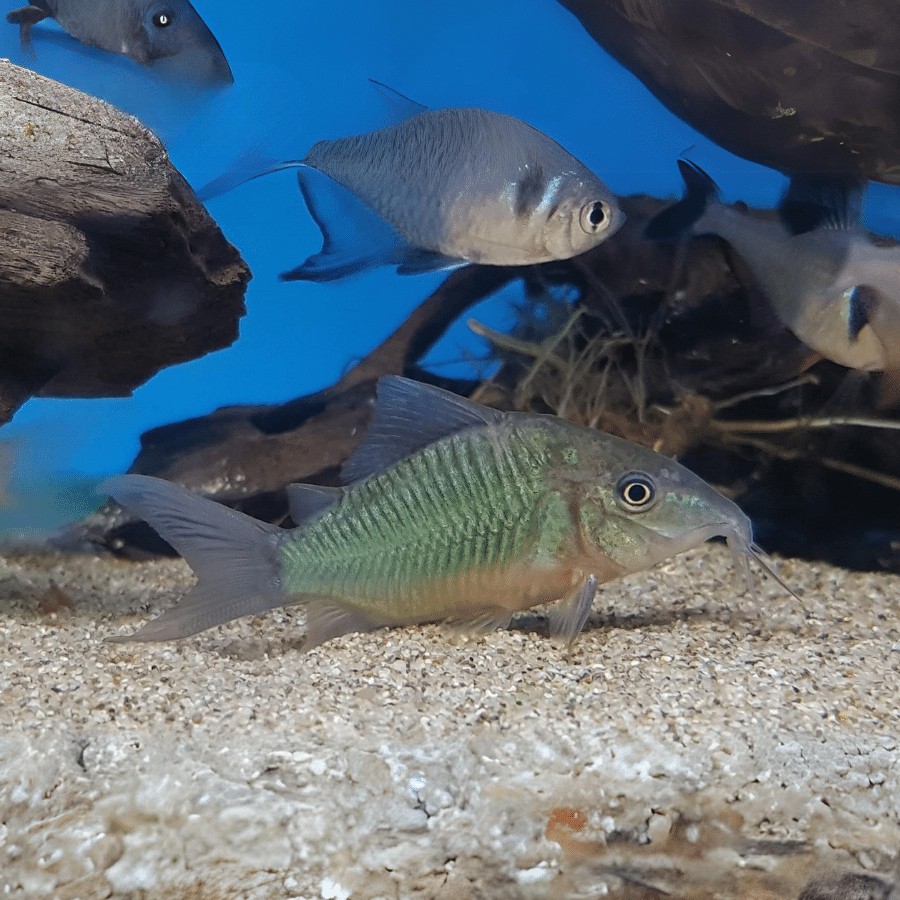
| ✅ | Sterbai Cory | Peaceful bottom-dweller that cleans up fallen food and occupies a completely different water column to the gourami; warm-water tolerant |
| ✅ | Kuhli Loach | Quiet, nocturnal bottom-dweller that never pesters mid or upper-water fish; shared peat-swamp native habitat |
| ✅ | Boesemani Rainbowfish | Peaceful, similarly sized upper-to-mid-level schoolers; adds colour and activity without stressing the gourami (best in larger tanks 250 L+) |
| ✅ | Hillstream-style Loach (gentle variants) | Quiet bottom grazers that do not compete or disturb mid-upper layers; ensure temperature overlap before stocking |
| ❌ | Tiger Barb | Notorious fin-nippers; the pearl gourami’s long trailing dorsal, anal, and pelvic filaments will be shredded within days |
| ❌ | Dwarf Shrimp (Neocaridina, small Caridina) | Adult pearl gouramis will hunt and eat shrimp fry and smaller juveniles; not a safe pairing for breeding shrimp colonies |
| ❌ | Aggressive Cichlids (Convict, Jewel, adult Angels in small tanks) | Territorial aggression stresses the timid gourami; dominant cichlids will out-compete at feeding time and may injure the gourami in disputes |
| ❌ | Large Fast Barbs (Tinfoil, Rosy in groups) | Out-compete the slower pearl gourami at every feeding and create a high-energy environment that causes chronic stress |
| ❌ | Additional Adult Male Pearl Gourami (in tanks <300 L) | Adult males are strongly territorial toward one another; two males in an inadequate tank will fight constantly. Keep 1 male + 2–3 females, or give each male enough space (300 L+ with sight breaks) to establish separate territories |
How to Breed
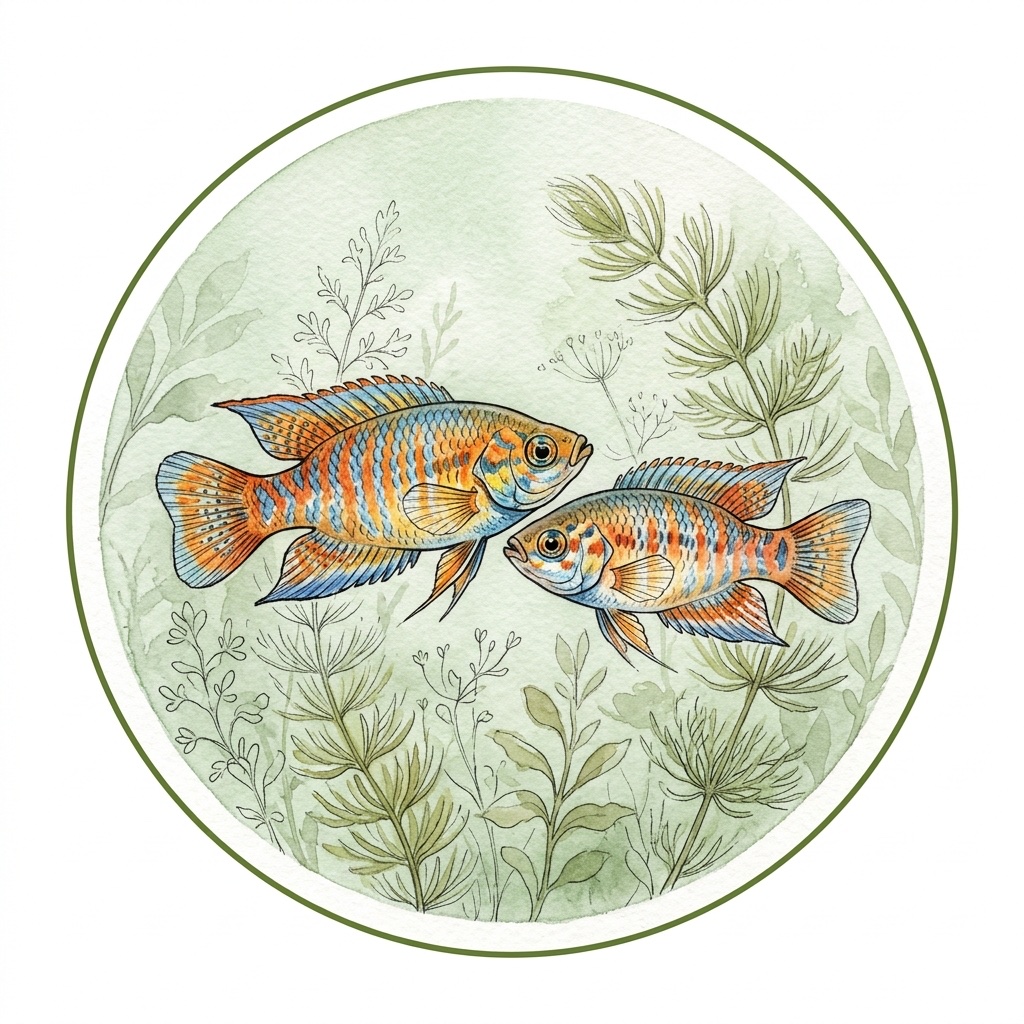
Week -2 to -1
Conditioning
Separate the pair; feed heavily on live and frozen protein
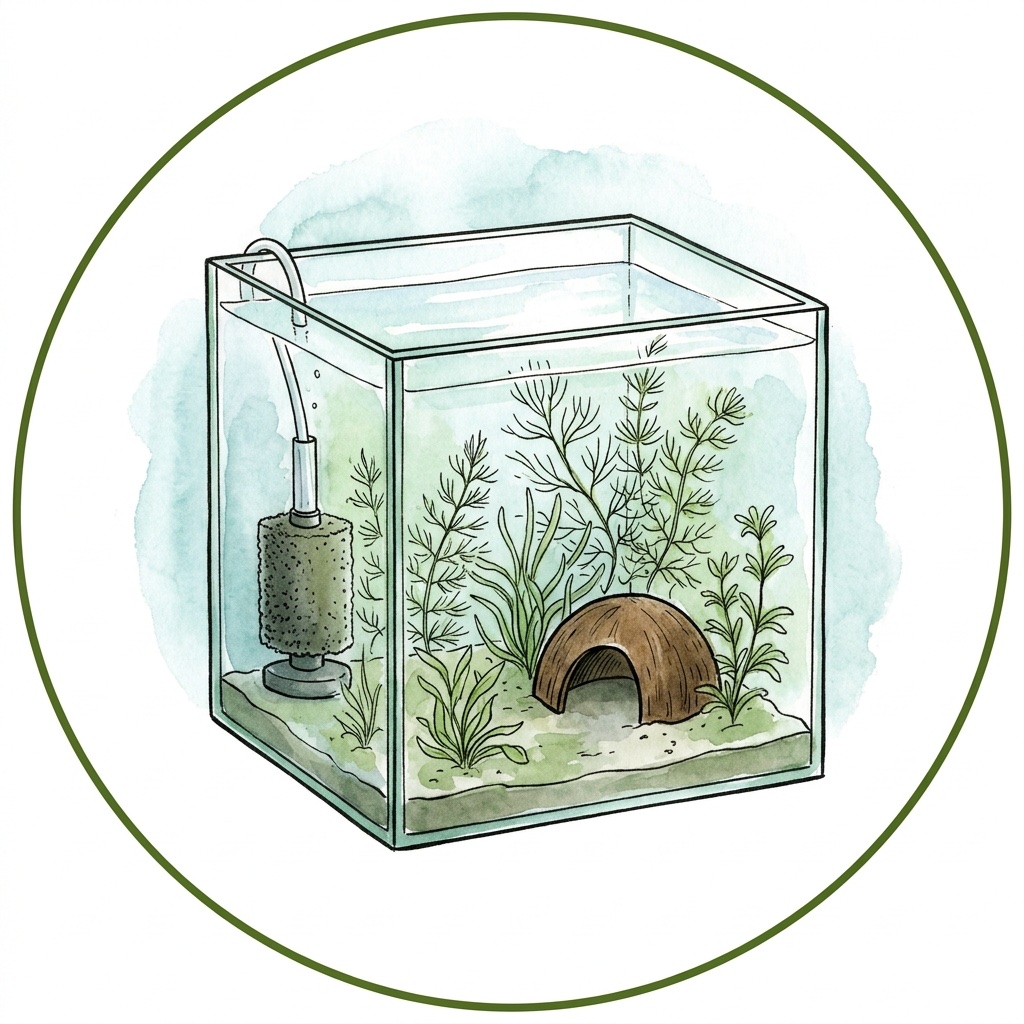
Day 0
Nest Building
Male constructs a large foam bubble nest beneath floating plants
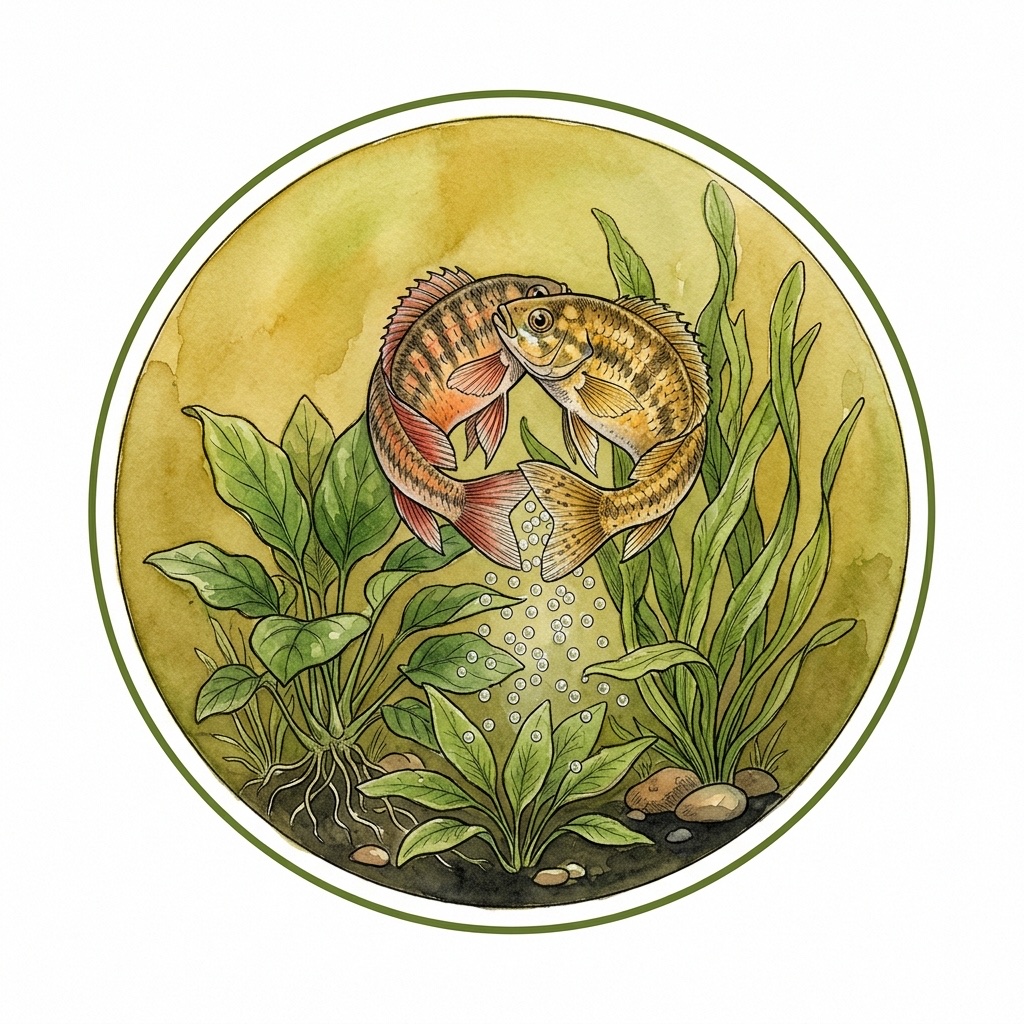
Day 1–2
Courtship and Embrace
Male displays to female; pair spawn in repeated embraces beneath the nest
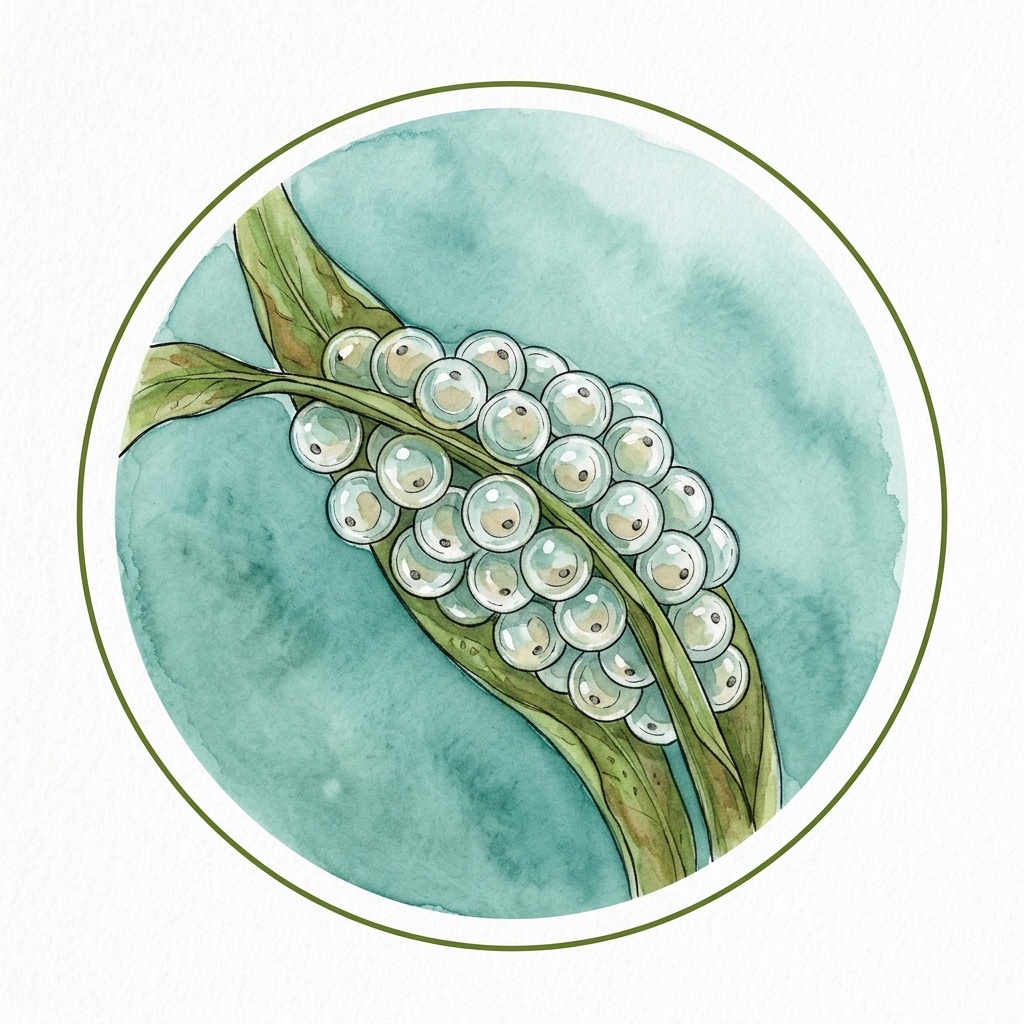
Day 2
Egg Guarding
Remove the female; male tends and guards the nest
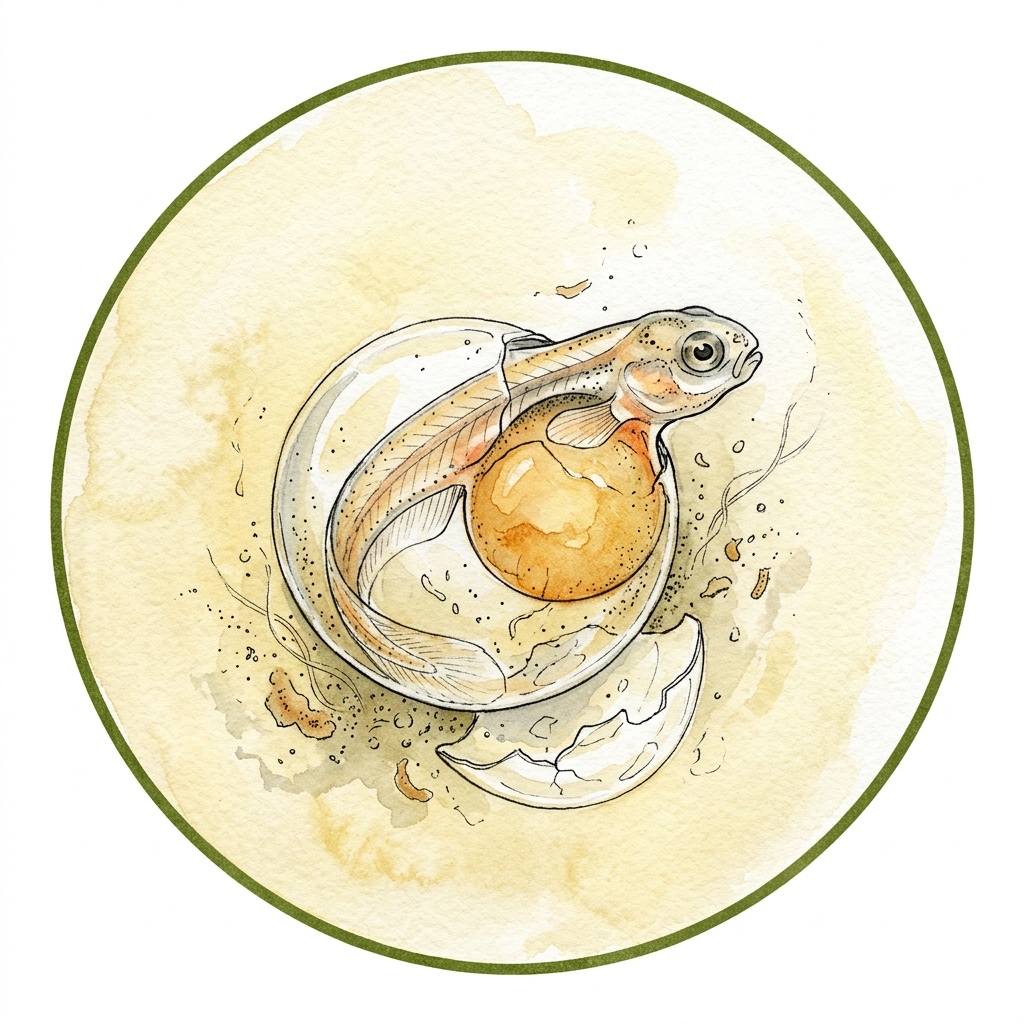
Day 3
Hatching
Eggs hatch; tiny fry hang from the nest absorbing yolk sacs
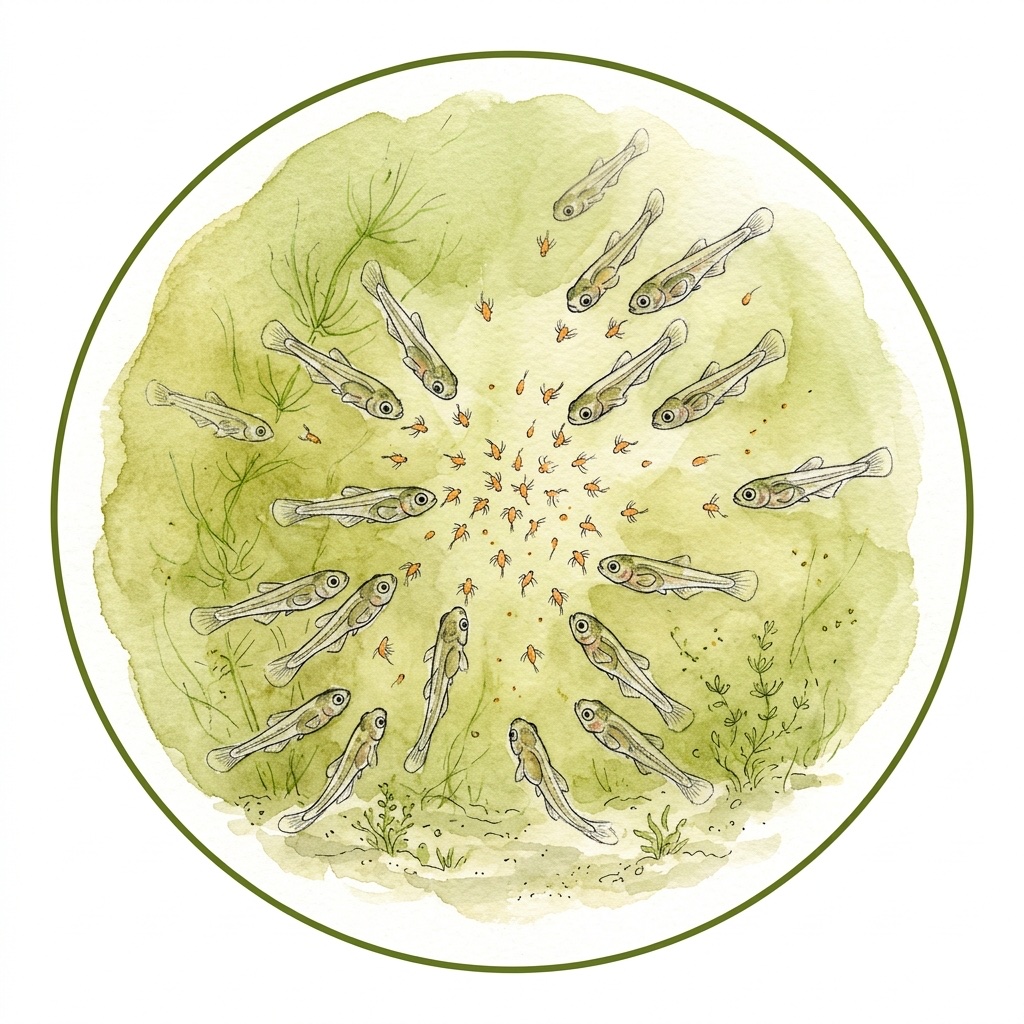
Day 4–5
Free Swimming
Fry become free-swimming; begin feeding infusoria then baby brine shrimp
Conditioning
Move the intended breeding pair — one male and one ripe female — into separate conditioning tanks or sections if possible. Feed heavily on live baby brine shrimp, daphnia, blackworms, and frozen bloodworm across two to three feeds daily for ten to fourteen days. The male should enter peak colour, his throat deepening from orange into an almost ruby red, while the female should visibly round out with eggs, belly becoming noticeably convex when viewed from above. Raise the dedicated breeding tank to 27–28 °C and confirm floating plant cover is in place before introduction.
Nest Building
Once introduced to the breeding tank, the male immediately begins surveying the surface and selecting a corner beneath the floating plant mat. Over the following 12 to 48 hours he builds an impressively large, thick foam nest — pearl gourami nests are among the largest constructed by any aquarium labyrinth fish, often ten to fifteen centimetres across and standing proud of the surface by a centimetre or more. He blows individual saliva-coated bubbles that lodge beneath plant roots, interweaving them into a remarkably stable raft. He may pick at the nest obsessively for hours, repairing edges and adding reinforcement. Do not disturb the tank at this stage; sudden movement or lid-opening can cause him to abandon the nest.
Courtship and Embrace
With nest complete, the male begins courting the female through a slow, full-fin display — dorsal held high, anal fin spread wide, throat flushed at maximum crimson intensity, pelvic filaments swept forward. He circles her, leading her back toward the nest. A receptive female follows; an unreceptive one retreats, at which point he may harass her until she comes into condition (the reason for keeping multiple females). Once beneath the nest, the male wraps his body around the female in the characteristic gourami embrace, turning her upside down. She releases 40 to 80 eggs per embrace; he fertilises them simultaneously. The eggs — which are slightly buoyant — float upward into the bubble nest. The embrace is repeated ten to thirty times over one to three hours, with a total spawn of 500 to 2,000 eggs for a large, well-conditioned female.
Egg Guarding
Immediately after spawning, remove the female — her parental role is finished and the male’s focus shifts entirely to nest defence. He will drive her away aggressively if she lingers, and can injure her. The male now patrols the nest, catching any eggs that drift down and blowing them back up into the foam. He blows fresh bubbles to reinforce the nest, fans the nest with his fins, and postures at any approaching fish or even keepers leaning over the tank. Keep the lid closed, minimise foot traffic, and feed the tank only sparingly at this stage.
Hatching
At 27–28 °C, eggs typically hatch around 24 to 36 hours after fertilisation. The newly hatched fry are minute — barely a few millimetres long — and hang vertically from the underside of the bubble nest, tails twitching, yolk sacs attached. The male remains on duty, returning any fry that drop. Do not feed. Do not perform water changes. Resist the urge to peer in with a torch — the male’s protective behaviour is easily disrupted.
Free Swimming
Four to five days after hatching, the yolk sacs are absorbed and the fry begin swimming free of the nest, typically as a loose cloud drifting just below the surface. This is the moment to start feeding — offer infusoria, commercially prepared liquid fry food, or vinegar eels for the first three days, then transition to freshly hatched baby brine shrimp as the primary food. Remove the male at this stage; his paternal behaviour fades rapidly and he may begin picking off fry. Feed the fry four to six small meals per day, perform gentle water changes with matched-temperature water, and expect visible recognisable miniature pearl gouramis within five to seven weeks. Grow-out requires space — the thousand-plus fry from a successful spawn quickly demand a 200 L grow-out tank or tighter culling.
Quick Reference
| Scientific Name | Trichopodus leerii (formerly Trichogaster leerii) |
| Family | Osphronemidae |
| Origin | Thailand, Malaysia, Sumatra, Borneo |
| Adult Size | 11–13 cm |
| Lifespan | 5–8 years |
| pH | 6.0–7.5 (ideal 6.5–7.0) |
| Temperature | 24–28 °C (ideal 26–27 °C) |
| Hardness | 4–12 dGH |
| Min Tank | 150 L for a trio; 200 L+ for community |
| Care Level | Beginner–Intermediate |
| Temperament | Peaceful; males territorial to each other |
| Diet | Omnivore leaning carnivore; flake/pellet plus frozen bloodworm, brine, daphnia |
| Breeding | Bubble nest; male builds large foam nest under floating plants and guards eggs/fry |
| Tank Zone | Mid-water to surface |
| Special Note | Labyrinth organ — needs warm covered air layer and floating plant cover |
Related Products
Reviews
Clear filtersThere are no reviews yet.