🪨 Species at a Glance
| Scientific Name | Corydoras julii (Steindachner, 1906) |
| Also Sold As | Leopard Cory, True Julii (see Buyer Guide — frequently confused with C. trilineatus) |
| Family | Callichthyidae |
| Order | Siluriformes |
| Origin | Brazil — north-east coastal drainages (Rio Parnaiba and Rio Fortaleza systems), NOT the Amazon basin |
| Adult Size | 4.5–5.5 cm (1.8–2.2 in) — smaller than most corys |
| Lifespan | 5–8 years |
| pH Range | 6.0–7.5 (ideal 6.8) |
| Temperature | 23–27 °C (73–81 °F) |
| Hardness (dGH) | 3–12 |
| Diet | Omnivore bottom feeder — sinking pellets, micro-pellets, frozen daphnia, bloodworm |
| Minimum Tank Size | 80 L (21 gal) for a school of 6+ |
| Care Level | Beginner — if genuinely C. julii; identification is the hard part |
| Temperament | Peaceful, social; must be kept in groups of 6 or more |
| Breeding | T-position egg scatterer; rarely captive-bred under the correct species name |
| Tank Position | Bottom / substrate |
| Availability | Rare under the correct name — verify before purchase |
Where the Name Comes From
The species name *julii* honours an individual whose identity has been the subject of mild ichthyological debate — most authorities associate it with a person close to the naturalist Alipio de Miranda-Ribeiro or one of the collectors who supplied Franz Steindachner, the Austrian ichthyologist who formally described the species in 1906. Steindachner’s type material was collected from the Rio Parnaiba system in the Brazilian states of Piaui and Ceara, and the restriction of the type locality in later taxonomic work has anchored the genuine Corydoras julii to these north-eastern coastal river systems. This is a crucial geographic point: the real Julii cory is NOT an Amazonian fish. It comes from a series of mid-sized drainages that flow directly into the Atlantic from the Brazilian north-east, including the Rio Parnaiba, the Rio Fortaleza and associated coastal tributaries — rivers that are geologically and hydrologically separate from the Amazon main basin.
The genus *Corydoras* is itself one of the most diverse catfish genera, with over 170 described species and many awaiting formal description. The name *Corydoras* derives from Greek *kory* (‘helmet’) and *doras* (‘skin’), referring to the two rows of bony armour plates that form the protective flanks of every callichthyid. These scutes are the defining anatomical feature of the group — not scales, but rigid bony plates — and they explain why corydoras handle poorly in fine-mesh nets (the fin spines hook and tangle) and why they are more sensitive to aquarium salt than scaled fish.
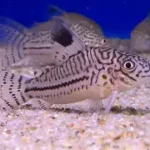
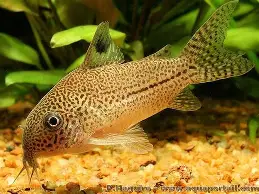
The confusion between true Corydoras julii and the far commoner Corydoras trilineatus — described by Cope in 1872 from the upper Amazon — dates back more than a century and is now deeply embedded in the aquarium trade. When exporters from central Brazil began shipping large numbers of small, spotted, Amazonian corys to Europe and North America in the mid-twentieth century, the attractive common name ‘Julii’ travelled with them regardless of the actual species being shipped. Today, an honest estimate is that well over 90 percent — perhaps 95 percent or more — of fish sold as ‘Julii Cory’ in Australian, North American and European retail are in fact C. trilineatus. Telling the two species apart requires looking carefully at the pattern itself: true C. julii displays a pattern of discrete, round, clearly-separated black spots scattered over a pale silver body and head, and a narrow horizontal line of darker pigment running along the middle of each flank that does NOT join up with the spots. Corydoras trilineatus, by contrast, shows markings that tend to fuse into horizontal lines (hence the species name *trilineatus* — ‘three-lined’), with the head markings often joining into vermiculations or broken stripes rather than remaining as independent round dots. If your fish has clear round dots that never touch each other and a body pattern dominated by spotting rather than linear markings, it is a strong candidate for true C. julii. If your fish has lines, merging markings or chain-like patterning across the head, it is almost certainly C. trilineatus.
This guide is written for the buyer who has confirmed — or wishes to confirm — that they are looking at the genuine species. Every subsequent section makes the assumption that you have done, or are about to do, that verification work.
Colour Forms & Morphs
⚫ Wild Corydoras julii (true Julii)
The genuine species: pale silver-grey body covered in discrete, round, well-separated black spots from head to caudal peduncle, a narrow uninterrupted dark line along the mid-flank, and a bold black blotch on the dorsal fin. Spots never merge into lines.
📝 Corydoras trilineatus (the ‘false Julii’ — what most shops actually sell)
The common substitute — horizontal lines or merged markings along the body, a reticulated or vermiculated pattern on the head, and a visible mid-flank stripe. If your fish shows lines rather than clean round dots, it is this species. See the companion guide.
🐅 Corydoras leopardus
A further look-alike from the upper Amazon — larger (up to 7 cm), more elongated in body shape, with finer spotting and a narrower snout. Occasionally confused with both C. julii and C. trilineatus by less experienced suppliers.
🕸 Corydoras reticulatus
A more distantly similar species with a genuinely net-like (reticulated) body pattern rather than discrete spots; rarely confused with true Julii on close inspection but sometimes mixed in on wholesale lists under generic ‘Julii-type’ labels.
True Corydoras julii is often described by long-time corydoras keepers as ‘the spotted one, nothing but spots’ — and that visual shorthand is accurate. The pale silver to off-white body is peppered with small, evenly-sized, round black dots from the gill cover to the base of the tail. Each spot is a discrete unit: it has a clean edge, a round outline, and sits in isolation from its neighbours. There are no linear markings of any kind across the body proper; only the narrow mid-lateral horizontal line (which is typical of many Corydoras and is not a ‘stripe’ in the C. trilineatus sense) and a dark blotch on the dorsal fin. The head pattern in true C. julii shows fine, dark, broken vermiculations, but these do not merge into continuous lines the way they do in C. trilineatus.
Compare this mentally with the look of Corydoras trilineatus: the body markings of trilineatus form or threaten to form horizontal lines, the head shows a chain-like reticulated pattern, and the overall impression is ‘striped’ rather than ‘spotted’. A photograph of the two species side by side makes the difference instantly obvious, and once a keeper has seen the distinction clearly, it becomes impossible to unsee.
True C. julii also tends to be slightly smaller than C. trilineatus at adult size (roughly 4.5–5.5 cm as against 5.5–6.5 cm for trilineatus), has a slightly shorter snout and a slightly more rounded body in profile. These differences are subtle and are not reliable on their own; the pattern is the diagnostic feature and should be the primary criterion for any buyer concerned about species identity. There are no recognised albino, long-fin or colour-morph forms of C. julii in the trade — any ‘albino Julii’ is almost certainly an albino C. trilineatus or C. aeneus and should be labelled accordingly.
Telling Males from Females
Sexing true Corydoras julii follows the same rules as other members of the genus and is best done by viewing mature adults from directly above. A mature female carries a broader, more oval silhouette when seen from the top of the tank, while a mature male appears more parallel-sided and torpedo-shaped. The difference is clearest in well-fed fish over 4 cm; juveniles are nearly impossible to sex reliably and any attempt to do so in fish under 3.5 cm is largely guesswork.
Unlike some fish families, there is no colour dimorphism in Corydoras julii — the pattern, spot density and fin colours are identical between the sexes. There is also no long-fin or extended-spine variant that is sex-linked. The only secondary sexual characteristic worth mentioning is that mature males develop a very slightly more robust first pectoral spine, a feature used in some Corydoras species for gripping the female during the T-position mating embrace; this is subtle and not reliable as a standalone sexing tool.
As with most corydoras, the practical approach for a keeper interested in breeding is to buy a group of six to eight juveniles of confirmed Corydoras julii provenance and allow them to mature in a stable, well-planted tank. A group of that size is statistically all but certain to contain both sexes, and the group dynamic provides the social stability that is essential for natural breeding behaviour to emerge.
| Feature | Male | Female |
|---|---|---|
| Body Shape (from above) | Slim and streamlined; parallel-sided when viewed from above | Noticeably broader across the body; oval outline when viewed from above |
| Size at Maturity | 4.5–5 cm; smaller and more slender | 5–5.5 cm; larger overall and deeper-bodied |
| Belly Profile | Flat ventral surface; belly does not extend below the pectoral line | Rounded, fuller belly, particularly when carrying eggs |
| Fin Proportions | Dorsal and pectoral fins slightly longer and more pointed; pectoral spines may be subtly stronger | Dorsal and pectoral fins slightly shorter and more rounded at the tips |
| Colouration and Pattern | Identical spotting to female; no sex-based colour difference | Identical spotting to male; no sex-based colour difference |
| Behaviour in a Group | More active; may chase females during pre-spawning periods; leads schooling movements | Less active day-to-day; conspicuous when gravid due to rounded belly; receives courting males in T-position mating |
Ideal Water Conditions
6.0–7.5
ideal 6.8
23–27 °C
ideal 25 °C
3–12 dGH
Soft to moderately hard; soft water preferred, particularly for breeding and long-term health
The coastal drainages of north-east Brazil — where the true Corydoras julii is found — differ in character from the classic Amazonian blackwater conditions associated with many popular corydoras species. The Rio Parnaiba and its neighbouring systems carry relatively clearer water with moderate mineral content derived from the surrounding semi-arid landscape, and tend to run slightly cooler on average than the lowland Amazon main-stem. The practical consequence for aquarium-keeping is that true C. julii is genuinely comfortable across a broad pH range (6.0 to 7.5) and tolerates moderate hardness well, with a slight preference for soft to medium-soft water around pH 6.8 and 4–10 dGH for long-term display.
Temperature is where the true Julii cory most clearly diverges from warm-water specialists like Corydoras sterbai. Genuine C. julii does best in the 23–27 °C range, with 25 °C as an excellent steady target and anything consistently above 28 °C imposing noticeable physiological stress. This makes true C. julii a better companion for mid-temperature communities (neon tetras, rummy-nose tetras, Apistogramma, Kribensis, most small community tetras) than for the warmest discus or altum-angel tanks. In fact, if a retailer claims their ‘Julii cory’ thrives at 28–30 °C, that is another subtle indicator that the fish may actually be C. trilineatus (which tolerates similar temperatures but again, is a different species) or another warmer-water relative mis-labelled at wholesale.
Water quality matters disproportionately. Corydoras as a group are bottom-dwellers, which means they are directly exposed to every piece of detritus, decomposing food fragment and waste particle that accumulates on the substrate. True C. julii is not unusually sensitive compared with other small corys, but its small adult size (under 5.5 cm) means it has less metabolic reserve to tolerate poor conditions. Weekly water changes of 25–30 percent, steady filtration, and gentle gravel siphoning of any uneaten food are essential. Chronically elevated nitrates (above 20 ppm) are a particular problem: they are strongly implicated in the barbel erosion and bacterial skin infections that are the most common avoidable health problems in captive corydoras.
Setting Up Your Aquarium
The single most important decision in setting up a Corydoras julii tank is the substrate. Like every member of the genus, true Julii corys forage constantly by pushing their short, sensitive barbels through the top layer of the substrate in search of microfauna and settled food. Barbels are not scaly skin — they are delicate sensory organs — and contact with coarse, sharp, or angular substrate abrades them progressively over months. The result is a slow erosion that first shortens the barbels and then opens them to bacterial infection, often misdiagnosed at the ‘sick cory with missing whiskers’ stage when it is really a husbandry problem that has been going on for a year. Use fine, rounded, inert sand (particle size 0.1–0.5 mm) such as aquarium-grade silica sand or pool-filter sand — dark-coloured sand is aesthetically ideal because it brings out the crisp contrast of the black spots on the pale silver body.
An 80-litre tank is a practical minimum for a school of six true C. julii, with 90–100 litres strongly preferred if the tank will also contain a small schooling fish and either a dwarf cichlid pair or another bottom-dweller. The floor space is more important than the tank height — these are bottom fish that use the horizontal footprint far more than the vertical column. A standard 80 x 35 x 30 cm tank provides more usable substrate area for a cory school than an equally-sized cube of similar volume.
Planting should be moderate to dense. True C. julii in the wild frequents riverbanks shaded by overhanging marginal vegetation, so it prefers diffuse light and plenty of visual shelter. Easy-growing plants that tolerate the soft-to-moderate water of the Parnaiba range are ideal: Cryptocoryne wendtii and C. parva at the base, Anubias nana on driftwood, Java fern across shaded back zones, and some Vallisneria or small Amazon sword plants for vertical structure. Add a few pieces of smooth driftwood — tannin-releasing woods such as spider wood or Malaysian driftwood are excellent — to provide visual breaks and resting spots. Dry Indian almond (catappa) leaves scattered across the substrate are an authentic touch; they release tannins, mildly acidify the water, and are grazed by the corys throughout the day as they soften.
The Julii cory is diurnally active but appreciates subdued conditions. A floating plant layer (Amazon frogbit, small water lettuce, or just a patch of Salvinia) gently diffuses the lighting and replicates the shaded riverbank habitat the species evolved in. Lids are required — these fish are not notorious jumpers but they gulp atmospheric air at the surface and may occasionally launch themselves over an open edge, particularly during feeding excitement or after a water change.
Tank
80 L (21 gal) minimum for a school of 6 true C. julii; 90–100 L strongly recommended for a balanced community
Filter
Sponge filter, canister with spray bar, or baffled HOB — gentle-to-moderate flow with strong oxygenation at the surface
Heater
50–100 W adjustable heater set to 25 °C; avoid running permanently above 27 °C
Substrate
Fine, rounded, inert sand (0.1–0.5 mm) — dark-coloured where possible for best contrast against the spotted pattern
Lighting
Low to moderate intensity LED; diffused further by floating plants to replicate shaded coastal streams
Driftwood and Decor
Smooth spider wood or Malaysian driftwood, rounded stones, a few catappa leaves on the substrate — no sharp edges
Plants
Cryptocoryne, Anubias, Java fern, Vallisneria; leave open sand lanes at the front for foraging
Thermometer
Accurate digital or glass thermometer; small species-specific stress appears quickly when temperatures drift above 28 °C
Feeding Guide
True Corydoras julii is an opportunistic omnivore with a clear bias toward small invertebrate prey, tiny crustaceans, and the biofilm/detritus layer that accumulates on a healthy mature substrate. In the aquarium, because the species is small (under 5.5 cm) with a correspondingly small mouth, food particle size matters as much as composition. Standard cory pellets and large sinking wafers are often too big for C. julii to handle efficiently, and in mixed-community tanks the corys can be outcompeted by larger or faster fish before the food reaches them in consumable form.
Build the staple diet around small sinking pellets (1–2 mm), crushed fragments of larger wafers, and micro-sized community pellets formulated for small bottom-feeders. Supplement two to three times per week with frozen daphnia, frozen cyclops, small frozen bloodworm, or thawed and finely chopped larger frozen foods — the protein supplementation maintains condition and is particularly valuable when conditioning for breeding. Live foods (live daphnia, live baby brine shrimp, live microworms) are taken with great enthusiasm and are the single best trigger for spawning behaviour.
Feeding behaviour is vigorous but methodical. C. julii will emerge quickly at feeding time but tends to forage rather than gorge, exploring the substrate with its barbels for several minutes to locate every scrap. Feed at a time of day when the corys will not be out-competed by daytime mid-water feeders — last thing before lights-out works very well for most community configurations, as the corys continue to forage in dim conditions when most tank-mates have settled for the night.
Do not rely on the common assumption that corydoras will ‘clean up’ uneaten food from other fish. This is the single most widespread myth about the genus and is directly responsible for chronic underfeeding of cory schools across the hobby. Corys will opportunistically eat fragments that reach the substrate, but they need their own food provided directly and at an appropriate particle size. An underfed cory develops a characteristic ‘sunken belly’ — a concave ventral profile visible from the side — and this appearance in a fish that is otherwise swimming normally is almost always diet-related.
Breeding Guide
Week -2 to -1
Conditioning
Feed the group heavily with live and frozen foods; reduce temperature gradually
Day 0
Spawning Trigger
Large cool water change; barometric drop in weather helps
Day 0–1
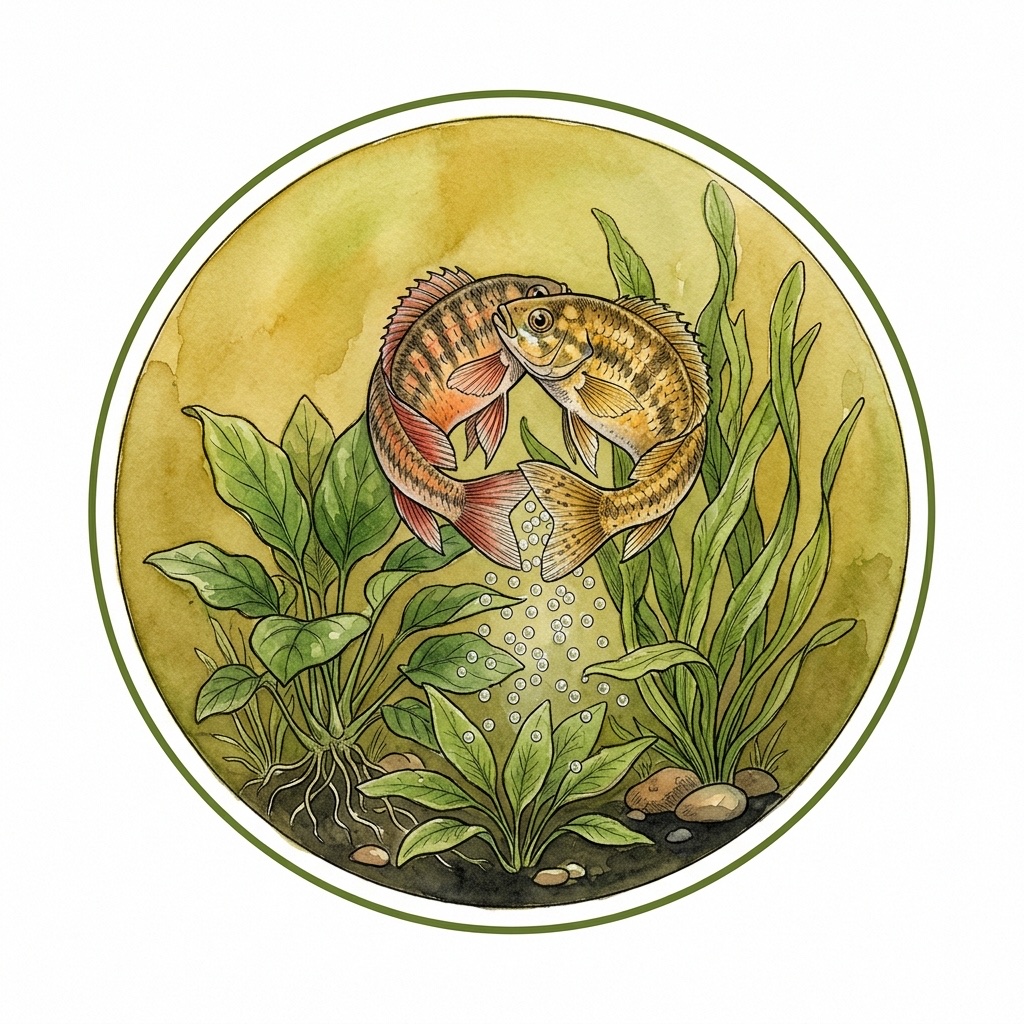
Courtship and T-Position Mating
Males pursue female; T-position embrace; female cups eggs in pelvic fins
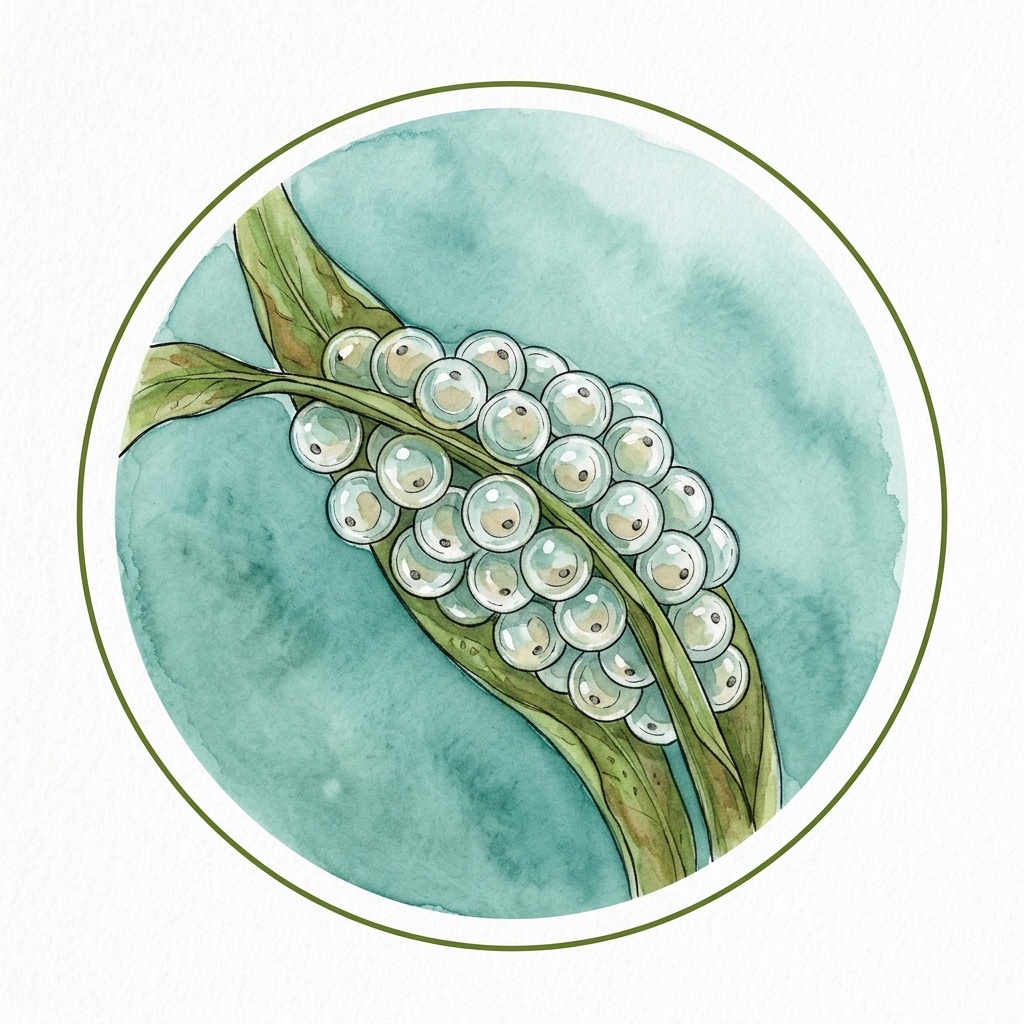
Day 1–3
Egg Deposition and Care Decision
Total clutch 40–120 eggs; adults will eat eggs if left
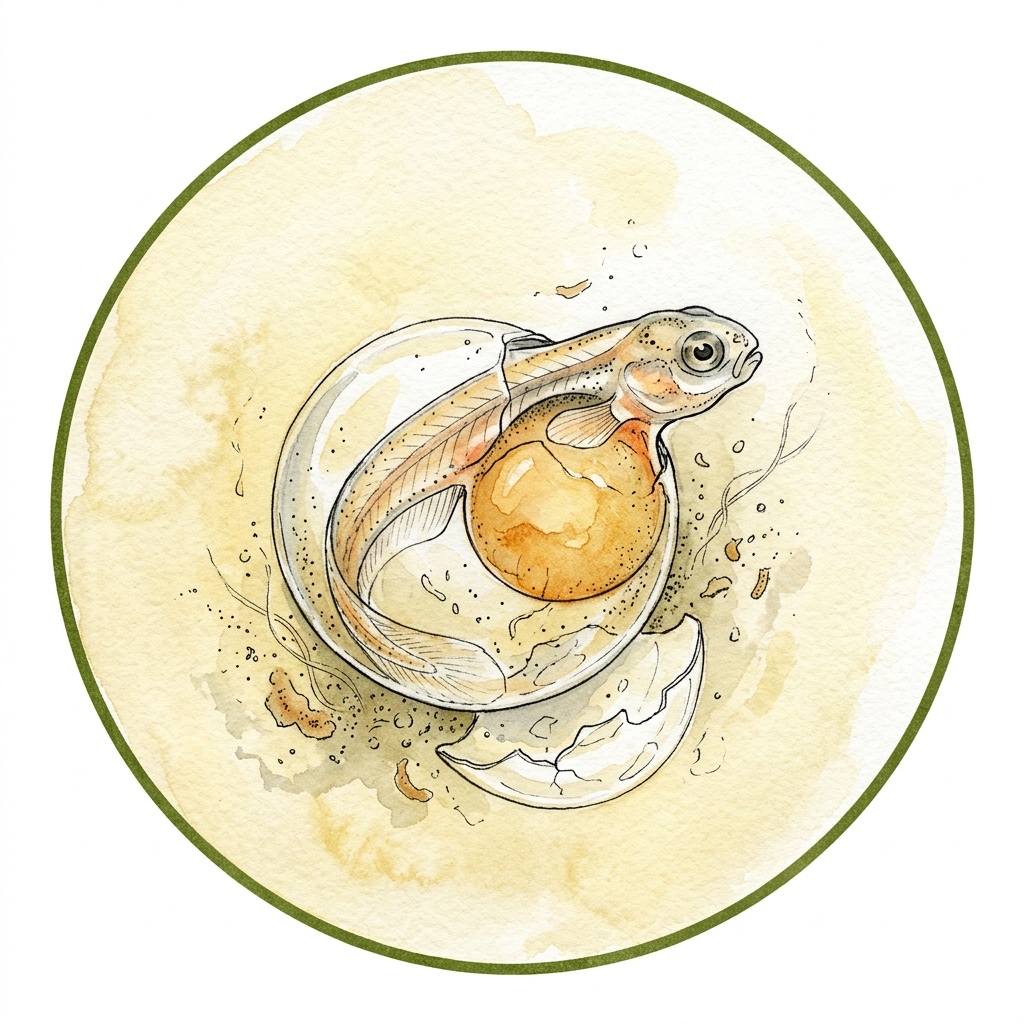
Day 4–6
Egg Development and Hatching
Eggs darken; hatch 3–5 days after fertilisation
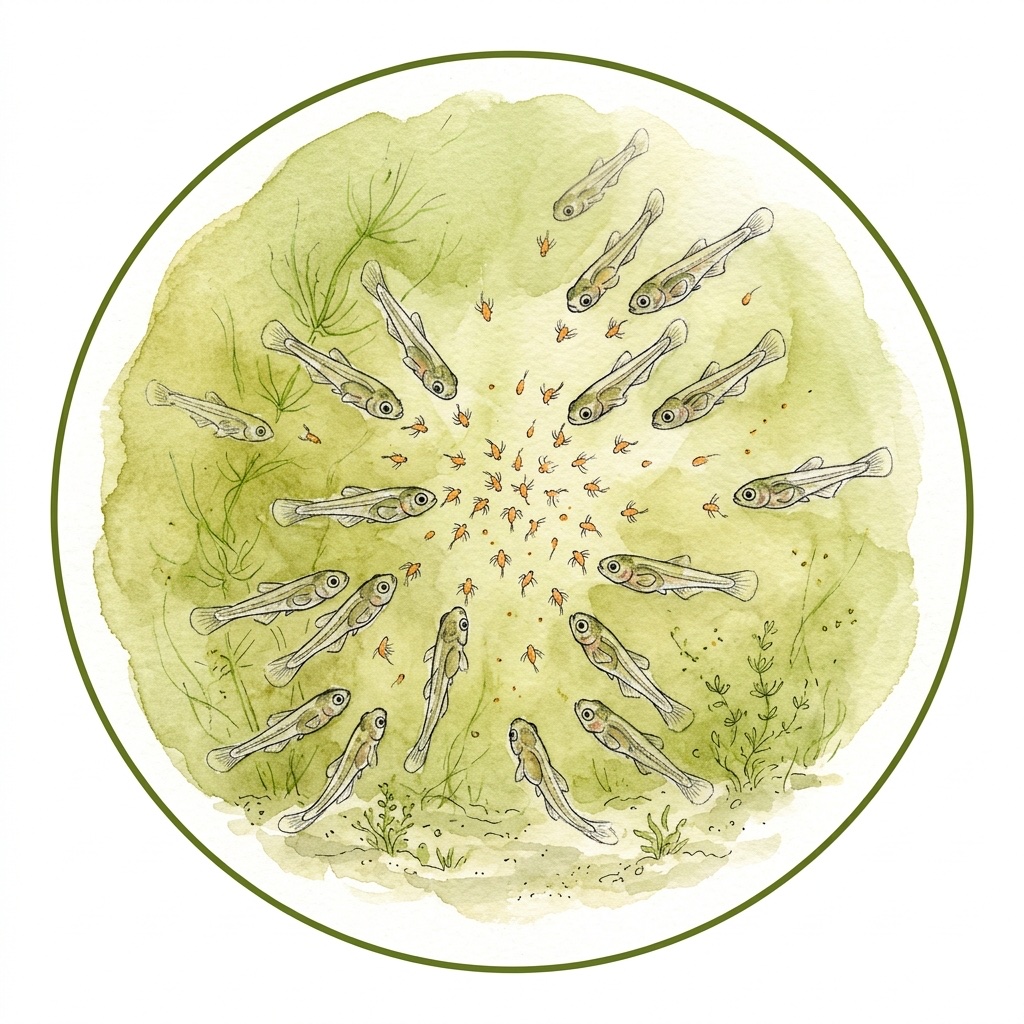
Day 7+
Free-Swimming Fry
Feed microworm and baby brine shrimp; grow on in a clean rearing tank
Conditioning
Bring the breeding group into condition by feeding generously twice a day for ten to fourteen days — frozen daphnia, frozen bloodworm, and live baby brine shrimp are all excellent conditioning foods. Mature females will visibly round out across the body as egg mass develops; from above, the difference between a conditioned female and a resting male becomes unmistakable. During this window, gradually bring the tank temperature down from the maintenance 25 °C toward 23 °C to simulate the cooler pre-rainy-season period in the coastal north-east Brazilian drainages. True C. julii responds to slightly cooler conditioning followed by a gentle rewarm — this is a subtle but reliable pattern across the species in the wild.
Spawning Trigger
Perform a 30–40 percent water change using water that is 2–3 °C cooler than the tank. This mimics the onset of the rainy season, when cooler, oxygen-rich rainwater pulses through coastal streams and brings invertebrate prey into the water column. Many cory breeders time this water change to coincide with a natural drop in barometric pressure before a storm — the fish unmistakably respond to the combination of cooler, fresher water and falling pressure. Within 6–24 hours of this trigger, conditioned males become visibly more active and begin the characteristic pre-spawning pursuit.
Courtship and T-Position Mating
The courtship phase is classically corydoras: one or more males pursue a ripe female around the tank in short, energetic bursts. When the female is receptive, the pair adopts the famous T-position — the female places her head against the flank of the male, perpendicular to his body, and the male curls his body and pectoral fin over her. The classical ichthyological interpretation is that the female takes milt into her mouth at this moment; a newer interpretation, supported by high-speed video of several Corydoras species, is that fertilisation takes place externally via sperm released near the female’s gills and drawn down her body. Either way, within seconds the pair separates, the female swims away with her pelvic fins cupped to hold 2–6 freshly fertilised eggs, and she selects a spawning surface — a broad plant leaf, the clean front glass, or a flat section of driftwood — on which to press the eggs.
Egg Deposition and Care Decision
The spawning session repeats many times over several hours, and a well-conditioned female of true C. julii typically lays 40–120 eggs in total, in small clutches scattered across multiple surfaces around the tank. The eggs are 1.5–2.0 mm across, adhesive, and initially pale cream. Corydoras do not parentally care for eggs or fry; adults will eat eggs opportunistically if given the chance. The standard breeder response is either to remove the adults after spawning finishes or to carefully roll the eggs off their surfaces (a fingertip works well) and transfer them into a small hatching vessel — typically a plastic container with aged tank water, an airstone for gentle circulation, and a drop of methylene blue to suppress fungus.
Egg Development and Hatching
Under the recommended incubation temperature of 25–26 °C, C. julii eggs develop over three to five days. Fertile eggs darken from the initial pale cream toward a greenish-grey and the developing embryo becomes visible through the translucent egg wall as a dark curl. Infertile or fungused eggs turn opaque white and should be removed promptly to prevent the fungus spreading to neighbours. Hatching occurs over a 24–48 hour window; newly hatched fry are relatively large and robust for the size of the parents, and they spend approximately 48 hours on the substrate consuming their yolk sacs before they become free-swimming.
Free-Swimming Fry
Once fry become free-swimming, they immediately begin the classic corydoras bottom-foraging behaviour. Offer microworms, newly-hatched Artemia (baby brine shrimp), and finely crushed dry food from day one; a second feed mid-day helps growth rate considerably. Keep the rearing vessel scrupulously clean — fry are vulnerable to bacterial water-column infections — with gentle water changes of 10–15 percent every two to three days using matched-temperature, matched-chemistry water. Spot pattern begins to emerge from around three weeks; by six weeks, juveniles look like small adults and can be moved to a grow-out tank. Reaching 2.5 cm and being safely introduced to a community tank typically takes four to six months. HONEST NOTE: because so few fish in the trade that are labelled ‘Julii Cory’ are actually Corydoras julii, there are relatively few aquarists worldwide who have bred the genuine species under the correct name. Commercial captive breeding of true C. julii is much rarer than of C. trilineatus, and most ‘tank-bred Julii cory’ on the market are in fact tank-bred C. trilineatus. If you successfully breed the real species you will be contributing meaningfully to the hobby’s understanding of it.
Compatible Species
True Corydoras julii is a classic peaceful community catfish. Its armoured body and small size combine to make it almost invulnerable to casual harassment by peaceful tank-mates while keeping it unobtrusive and non-territorial toward everything else in the tank. The species’ mild temperature preferences (23–27 °C) and moderate water-chemistry tolerances place it squarely within the comfort zone of most standard soft-water community setups built around tetras, rasboras, small gouramis and peaceful dwarf cichlids.
In practical terms, there are three rules to remember when planning a C. julii community tank. First, keep them in a group of at least six — this is not a cosmetic recommendation but a welfare requirement, as isolated or small-group corys experience chronic stress, forage much less effectively, and tend to hide for long periods. Second, avoid any tank-mate large enough to consider the corys as food — large cichlids, large catfish, and predatory barbs are all poor choices regardless of their reputation for being ‘peaceful’. Third, be cautious with mixed-species cory groups. Corydoras julii, C. trilineatus, C. aeneus, and C. sterbai will all cohabit without aggression, but mixed schools complicate breeding, make positive species identification in the fry stage nearly impossible, and contribute over time to the same species-confusion problem that produced the Julii/trilineatus trade mess in the first place. If you care about maintaining clean genetic lines of true C. julii (and you should, given how rare it is in the trade), keep the species in a single-species group or pair it only with obviously distinct tank-mates.
The buyer guide element remains relevant even in a community-tank context: if your ‘Julii cory’ school actually turns out to be C. trilineatus, the compatibility list above is essentially unchanged (trilineatus has the same community requirements), but the species identification matters enormously for breeding, for any future sales you might make, and simply for keeping the hobby honest. The community section of this guide applies to the genuine species as written; for C. trilineatus-specific community considerations, consult the companion false-julii guide.
BUYER FAQ — ‘Am I Buying a True Julii?’: This is the single most important question for anyone considering this fish. Approach every purchase labelled ‘Julii Cory’ with the assumption that you are most likely being offered C. trilineatus, and only accept it as true C. julii after pattern verification. Ask the retailer three direct questions: (1) Can you confirm this is Corydoras julii and not Corydoras trilineatus? A good supplier will know the distinction and will either confirm, correct, or defer to their own supplier’s documentation; a vague or defensive answer is itself informative. (2) What is the collection locality or provenance? Genuine wild-caught C. julii comes from coastal north-east Brazil (Rio Parnaiba, Rio Fortaleza); wild-caught C. trilineatus comes from the upper Amazon (Peru, Colombia, upper Brazil). If the answer is ‘Amazon’ or ‘Peru’, the fish is almost certainly C. trilineatus regardless of the label on the tank. (3) May I photograph the fish from above and from the side before purchase? A confident retailer will be happy to accommodate, and the photograph gives you a reference for the spot-versus-line pattern test described in the Name Origin section of this guide. If after all this you remain uncertain, the honest default is to treat the fish as ‘Corydoras sp., julii-complex’ — accept the purchase if you are happy with the animal at the price offered, but do not pass on claims of species identity to future buyers if you cannot verify them yourself. Keeping accurate species names in circulation is the single most effective thing individual hobbyists can do to slow the decades-old Julii/trilineatus trade confusion. If the fish you take home turns out on closer inspection to be C. trilineatus, the care requirements are nearly identical and your fish will do well; simply switch to the companion false-julii guide for the correct species label and any trilineatus-specific husbandry notes, and update your own tank records accordingly.
| Species | Why | |
|---|---|---|
| ✅ | Neon Tetra | Classic community pairing; neons school in the mid-water and ignore the substrate, leaving the corys complete control of the bottom zone at compatible temperatures |
| ✅ | Cardinal Tetra | Similar water-chemistry preferences and completely different habitat zones; soft, slightly acidic water suits both species well |
| ✅ | Rummy Nose Tetra | Peaceful mid-water schooler that prefers the same soft-water, moderate-temperature conditions as true C. julii |
| ✅ | Honey Gourami | Gentle surface and mid-water fish; no competition at the bottom level and no aggression toward small armoured catfish |
| ✅ | Apistogramma (Dwarf Cichlid) | Most Apistogramma species coexist peacefully with small corys; the corys are agile enough to evade cichlid posturing and are protected by their armoured flanks |
| ✅ | Flame Tetra | Small, peaceful, mid-water schooler with similar water-quality tolerances; adds colour without pressuring the substrate |
| ✅ | Peacock Gudgeon | Gentle sub-surface fish that shares water-chemistry preferences with C. julii and does not interfere with the bottom-foraging zone |
| ✅ | Other Corydoras (trilineatus, sterbai, aeneus) | Mixed-species cory groups generally coexist without conflict; keep in mind that mixed schools reduce spawning clarity (cross-species identification of eggs and fry can be impossible) and increase the risk of future hybridisation in the trade |
| ❌ | Large Cichlids (Oscars, Jack Dempseys, Green Terrors) | Will attempt to eat small corys; even when the armour prevents swallowing, the cory’s locking pectoral spine can lodge in the predator’s throat and cause serious injury to both fish |
| ❌ | Large Predatory Catfish (e.g. Redtail Catfish, large Pimelodidae) | Direct substrate competitors or predators; small corys are eaten or outcompeted for food |
| ❌ | Goldfish and Other Coldwater Species | Temperature incompatibility — goldfish prefer 15–20 °C whereas true C. julii requires 23–27 °C; neither species thrives in the other’s range |
| ❌ | Aggressive Loaches (e.g. large Botia species) | Compete aggressively for bottom territory and may nip at small corys, particularly at night; calmer small loaches (kuhli, dwarf chain) are fine but larger Botia are a poor match |
Quick Reference
| Scientific Name | Corydoras julii (Steindachner, 1906) |
| Origin | Brazil — Rio Parnaiba / Rio Fortaleza (coastal NE, NOT Amazon) |
| Adult Size | 4.5–5.5 cm |
| Lifespan | 5–8 years |
| pH | 6.0–7.5 (ideal 6.8) |
| Temperature | 23–27 °C (ideal 25 °C) |
| Hardness | 3–12 dGH |
| Min Tank | 80 L for a school of 6 |
| Group Size | 6+ minimum; 8–10 recommended |
| Care Level | Beginner (if species identification is correct) |
| Diet | Small sinking pellets, frozen daphnia, bloodworm, live foods |
| Breeding | T-position egg scatterer; cool water change trigger |
| Tank Zone | Bottom / substrate |
| Trade Status | RARE under the correct name — 95%+ of ‘Julii Cory’ in Australia is actually C. trilineatus |
| Identification Rule | Discrete round dots = true C. julii. Horizontal lines / merged markings = C. trilineatus (false Julii) |
| Keeper Tip | If in any doubt, treat the fish as ‘Corydoras sp., julii-complex’ and verify pattern before committing to the species name. |
Related Products

Reviews
Clear filtersThere are no reviews yet.