🪨 Species at a Glance
| Scientific Name | Botia lohachata |
| Alternate Genus | Sometimes classified as Yasuhikotakia lohachata |
| Common Names | Pakistan Loach, Yoyo Loach, Reticulate Loach, Almora Loach |
| Family | Botiidae |
| Origin | South Asia — Ganges, Indus, Brahmaputra & Mahanadi river basins |
| Adult Size | 12–15 cm (4.7–5.9 in) |
| Lifespan | 10–15 years |
| Water Type | Tropical Freshwater |
| Temperature | 24–28 °C (75–82 °F) |
| pH Range | 6.5–7.8 |
| Hardness | 5–15 dGH |
| Care Level | Intermediate |
| Minimum Group | 5+ (strongly social) |
| Tank Position | Bottom to lower-midwater |
| Min Tank Size | 150 L (40 gal) for a group of 5 |
Meet the Species
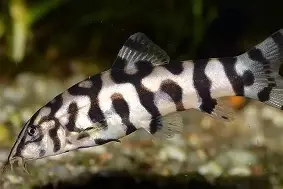
The Pakistan Loach has one of the more entertaining naming histories in the aquarium trade, and both of its common names are rooted in something a keeper can actually see with their own eyes. The name ‘Yoyo Loach’ was coined in the 1970s by aquarist Ken Childs, who noticed that the dark bars running down the flanks of juvenile specimens repeatedly formed shapes resembling the letters Y-O-Y-O when viewed from the side. Hold a young Botia lohachata up to the light and the resemblance is genuinely uncanny — two Y-shapes enclosing a pair of rounded O-markings, repeating along the silver body like printed text on a label. It is the kind of natural pattern that, once pointed out, is impossible to un-see, and the nickname stuck so firmly that many retailers now sell the species under the Yoyo name alone, sometimes to the point where first-time buyers do not realise Yoyo Loach and Pakistan Loach are the same fish.
The second name, ‘Pakistan Loach,’ is a nod to the fish’s geographical distribution rather than any exclusive Pakistani origin. Botia lohachata is found throughout the great river systems of the northern Indian subcontinent — the Ganges and Brahmaputra in India and Bangladesh, the Indus and its tributaries in Pakistan, and the monsoon-fed streams of lowland Nepal. In the early days of the ornamental trade during the 1960s and 1970s, a significant proportion of specimens were exported through Karachi, and the name attached itself to the species in English-speaking markets even though Indian and Bangladeshi exporters now supply most of the stock. The species epithet ‘lohachata’ derives from a local Bengali name for the fish, a nice linguistic thread connecting the hobby label back to the people who have known, caught, and eaten this loach for centuries. In parts of its native range the fish is a minor food species, harvested alongside more economically significant carps and catfish from monsoon-flooded rice paddies and side channels.
Taxonomy, as ever with botiid loaches, is not entirely settled. The species was described by Chaudhuri in 1912 and placed originally in Botia, where it has remained the default genus in most reference works and commercial catalogues ever since. However, since the turn of the millennium molecular phylogenetic work — in particular the 2004 and 2012 revisions of the family Botiidae by Kottelat and colleagues — has split the classical Botia into multiple smaller genera including Yasuhikotakia, Syncrossus, Chromobotia, and Ambastaia. Some sources now list the Pakistan Loach as Yasuhikotakia lohachata, but the weight of the current literature and virtually all retail labelling continues to use Botia lohachata, and that is the name you will encounter in Australian shops and on your invoice. Whichever label you prefer, the fish itself — inquisitive, vocal, durable, genuinely long-lived, and utterly charming once settled in — remains the same.
One last naming note worth mentioning: you will occasionally see the species sold as ‘Almora Loach’ or ‘Reticulate Loach,’ particularly in older literature or from specialist importers. ‘Almora’ refers to a town in the Indian state of Uttarakhand near the species’ historical type locality, while ‘Reticulate’ captures the net-like adult pattern that emerges as the juvenile Y-O-Y-O letters broaden and merge. All four names — Pakistan Loach, Yoyo Loach, Almora Loach, Reticulate Loach — refer to exactly the same fish.
Spot the Difference: Male & Female
Honesty first: the Pakistan Loach is a poorly dimorphic species, and any guide that claims otherwise is oversimplifying to seem authoritative. Outside of active breeding condition, telling males from females by eye is genuinely difficult even for experienced keepers. The cues that do exist — a marginally fuller belly on a mature female, a slightly more streamlined silhouette on a male, perhaps a subtly more pointed caudal fin lobe on some males — only become visible once the fish are well into adulthood, in good condition, and being observed over time rather than in a single snapshot. Juvenile and sub-adult specimens are effectively impossible to sex at the point of purchase, and no retailer can reliably provide a sexed pair or trio of this species without having grown the stock out themselves.
The practical takeaway is that obsessing over a perfect male-to-female ratio is not a productive use of energy with this species. Buy a group of five, six, or more, feed them well, give them space, and let the group sort itself out. In a conditioned, happy group you will eventually identify the females by their visibly rounder abdomens — best viewed from directly above after a substantial feeding, when a gravid female’s pear-shaped silhouette contrasts clearly with the parallel-sided profile of males. You may also notice minor behavioural differences during seasonal cues or after large cool water changes, with males tending to chase and females taking cover, but these are fleeting and unreliable as a general ID method.
For the vast majority of keepers, the species reads as a uniform social mass rather than a sexed collection of individuals, and that is perfectly fine. Pakistan Loaches are kept as groups for their group dynamics, not as breeding pairs, and the handful of keepers who have pursued breeding have all worked with large, mixed-sex groups rather than carefully selected pairs. If you ever want to narrow the group down for a breeding attempt, the approach is straightforward but slow: grow a group of eight or more out over 18–24 months on a rich, varied diet, then identify the clearly gravid females by top-down observation after a major meal. Even then, expect to be wrong about a third of the time — the morphological cues in this species are genuinely that subtle.
| Feature | Male | Female |
|---|---|---|
| Body Shape | Slightly slimmer, more torpedo-like profile | Fuller abdomen, particularly rounded when gravid |
| Size at Maturity | Typically 11–13 cm | Often reaches the upper end of the range, 13–15 cm |
| Belly Contour (from above) | Straight, parallel lines | Pear-shaped outline widening toward the vent |
| Caudal Fin Tips | Occasionally slightly more pointed in mature specimens | Usually rounder, though heavily overlapping with males |
| Colour Intensity | Can look marginally crisper outside breeding season | May dull slightly when carrying eggs |
| Difficulty to Sex | Very difficult — poorly dimorphic species | Only reliably identifiable when visibly gravid |
Visual Varieties
🟡 Juvenile Yoyo Pattern
Silver-cream base crossed by dark, sharply defined bars that visibly spell Y-O-Y-O shapes; the classic image most hobbyists think of when they hear ‘Yoyo Loach.’
⚫ Adult Reticulate Pattern
As the fish matures, the crisp juvenile bars widen and interconnect into a broader net-like or reticulated pattern on a slightly more olive-silver base.
🔄 Transitional Phase
Sub-adults between 6 and 9 cm often display a hybrid look — the Y-O-Y-O letters still visible but starting to bleed into the adult reticulation, especially around the tail.
⚪ Botia kubotai (Polka Dot Loach)
A closely related cousin from Myanmar with black-on-white polka-dot markings rather than bars — sometimes confused with Pakistan Loach in stores, though clearly distinct once side by side.
💠 Botia histrionica (Burmese Border Loach)
Another relative from the Irrawaddy basin, displaying 3–4 broad dark saddles rather than the fine Y-lettering — often mixed in with B. lohachata shipments from older wholesalers.
The Pakistan Loach is famous for a pattern that dramatically rewrites itself as the fish grows up, a phenomenon called ontogenetic colour change that is surprisingly uncommon in the botiid family. In a store tank full of small juveniles, you will see the classic Y-O-Y-O lettering at its purest: silvery base, clean separation between dark and light, almost stencilled in its precision. The bars are narrow relative to the lighter gaps between them, giving the fish that distinctive ‘printed’ look that supplied the common name. Bring a group home, settle them in, and watch what happens over the following twelve to eighteen months. As the fish approach sub-adult size around 8 cm, the dark bars begin to widen. Vertical and horizontal strokes that once formed clean letters start to touch, branch, and connect. By the time your loaches reach adult size at 12–15 cm, the Y-O-Y-O is gone; in its place is a beautiful interconnected reticulation, dark ink splashes across a silver-olive flank, that looks nothing like the fish you originally bought.
This is not a defect, and it is not selective breeding gone sideways — it is simply normal development in Botia lohachata. Keepers who are unaware of the change sometimes worry their fish is sick or crossbred; in reality, the adult reticulate pattern is every bit as attractive as the juvenile form, just different in character. Think of it less as loss and more as maturation: the crisp graphic quality of the juvenile yields to the softer, more complex texture of the adult, and both are genuinely beautiful in their own right. Good water quality, a varied diet, and the calm that comes from living in a proper group of five or more will all deepen the contrast between dark and light, whatever life stage your fish is in. Pale, washed-out individuals almost always signal stress — bullying by a dominant tankmate, water quality problems, temperature instability, or simply loneliness in a group that is too small. A healthy Pakistan Loach should look crisp and high-contrast whether it is three centimetres or fifteen.
It is also worth keeping in mind that stores frequently mix Pakistan Loach with closely related species — either accidentally through wholesaler errors or deliberately to pad out shipments. Botia kubotai (the Polka Dot Loach from Myanmar), Botia histrionica (the Burmese Border Loach), and occasionally Botia striata (the Zebra Loach from southern India) all look superficially similar as juveniles but diverge dramatically as adults. If you notice one individual in a group of ‘Yoyo Loaches’ developing a very different pattern — large round polka dots on a pale background, or three or four broad dark saddles rather than connected bars — you probably have a mis-shipped relative rather than a defective Pakistan Loach. The good news is that all these species share similar care requirements and generally cohabit without issue, so an accidental mixed group is a curiosity rather than a problem. The only practical caveat is that full-grown B. histrionica can reach 16 cm and B. kubotai can hit 13 cm, so bioload calculations should assume adult size rather than juvenile size in case of mixed stock.
Water Quality Requirements
6.5–7.8
ideal 7.2
24–28 °C
ideal 26 °C
5–15 dGH
Neutral, moderately hard water tolerated well
Pakistan Loaches are genuinely tolerant water-parameter generalists, which is one of the reasons they have thrived in the hobby for half a century. Their native rivers swing dramatically with the monsoon cycle — clear and low during the dry season, turbid and fast during the rains, sometimes varying by several degrees of temperature and half a unit of pH between wet and dry months — and the species evolved to handle a broad envelope of conditions. Target a pH between 6.5 and 7.8, temperatures of 24 to 28 °C, and a moderate hardness of 5 to 15 dGH. Within those ranges you can go almost anywhere and the fish will be fine; what they cannot tolerate is instability, ammonia or nitrite readings above zero, or nitrate levels that creep into triple digits. A tank with Pakistan Loaches should test zero for ammonia and nitrite at all times and ideally stay under 20 ppm nitrate, with 40 ppm as a soft upper limit before a water change is overdue.
Because adults reach 15 cm and are heavy-bodied, active fish, the biological load of a mature group is considerably higher than you might expect from first appearances at the store where the fish are still 4–5 cm juveniles. Do not under-filter. A canister filter rated for double the tank volume, or a pairing of a canister and a large sponge filter, gives you the headroom needed to absorb the peaks — the moments after a heavy feeding, the day after a big water change disrupts the biofilm, the week your vacation sitter overfeeds a little. Flow should be brisk but not punishing — a current the fish can work against when they want to, with calmer eddies behind rockwork and driftwood where they can rest. A simple rule of thumb: if you see the group actively swimming into the current for fun, flow is appropriate; if they are constantly pinned against the substrate or all hiding in the calmest corner, flow is too strong.
Aim for weekly water changes of 25–30 %, temperature-matched and dechlorinated, and test regularly during the first two months of a new setup. Use a proper heater controller or, better, two smaller heaters rather than one large unit — Pakistan Loaches are unusually sensitive to cold shock despite their otherwise tough reputation, and a stuck or failed heater on a winter night is one of the most common triggers for catastrophic ich outbreaks in this species. Once stable, Botia lohachata is among the more forgiving loaches in the hobby — but the key word remains stable. A pH that sits at 7.4 for years is vastly better than one that oscillates between 6.8 and 7.6 because the tap water changes seasonally and nobody has remineralised the RO top-up. If your municipal water is unusually variable, consider storing and remineralising water for 24 hours before using it for water changes. The investment in a 25-litre HDPE drum and a basic heater-pump pair pays for itself many times over in fish health across a decade of keeping.
Feeding Schedule & Diet
Pakistan Loaches are confident, enthusiastic omnivores and arguably the most talented snail-eaters in the hobby. In the wild they work the margins of sandy riverbeds and gravel bars, sifting for insect larvae, small crustaceans, worms, and — most famously — any molluscs they can crush between their robust pharyngeal teeth. The pharyngeal apparatus in botiid loaches is genuinely impressive: a paired set of heavy grinding plates deep in the throat that can reduce a bladder snail shell to fragments in seconds. Put a group in a snail-infested aquarium and within a few weeks the pest population will be gone, cracked shells the only remaining evidence scattered across the substrate. This is the single most-requested feature of the species, and it is not marketing — it is simply how the fish is wired. Malaysian trumpet snails, bladder snails, ramshorn juveniles, pond snails, and the infant stages of almost every common aquarium snail are all fair game. Adult Mystery and Nerite snails are often (though not always) safe due to sheer size and shell hardness, but expect any vulnerable snail to be methodically investigated, harassed, and — if the shell or operculum gives an opening — eaten.
In captivity, build the diet around a high-quality sinking pellet or wafer as the daily staple. Hikari Sinking Carnivore Pellets, New Life Spectrum Sinking Pellets, Repashy Bottom Scratcher, and Omega One Shrimp Pellets all work well; rotating between two or three staples prevents dietary monotony and covers any gaps in micronutrient profiles. Supplement three or four times per week with frozen foods — bloodworm, brine shrimp, tubifex, krill, chopped mysis, and daphnia are all eagerly accepted and trigger the full range of natural foraging behaviours. Live foods (earthworm pieces, grindal worms, baby brine shrimp, white worms) trigger the most dramatic feeding response and are excellent for conditioning, though they require either a reliable supplier or a small home culture. Blanched vegetables such as zucchini medallions, cucumber slices, and shelled peas are generally ignored in favour of protein, but are worth occasionally offering for fibre — the occasional Pakistan Loach does develop a taste for them, and vegetable matter contributes to gut health even when only nibbled.
A note on snails specifically: if you are keeping Pakistan Loaches primarily for pest snail control, you can let them work the tank naturally for the first one to two weeks while reducing prepared food. The hunger drives them to actively search out and crack open even hidden snails buried in the substrate. Once the pest population is meaningfully knocked back, resume normal feeding — a starving loach is not a happy loach, and prolonged under-feeding with a depleted snail population can redirect their predatory focus toward any dwarf shrimp or small tankmates present.
Feed once or twice daily in quantities the group consumes in three to four minutes. Pakistan Loaches are greedy — they will happily eat beyond what is good for them — so portion control matters, particularly with sedentary adults in smaller setups. A visibly sunken belly between meals is normal and desirable; a constantly distended abdomen signals overfeeding and, long-term, leads to fatty liver and shortened lifespan. One 24-hour fasting day per week is beneficial and closely mimics the natural feast-or-famine pattern of monsoon-driven river systems. A well-fed, exercised Pakistan Loach should look sleek and torpedo-shaped, not pot-bellied.
Tank Requirements & Layout
A 150-litre (40-gallon) tank is the realistic minimum for a group of five adult Pakistan Loaches, and for long-term adult groups something in the 200- to 300-litre range gives vastly better results. Two things drive the size requirement: adult body length (a well-grown specimen pushing 15 cm needs room to turn without bumping the glass) and the sheer quantity of caves and shelter the group will use. Footprint matters more than volume — a long, shallow 150-litre tank at 120 cm x 40 cm x 35 cm is a far better Pakistan Loach home than a tall 150-litre tank at 60 cm x 40 cm x 60 cm, even though the water volume is identical. These are bottom-dwellers, and bottom-dwellers live in square centimetres of floor space, not litres of water column. Under-housed loaches turn snappy and territorial, while properly housed loaches are endlessly entertaining.
Substrate should be fine sand or smooth, small-diameter gravel. The species spends considerable time sifting, resting on, and occasionally partially burying itself in the substrate, and any sharp or coarse material — particularly the angular crushed quartz often sold as ‘aquarium gravel’ — will damage their sensitive barbels over time, leading to erosion, infection, and eventual barbel loss. Once a barbel is gone it does not grow back. Pool filter sand, river sand, or smooth rounded pea gravel of 2–4 mm grain size are all excellent choices. A bed depth of 3–5 cm is plenty; Pakistan Loaches are not deep-burrowers like kuhlis, just casual sifters.
Aquascape with a generous emphasis on shelter: build overlapping stacks of smooth river stones, slate, and terracotta caves so that every loach in the group has at least two hiding options at any moment. A good rule is ‘two caves per fish plus two spares’ — so a group of five wants at least twelve distinct shelter spots. Cave entrances should be sized to the fish: a Pakistan Loach’s head is about 2 cm wide at adult size, so cave openings of 3–5 cm work well. Overly tight caves that the fish can wedge themselves into are genuinely dangerous — loaches have been lost to stuck-in-hardscape accidents that simply would not have happened with generously sized shelter. Driftwood — branching, cholla, or substantial root pieces — provides both cover and the slightly tannin-stained water the species appreciates. The tannins are not essential, but they do encourage the deepest colouration.
Plant with species that tolerate some bumping: Anubias and Java fern anchored to the hardscape work beautifully, while more delicate stem plants near the bottom will eventually be nudged out of position by busy loaches working the substrate. Floating plants (Salvinia, Amazon frogbit, red root floaters) diffuse the light and make the loaches visibly bolder during daytime — a well-floated tank will have its loaches out and foraging mid-afternoon, while a bare-topped brightly-lit tank will often have them buried in caves until dusk. Leave open sand areas between the cave clusters. This is where the group will gather for their playful evening chases, their occasional territorial squabbles, and the slow foraging passes that expose buried snails. These open zones are also where you will most often see the famous ‘loachy loachy’ behaviour: the comical sideways resting position, wedged into a corner with the body tilted at an alarming angle. It looks like the fish is dying. It is not. It is just loaching.
A tight-fitting lid with no gaps is essential. Pakistan Loaches are powerful, determined jumpers — more so than many smaller loach species — and will find any opening within a few weeks of settling in, especially when startled at night or during lights-out transitions. Check cable cutouts, filter intakes, and the seal between the lid and the tank frame. An open-top aquascaped tank without a lid is simply not a safe home for this species, no matter how beautiful the emersed plants would look.
Tank
150 L (40 gal) minimum for a group of 5; 200–300 L strongly preferred for long-term adults
Substrate
Fine sand or smooth, rounded gravel — protects sensitive barbels during constant sifting
Filtration
Canister filter rated for 2x tank volume, or a canister plus large sponge filter for redundancy
Heater
Reliable thermostat heater (ideally two smaller heaters instead of one large) set to 25–26 °C
Caves & Rockwork
Multiple overlapping caves, slate stacks, smooth river stones and terracotta pipes — aim for 2 shelters per fish
Driftwood
Substantial branching or root driftwood for cover, territory markers, and gentle tannin release
Lighting
Moderate LED — dappled shade from floating plants brings the loaches into the open earlier in the day
Tight-Fitting Lid
Non-negotiable — Pakistan Loaches are skilled jumpers, especially at night and during startle events
Choosing Tank Mates
The Pakistan Loach is a social, confident, mid-sized loach that slots into most mixed community tanks remarkably well, provided a few key rules are respected. Get these rules right and you have a decade-plus of entertaining community keeping ahead; get them wrong and you will watch a beautiful fish slowly decline for reasons that look mysterious but have obvious causes in retrospect.
Rule one is the group size: always keep five or more, and ideally six to eight, in a tank large enough to support them. Singletons and pairs become unhealthy quickly — reclusive, pale, sometimes aggressive, sometimes ill, sometimes simply ‘off’ in a way that is hard to diagnose but unmistakable once you know what to look for. No amount of good water quality, varied diet, or enrichment can compensate for the missing social structure. The group is the species’ natural state and the foundation of its wellbeing in captivity. A lone Pakistan Loach is not a Pakistan Loach; it is a slowly deteriorating shadow of one. If you inherit or are otherwise stuck with a solo individual, the kindest thing you can do is find it a group, even if that means rehoming to another keeper who has one.
Rule two is matching temperament and size. Pakistan Loaches do best with peaceful to semi-active mid- and upper-level species of similar or slightly larger size. Rainbowfish (Boesemani, Turquoise, Red), larger barbs (Denison, Tinfoil in big enough tanks, Cherry), gouramis (Pearl, Honey, Three-spot), peaceful cichlids like angelfish in appropriate setups, and other loach species are all excellent matches. Fellow botiids — Clown Loaches in particular, when space allows for their eventual 20 cm+ adult size — will often interact socially with Pakistan Loaches, loosely schooling together in the bottom third of the tank in a way that is genuinely charming to watch. Smaller tetras and rasboras work fine in taller tanks where they have their own zone, though in shorter tanks the constant bottom activity can stress naturally shy species.
Rule three is the invertebrate rule. Do not mix Pakistan Loaches with dwarf shrimp (Cherry, Crystal, Amano, Sulawesi, or any Neocaridina / Caridina) or ornamental snails that you want to keep alive. This is not a case of the occasional accident — it is a core behavioural feature of the species. Pakistan Loaches are natural-born invertebrate predators, and no amount of alternate feeding will override that instinct in the long term. If pest snail control is your goal, this is the perfect fish; if a shrimp colony is the heart of your aquascape, pick a different loach (Kuhli, Dwarf Chain, or Hillstream species are all vastly shrimp-safer alternatives). Some keepers report keeping Amano shrimp alive with Pakistan Loaches in very heavily planted tanks where the shrimp have unlimited hiding, but this is the exception rather than the rule and comes at the cost of never seeing your shrimp during the day.
Rule four is the timid-species exclusion. Avoid very timid or long-finned species — bettas, fancy guppies, slow-moving angelfish strains in smaller tanks, slow corys in cramped spaces — that cannot cope with the nocturnal chases and exuberant group dynamics that define a healthy Pakistan Loach tank. Pakistan Loaches engage in extended play-chasing behaviours, particularly after lights-out and at feeding times, which can look aggressive but rarely results in injury among robust tankmates. Delicate fish find the constant activity stressful even when they are not directly targeted, and long-finned fish can get nipped incidentally even in groups that are not truly fin-nippers.
Rule five is bioload honesty. A group of five to eight adult Pakistan Loaches at 12–15 cm each is a substantial fish stocking commitment in its own right. Resist the temptation to also load the tank with a large rainbowfish school, a gourami trio, and a pleco. Pick one or two well-matched tankmate species and give everyone space to breathe. A 250-litre tank with six Pakistan Loaches, eight Boesemani Rainbowfish, and a single Bristlenose Pleco is a beautifully balanced, long-lived community. The same tank with Pakistan Loaches plus four other species will be a constant water quality battle.
| Species | Why | |
|---|---|---|
| ✅ | Boesemani Rainbowfish | Active, larger mid-water schooler that shares temperature and pH preferences; adds brilliant colour above the busy loach group |
| ✅ | Denison Barb / Roseline Shark | Fellow South Asian species with matching parameters; energetic mid-water swimmer that complements the loaches’ bottom activity |
| ✅ | Congo Tetra | Larger, peaceful tetra with a strong presence that holds its own without stressing the loaches; ideal for 250 L+ setups |
| ✅ | Honey Gourami | Calm surface-to-midwater dweller from the same subcontinent; adds a warm colour accent and never bothers bottom fish |
| ✅ | Pearl Gourami | Larger, graceful labyrinth fish; occupies the upper levels and tolerates the loaches’ occasional exuberant bursts |
| ✅ | Angelfish | Works well in taller tanks of 200 L+ as a mid-to-upper tier centrepiece; neither species troubles the other when properly housed |
| ✅ | Rainbow Shark | Compatible in larger tanks (250 L+) with plenty of separate territory; both species tolerate the other’s confident behaviour |
| ✅ | Clown Loach | Related botiid that shares size, temperament, and preferences; the two species often school loosely together in large aquaria |
| ✅ | Bristlenose Pleco | Peaceful, slow-moving algae grazer with armoured plating; unbothered by loach activity and keeps glass clean |
| ❌ | Dwarf Shrimp (Cherry, Crystal, Amano) | Will be hunted and eaten — Pakistan Loaches are dedicated invertebrate predators and treat shrimp as food, not tankmates |
| ❌ | Ornamental Snails (Nerite, Mystery, Ramshorn) | Classic snail-eater — the loaches will crack and consume vulnerable snails, and even attack adult mystery snails over time |
| ❌ | Timid Long-Finned Species (Betta, Guppy) | Slow, flowing-finned fish are stressed by the loaches’ constant movement and playful nocturnal chasing |
| ❌ | Large Aggressive Cichlids (Oscar, Jaguar, Red Devil) | Predatory cichlids large enough to view 12–15 cm loaches as food or serious territorial competitors |
| ❌ | Small Peaceful Bottom-Dwellers (Kuhli Loach alone, small Corydoras) | Can be bullied at feeding time or outcompeted for bottom space — only safe in very large, complex aquascapes |
Breeding in Captivity
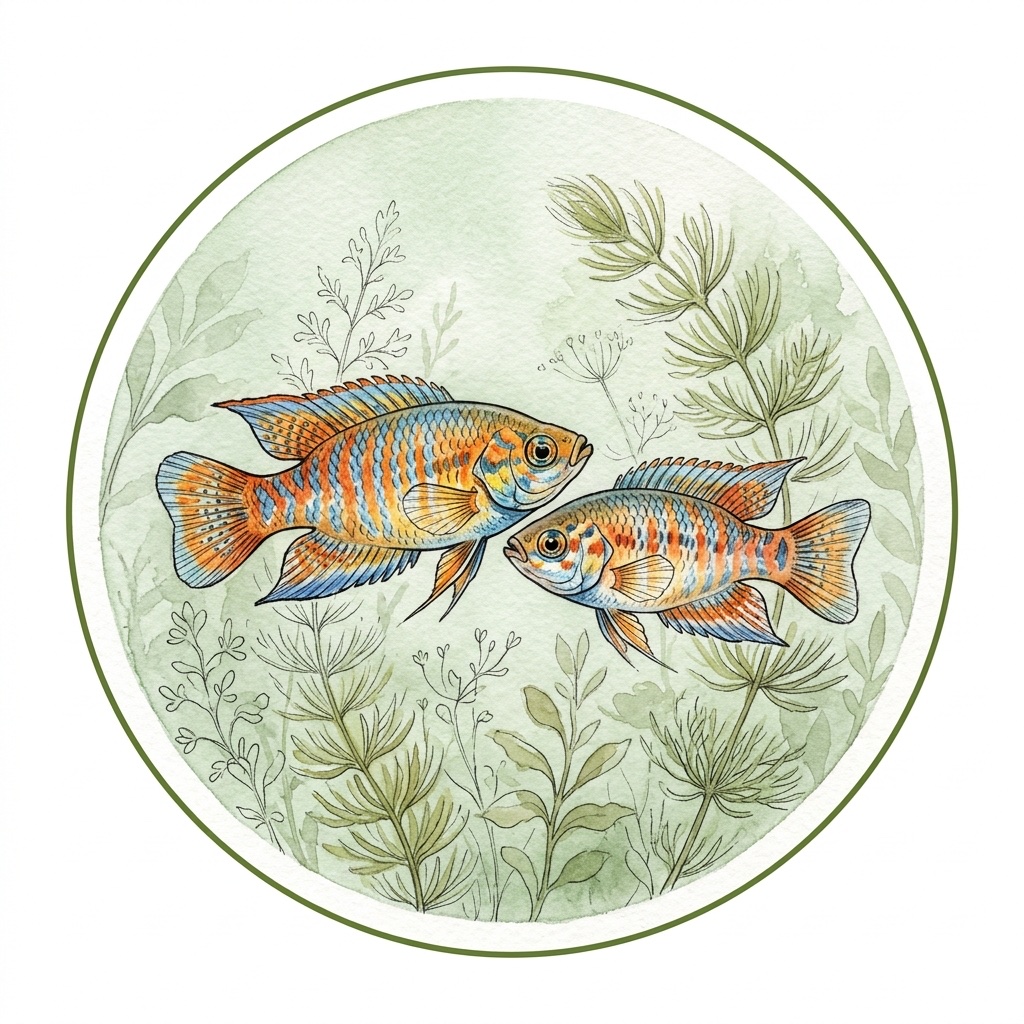
Stage 1 — Wild Monsoon Rise
Seasonal Trigger in Nature
Rising rivers, falling pH, cooler water, rich plankton bloom
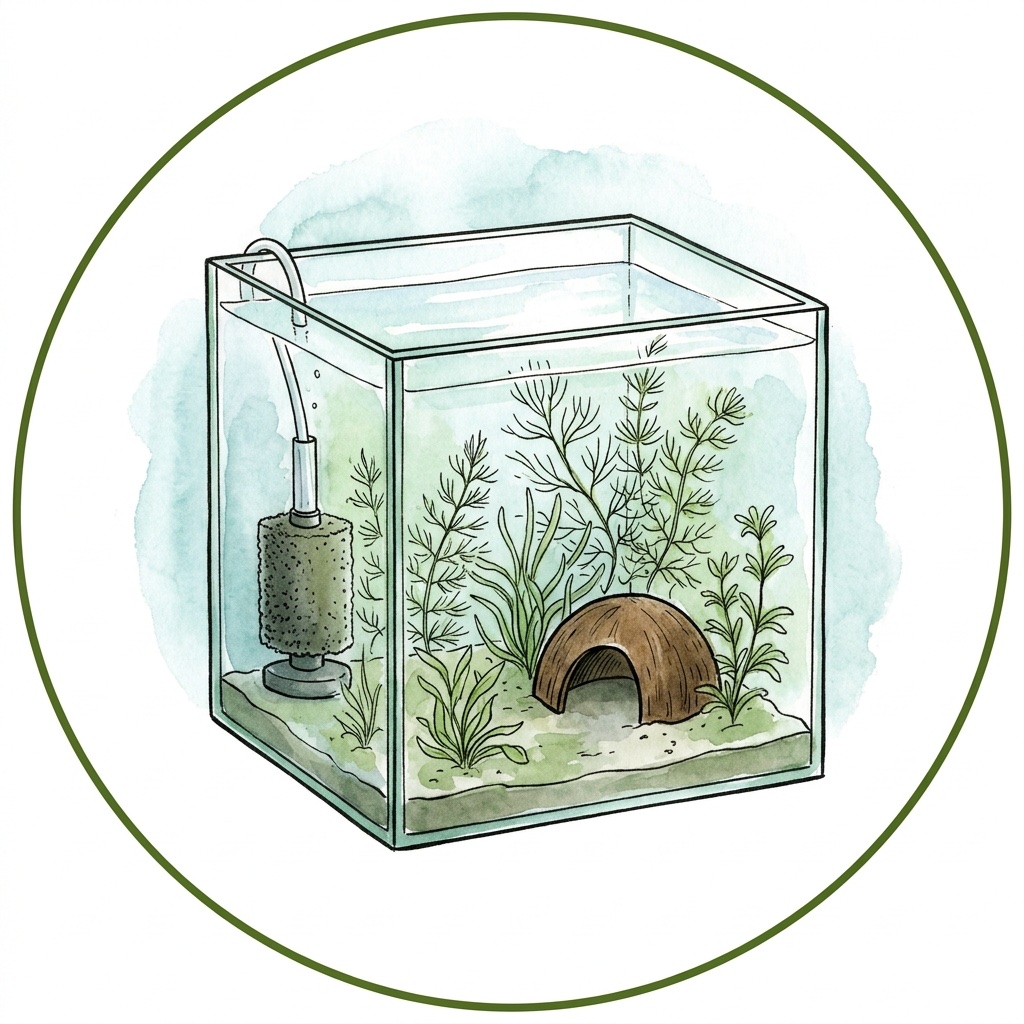
Stage 2 — Courtship
Wild Spawning Behaviour
Chasing, flank-displaying, vertical spiralling in shallow water
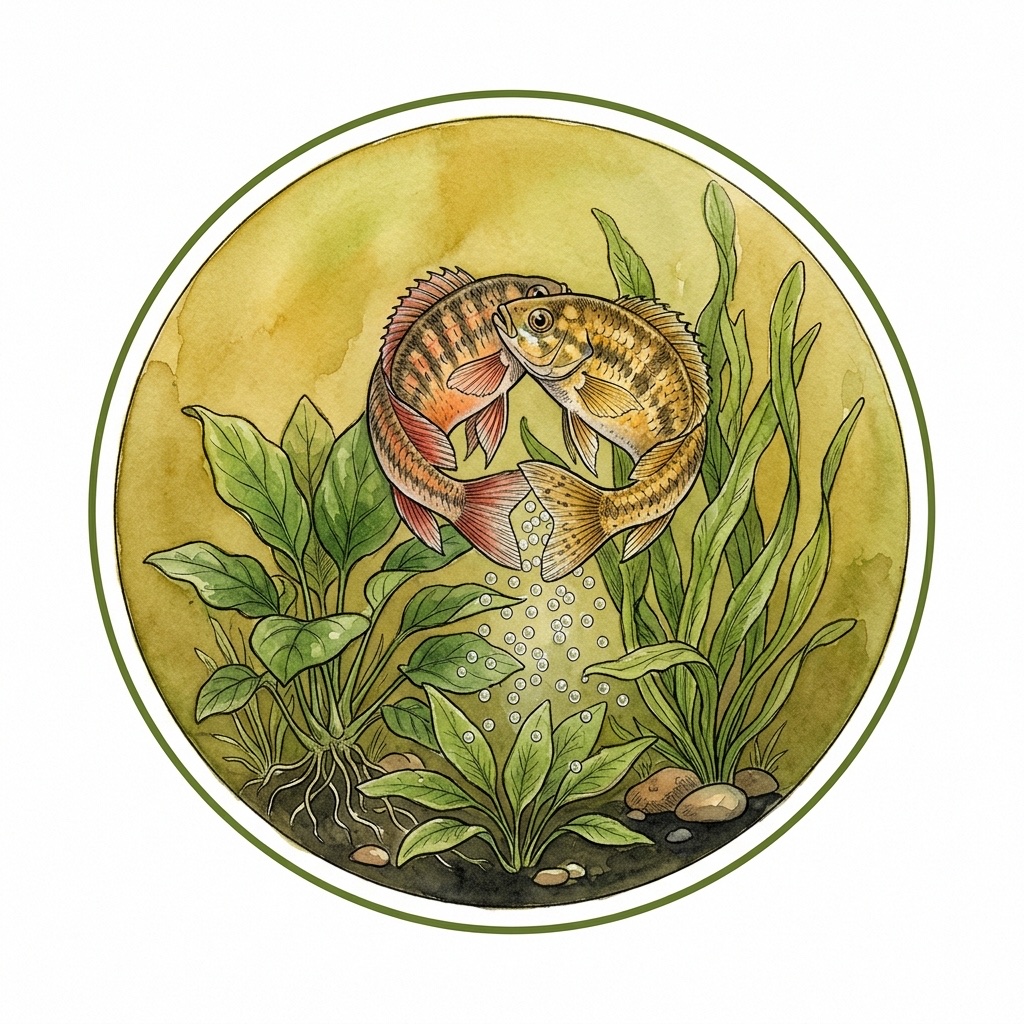
Stage 3 — Egg Dispersal
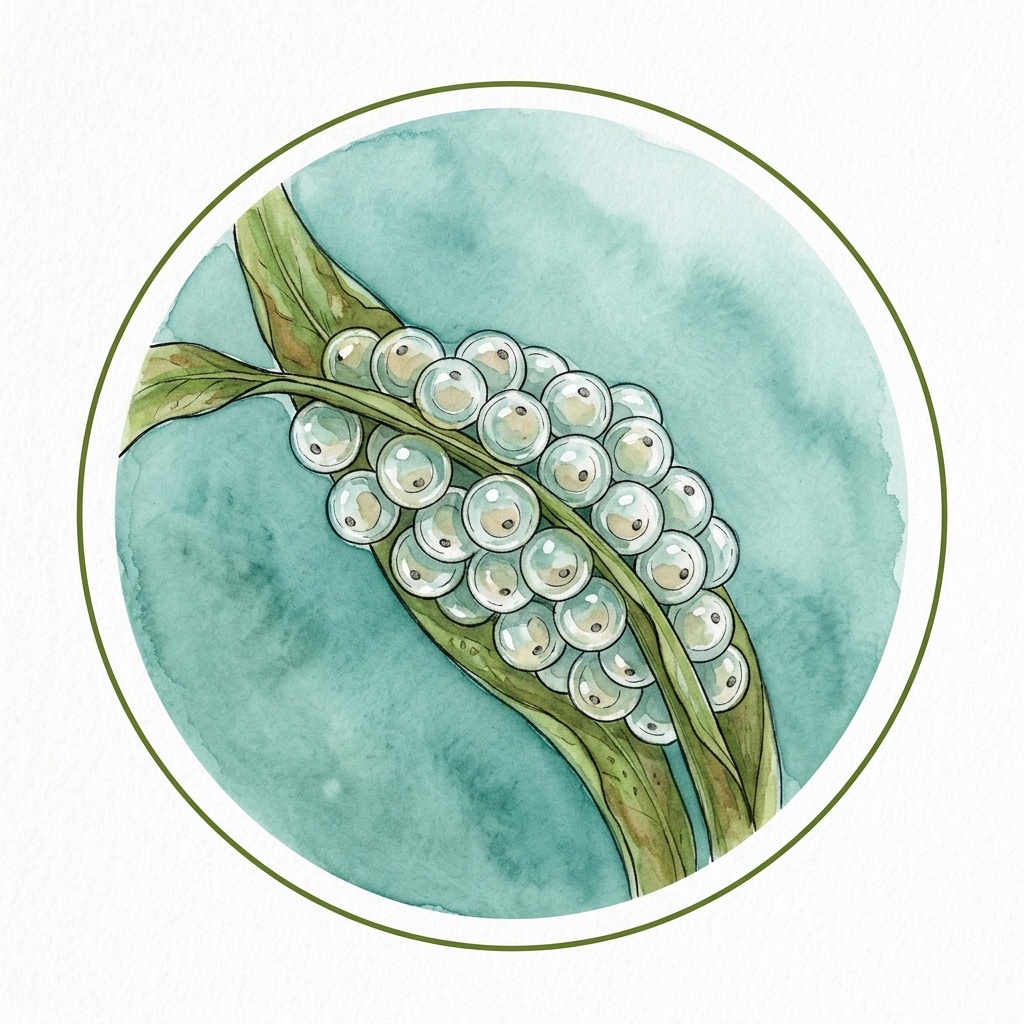
Adhesive Eggs Among Flooded Plants
Scattered eggs stick to inundated grasses and roots
Stage 4 — Commercial Production
Hormonal Induction on Farms
Injected hormones force spawning in pond facilities
Seasonal Trigger in Nature
In the wild, Botia lohachata breeds during the South Asian monsoon, typically June through September depending on latitude. Rising water levels flood adjacent lowland forests and rice paddies, cooler rainwater drops the pH and temperature of the river mainstream, and the sudden explosion of plankton and insect larvae creates perfect conditions for a spawning event. Mature adults migrate upstream into shallow flooded areas where they pair off against a backdrop of inundated vegetation.
Recreating this cascade of environmental triggers in a home aquarium is extraordinarily difficult, which is the primary reason hobbyist-level captive breeding of Pakistan Loach is essentially non-existent.
Wild Spawning Behaviour
In flooded shallows, males pursue gravid females with persistent chasing, flank-flashing, and vertical spiralling displays. The courtship is vigorous and sometimes rough — this is one reason the species is known to engage in spirited chasing in community aquaria long after any real reproductive cue has passed. Field observations of the actual spawning event are rare, but are believed to involve the pair releasing eggs and sperm near the water surface over submerged vegetation.
Adhesive Eggs Among Flooded Plants
Pakistan Loach eggs are small, slightly adhesive, and scattered among flooded vegetation in water that may only be a few tens of centimetres deep. No parental care is provided; the adults drift back to the main river channels and the eggs hatch among the submerged grasses where they are deposited. Fry development is rapid in the warm, food-rich monsoon shallows, and the young fish make their way back to the main rivers as water levels recede.
Hormonal Induction on Farms
The overwhelming majority of Pakistan Loach in the aquarium trade are either wild-collected juveniles or farm-produced specimens bred via hormonal induction at commercial facilities in Southeast Asia and, increasingly, eastern Europe. The process involves injecting conditioned adults with gonadotropin-based hormones to trigger ovulation and spermiation, followed by artificial stripping and fertilisation or monitored spawning events in controlled ponds. This is a specialised procedure not suited to the home aquarium — not because the technique is proprietary, but because the combination of equipment, hormone access, and mature brood stock is impractical at hobbyist scale.
For the home keeper, the honest answer is: enjoy the fish as pets, not as a breeding project. Natural captive spawns have been documented a handful of times over decades of hobbyist record-keeping, almost always as unplanned accidents in very large, very mature tanks. If it happens to you, document everything and share it — the loach community will take genuine interest.
Quick Reference
| Scientific Name | Botia lohachata |
| Adult Size | 12–15 cm |
| Lifespan | 10–15 years |
| pH | 6.5–7.8 (ideal 7.2) |
| Temperature | 24–28 °C (ideal 26 °C) |
| Hardness | 5–15 dGH |
| Min Tank Size | 150 L (40 gal) for a group of 5 |
| Diet | Omnivore — sinking pellets, frozen, live foods, snails |
| Temperament | Peaceful but boisterous, strongly social |
| Min Group | 5+ (6–8 ideal) |
| Tank Zone | Bottom to lower-midwater |
| Snail Control | Yes — one of the most effective snail-eaters in the hobby |
| Shrimp Safe | No — will eat dwarf shrimp |
| Breeding | Egg scatterer — essentially never in home aquaria |
| Care Level | Intermediate |
Related Products
Reviews
Clear filtersThere are no reviews yet.